A leading research and public policy think tank, CUTS International Accra, is urging the Ghanaian government to delay the full enforcement of Traffitech-GH, a technology aimed at improving compliance with road traffic rules. The enforcement, scheduled for 1 October 2026, should be postponed until the traffic infrastructure at enforcement locations is inspected and repaired. CUTS supports the use of technology to reduce crashes, but emphasizes that a fair enforcement system requires functional traffic lights, clear speed limits, and visible road markings.
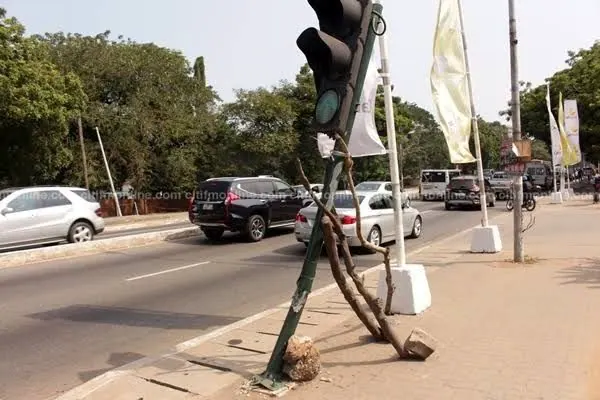
CUTS International Accra highlights that across Accra, many traffic lights are obstructed by overgrown trees, damaged, displaced, or out of service. At some junctions, only one of two traffic lights works, while the other does not. Faded lane markings and stop lines add to the uncertainty, creating risks for drivers and pedestrians. These conditions can lead to unfair tickets being issued, as drivers may not be able to see traffic lights or signs.
The think tank specifically mentions the traffic lights on Nsawam-Accra Road, just before the Apenkwa-Achimota overhead bridge, and at the Police Training Academy junction in Tesano. At these locations, the traffic lights have reportedly shifted out of clear view for approaching drivers, while the Traffitech-GH cameras appear to be correctly positioned. CUTS is concerned that a camera might capture a vehicle crossing on red, even though the driver could not clearly see the red signal.
CUTS International Accra recommends that the Ghana Police Service and the Department of Urban Road inspect every enforcement location from the driver's position. This inspection should cover each affected lane, including visibility at night and during rain. Authorities should record the condition of every signal, sign, lane marking, and stop line before activating fines at that location.
The think tank also emphasizes the need for clear speed limit signs before every Traffitech-GH speed camera and wherever the applicable limit changes. Drivers should receive fair warning on the road before an automated system issues a fine for exceeding the limit. Regulation 211 of the Road Traffic Regulations, 2026 (L.I. 2519) sets general speed limits, but CUTS stresses that drivers need to be informed of specific limits.
CUTS International Accra argues that the purpose of Traffitech-GH is to promote safer roads, not to issue tickets arising from traffic lights drivers could not see. The think tank supports the use of technology to improve road safety, but emphasizes that the system must be fair and transparent. The government should prioritize repairing and maintaining the traffic infrastructure before enforcing the new technology.
The call for delayed enforcement has been made by CUTS International Accra's News Editor, Eric Mensah-Ayettey, who has over twenty-five years of experience in journalism. The think tank's recommendations aim to ensure that the Traffitech-GH system is implemented in a way that promotes road safety and fairness for drivers.
Key points
- CUTS International Accra urges the Ghanaian government to delay enforcement of Traffitech-GH until traffic infrastructure is inspected and repaired.
- The think tank highlights that many traffic lights in Accra are obstructed, damaged, or out of service, creating risks for drivers and pedestrians.
- CUTS recommends that the government inspect every enforcement location, repair and maintain traffic infrastructure, and provide clear speed limit signs before enforcing Traffitech-GH.