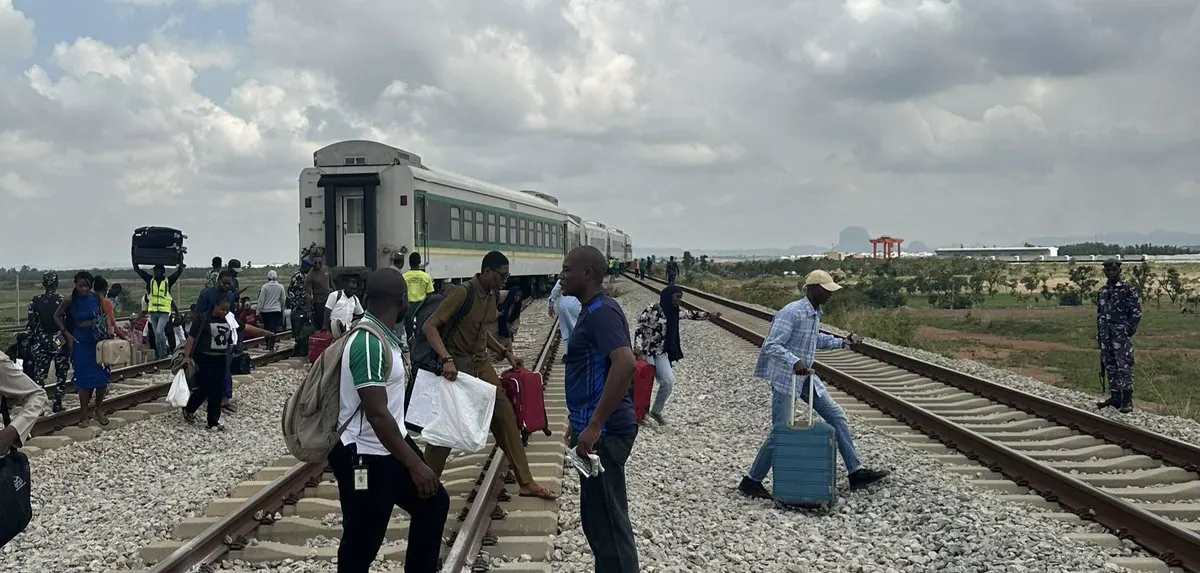
The Abuja-Kaduna railway route, operated by the Nigeria Railways Corporation (NRC), has significantly reduced its daily trips from five to just one, causing distress to commuters and substantial revenue loss for the NRC. This drastic cut in services has been attributed to a mechanical fault in one of the two locomotives serving the route. As a result, passengers face intense competition for the limited tickets available, often leading to long queues and exploitation by unscrupulous railway staff.
The reduction in train operations has not been adequately addressed by the authorities, leaving commuters worried and stranded at stations daily. The situation is further complicated by the malfunctioning online booking system, making it nearly impossible for passengers to secure tickets online. Over-the-counter tickets are sold only a few minutes before departure, if available, forcing desperate commuters to buy tickets at exorbitant prices from staff members or agents outside the stations.
The scarcity of tickets has given rise to a black market, where economy tickets officially priced between N3,500 and N4,000 are resold for between N5,000 and N10,000. These unofficial tickets often bear names different from those of the actual passengers, in clear violation of security regulations. This has not only led to financial exploitation but also raised concerns about the potential for terrorists and other criminals to board the trains.
Passengers have reported resorting to giving money to staff to gain access to the trains without valid tickets. Those who cannot secure tickets through official channels are left with little choice but to pay more in cash and risk being fined for boarding without receipts. During journeys, some staff approach passengers travelling without tickets, allegedly pressuring them to pay cash instead of following a transparent and official process.
The sloppy system has also compromised the tracking of passengers' identities, as official regulations require valid identification such as a National Identity Card, driver's licence, or passport for ticket purchases. Without these, it is virtually impossible to track the movement of wanted criminals or document passengers in case of emergencies.
Sources indicate that spare parts are available to fix the faulty engine that led to the reduction in services. However, the NRC has not provided an official explanation or timeline for restoring the route to its full operational capacity. The lack of transparency and inadequate communication have exacerbated the challenges faced by commuters.
The Abuja-Kaduna railway route is a critical corridor, and its reduced capacity has significant implications for the region's transportation infrastructure. With concerns over the continued reduction in train operations, stakeholders are calling for urgent intervention to address the mechanical issues, improve the online booking system, and curb the exploitation of passengers by railway staff.
Key points
- The Abuja-Kaduna railway route has been reduced to one trip a day due to a mechanical fault in one of the locomotives.
- Passengers face significant challenges in securing tickets, including a malfunctioning online booking system and exploitation by railway staff.
- The reduction in services has resulted in substantial revenue loss for the NRC and compromised the safety and security of passengers.