A recent cultural festival held at the Kuch Temple in Kampala, Uganda, brought together approximately 800 members of the Indian community, demonstrating the resilience of culture in the face of historical displacement. The event was part of the 100th-anniversary celebrations of Shree Sanatan Dharma Mandal. The gathering was marked by music, conversation, laughter, and a sumptuous meal, showcasing a sense of community and belonging.
The Indian presence in Uganda dates back to the colonial period, when Indians became an integral part of the country's commercial and economic landscape. However, this history was complicated by unequal racial structures, leading to strained relationships between Indian and African communities. A significant event that impacted this community was the 1972 expulsion of Asians from Uganda by dictator Idi Amin, which forced around 80,000 people of Indian descent to leave the country with minimal belongings.
The expulsion led to the loss of homes, businesses, and family separations, causing deep wounds that persisted long after the political moment had passed. However, in 1986, President Yoweri Museveni invited the community back and returned seized properties, enabling them to rebuild. This historical context made the recent cultural festival significant, as it showcased a community that had once experienced profound displacement now celebrating its culture openly and collectively.
Culture has a remarkable capacity to survive displacement through various means such as food, language, religion, music, clothing, stories, and dance. These cultural elements can carry history, memory, and identity across generations. For instance, a recipe or a prayer can evoke a sense of connection to one's heritage, while a song or dance can preserve a place that no longer exists in the same way.
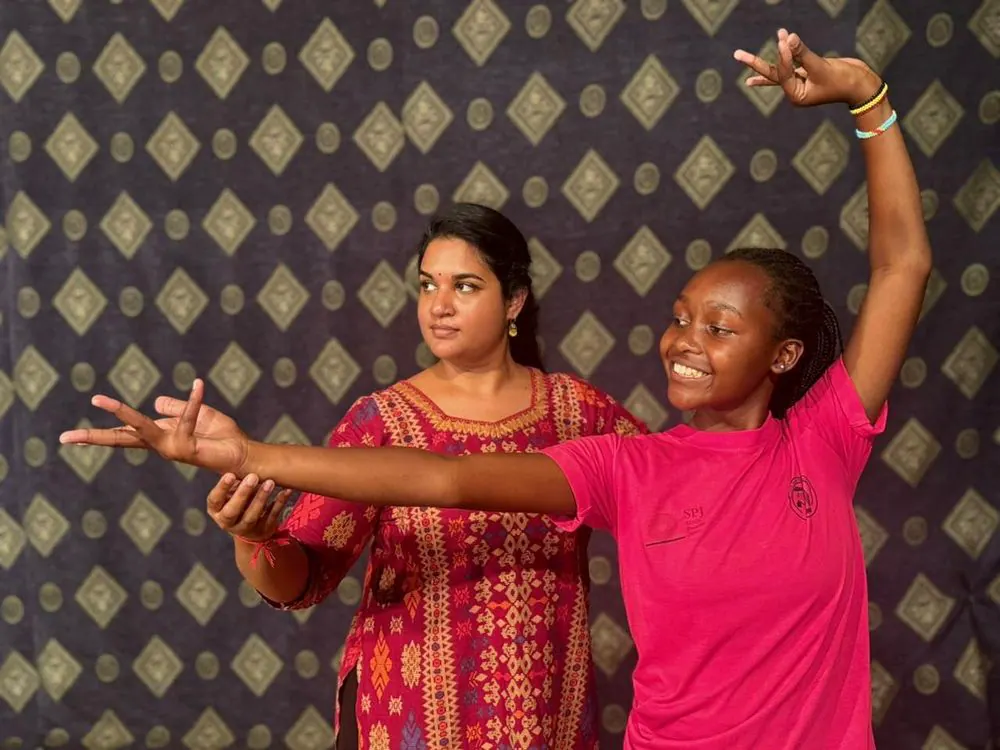
The author, Saranya Devan, a theatre-maker and dance performer, has been working with Ugandan performers, teaching them Bharatha Natyam, an Indian classical dance form. This experience has highlighted the openness and curiosity of the Ugandan dancers, leading to new conversations and possibilities for understanding. It demonstrates how culture can travel, cross borders, and be embraced by new communities without losing its original identity.
The Indian diaspora, often perceived as a homogeneous community, is diverse, with each community negotiating its unique relationship with its host country, ancestral country, and historical context. The author's experience in Uganda and her connection to the Indian diaspora in South Africa highlight the importance of understanding these differences. Her work with Ugandan dancers and her observations of the Indian community in Uganda underscore the power of culture to connect people across different backgrounds.
The cultural festival in Kampala served as a reminder that home is not solely defined by one's place of origin but can be rebuilt and found in new communities, cultural practices, and shared experiences. The event demonstrated that culture can be a source of belonging, connection, and identity, even in the face of historical displacement and trauma. Ultimately, it highlighted the resilience of culture and its ability to bring people together.
Key points
- The cultural festival in Uganda showcased the resilience of the Indian community and the power of culture to bind people together despite historical displacement.
- The event highlighted the importance of preserving cultural heritage and its role in shaping identity and a sense of belonging.
- The Indian diaspora is diverse, with each community having its unique experiences and relationships with its host country and ancestral heritage.