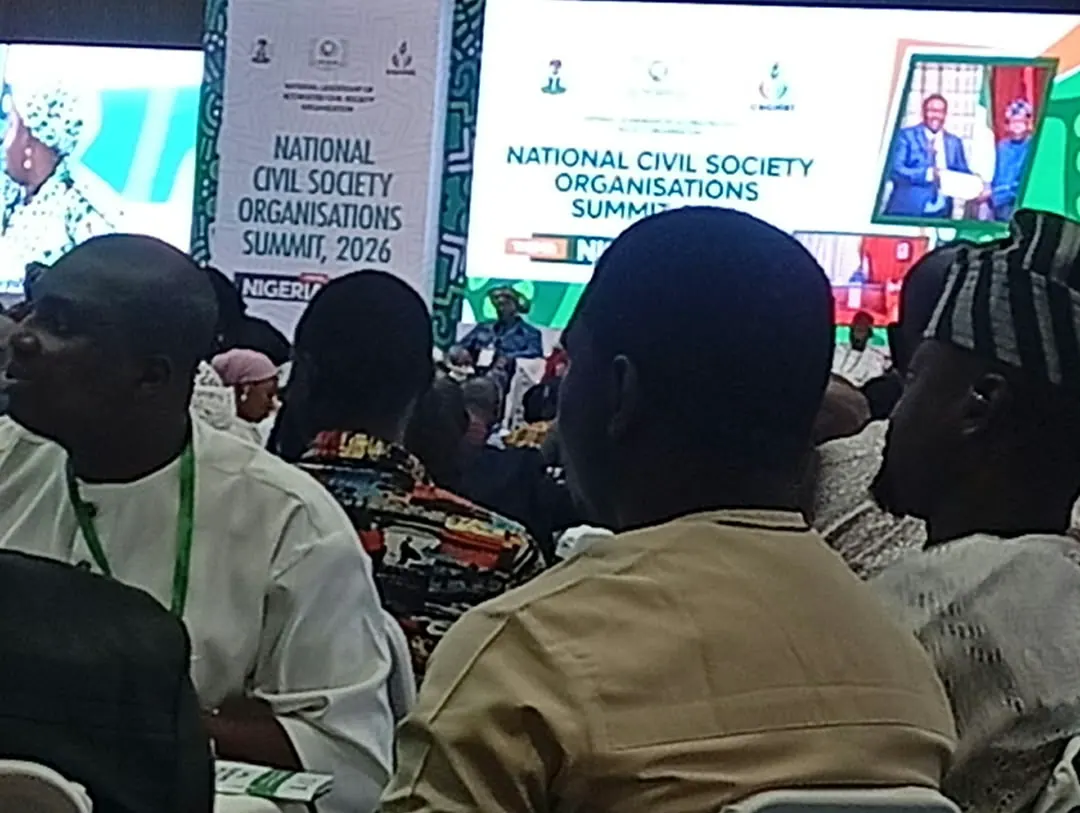
Ahead of the 2027 general elections, civil society groups in Nigeria have cautioned the Independent National Electoral Commission (INEC) and political players against actions that would compromise the provisions contained in the amended Electoral Act. The groups, at a National Civil Society Organisations Summit 2026 convened in Abuja, reminded INEC of the shortfalls that characterised the 2023 general elections, such as vote buying, inadequate logistical preparations, and insufficient public enlightenment.
The summit, convened by the Civil Society Organization on Community Advancement and Humanitarian Empowerment Initiative (CSCHEI) under the leadership of Dr. Kunle Yusuff, had panel discussions with speakers lending their voices to the dangers of vote buying, tracking financial spending among contestants, and allowing for separate voting days for specialised workers and other professionals to prevent disenfranchisement. The panelists included Amb Charles Omini, Special Envoy, West Africa, International Human Rights Protection Service, and Chief Oluwasegun Oyedijo, National Coordinator, Support for Civil Society Organisations.
The panelists argued that election financing must be tracked to discourage voter inducement and swaying of the outcomes of electoral processes. According to them, many candidates seeking votes in an election violate electoral laws, especially on the issue of spending, because there has never been a strict regulatory framework on the threshold of spending. They took turns to emphasise the need for strict regulations to prevent vote buying and ensure a level playing field for all contestants.
Bar. Crownwell Chibuzor, Executive Director, Youth Education on Human Rights and Civic Responsibilities, spoke of the numbers not adding up in terms of actual participants in an election process, which eventually affects the outcomes. He blamed voter apathy, suggesting that INEC should up its game in terms of sensitisation of the electorate on the importance of engaging in polls. Chibuzor also spoke on the need to copy the mail system of voting, such that core professional workers can be allowed to vote days before other citizens can do the same.
Dr. Ezeadili Appolonia Obiageri, CEO, Africa for Millennium Change Initiative, said women and physically challenged citizens play key roles in the electoral process; hence, they should be given preferences like queuing up separately during voting exercises. According to her, a system where pregnant women or disabled persons queue up together might discourage them from participating in an election. She argued that enlightenment for women in terms of electoral laws is very low, despite their roles in the process.
Ezenwa Nwagwu, Executive Director, Peering Advocacy and Advancement Centre in Africa (PAACA), spoke on the power of the BVAS, saying it is more important than the ATM cards people carry about. He discouraged voter buying in its entirety, warning that even though the law is not explicit on sanctions for vote buying or inducement, somebody could be used as a scapegoat and would be in jail and become an ex-convict someday.
The civil society groups at the summit emphasised the need for INEC to take concrete steps to address the challenges of the 2023 general elections and ensure a credible 2027 general election. They also called on the political class to be transparent in their dealings and to refrain from actions that could undermine the electoral process. The groups vowed to monitor the electoral process closely and to hold INEC and the political class accountable for their actions.
Key points
- Civil society groups in Nigeria have outlined an agenda for INEC and the political class to ensure a free and credible 2027 general election.
- The groups emphasised the need for strict regulations to prevent vote buying and ensure a level playing field for all contestants.
- They also called for the protection of vulnerable groups, such as women and physically challenged citizens, during the electoral process.