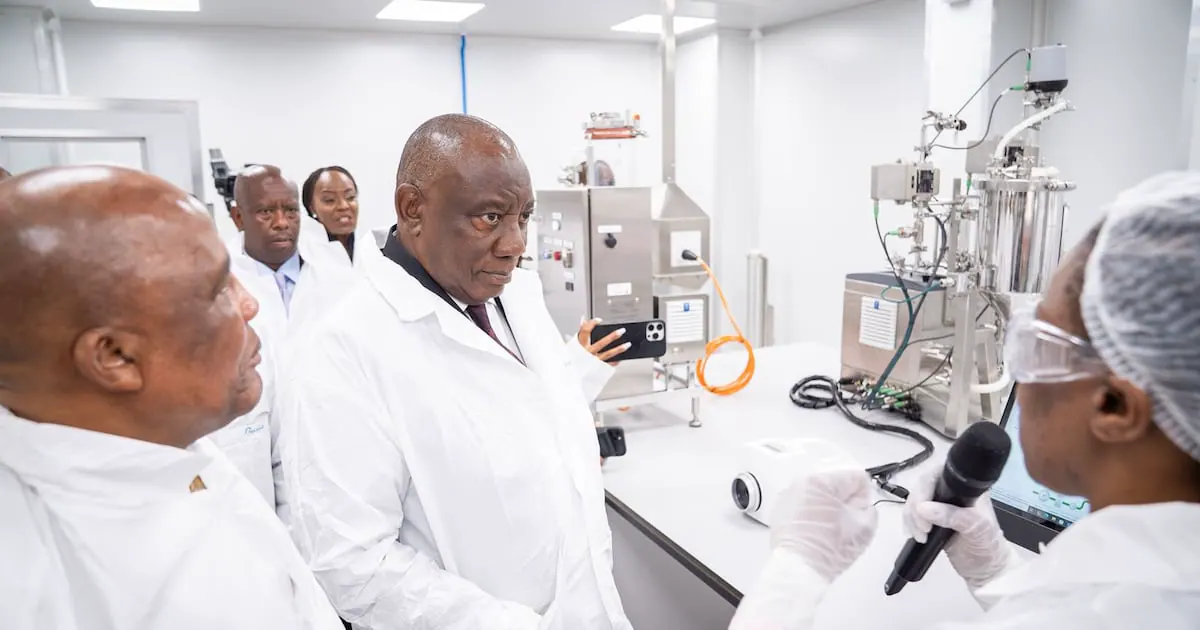
The Council for Scientific and Industrial Research (CSIR) has launched a new facility aimed at reducing South Africa's reliance on imported active pharmaceutical ingredients (APIs). The country's pharmaceutical manufacturing industry currently imports 98% of the APIs it needs, at an annual cost of R15bn. This high dependence on imports makes the sector vulnerable to price shocks, supply chain disruptions, and exchange rate fluctuations. The new facility seeks to address these challenges and improve the country's health security.
The CSIR's FuturePharma unit aims to bridge the gap between laboratory research and commercial production by helping researchers develop the processes needed to make clinical-grade batches of their candidate medicines. The unit has already piloted a process to make the API used in the non-steroidal anti-inflammatory celecoxib, a prescription medicine used to treat pain and inflammation. This development is a significant step towards enabling local production of essential medicines and reducing the risk of critical drug shortages.
President Cyril Ramaphosa, who is also the AU Champion on Pandemic Prevention, Preparedness and Response, has emphasized the importance of the facility in improving South Africa's health security. He noted that the Covid-19 pandemic taught many lessons, including the need for developing economy countries to strengthen local scientific, technological, and manufacturing capabilities to safeguard the health of their people. Ramaphosa added that health security, economic resilience, and national development are interconnected.
The FuturePharma facility is designed to be an "innovation sandbox" that can be rapidly reconfigured to make clinical-grade products in a health crisis. According to Rachel Chikwamba, the CSIR's group executive for advanced chemistry and life sciences, the facility seeks to ensure that when the next pandemic strikes, South Africa is not at the back of the queue waiting for vaccines and treatments. This flexibility is critical in responding to emerging health threats.
The South African Health Products Regulatory Authority (SAHPRA) has taken steps to support local pharmaceutical manufacturing, including shorter evaluation times and reduced assessment fees. CEO Boitumelo Semete-Makokotlela noted that expanding the range of locally manufactured APIs would enable South Africa to produce more essential medicines and limit the risk of critical drug shortages. This support from regulatory authorities is crucial in enabling local production.
Approximately R150m has been invested in the FuturePharma facility to date, with most of the funding provided by the government and support from the German KfW Development Bank. According to CSIR's chief researcher for biopharmaceuticals Tsepo Tsekoa, this investment will help to establish a robust API manufacturing capacity in South Africa. The facility is a significant step towards achieving this goal.
The launch of the FuturePharma facility is a significant milestone in South Africa's efforts to improve its health security and reduce reliance on imported pharmaceutical products. Key stakeholders, including government officials, researchers, and industry experts, have welcomed the development as a critical step towards strengthening the country's scientific, technological, and manufacturing capabilities. The facility is expected to play a vital role in ensuring that South Africa is better prepared to respond to emerging health threats.
Key points
- The CSIR's FuturePharma facility aims to reduce South Africa's reliance on imported APIs and boost local API manufacturing capacity.
- The facility has already piloted a process to make the API used in the non-steroidal anti-inflammatory celecoxib.
- Approximately R150m has been invested in the FuturePharma facility to date, with support from the government and the German KfW Development Bank.