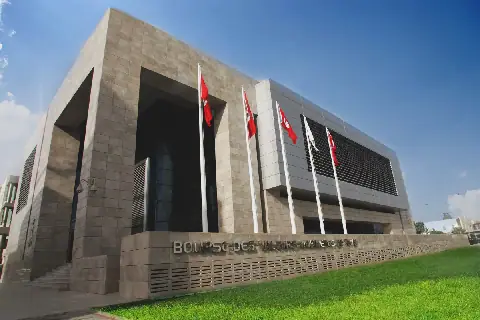
The West African Economic and Monetary Union's (UEMOA) central bank, Banque centrale des États de l’Afrique de l’Ouest (BCEAO), has excluded crypto-asset projects from its first cohort of financial innovation laboratory. The laboratory, which is open to licensed establishments and financial technology companies in the UEMOA, aims to test innovative services in a controlled environment under the supervision of the central bank. This move is consistent with the bank's cautious approach to crypto-assets.
The BCEAO's call for applications, published on October 14, explicitly stated that it does not concern projects related to crypto-assets. Fintech companies working on payment, credit, or digital savings can apply, but those whose projects involve crypto-assets are not eligible for the first selection. The laboratory's primary goal is to provide a regulatory sandbox for testing innovative financial services.
The exclusion of crypto-asset projects from the laboratory has sparked debate, with the Africa Blockchain & Crypto Conference (ABCC 2026) set to take place in Cotonou on November 25. The conference, organized by the Alliance Fintech UEMOA, aims to discuss the economic uses of crypto-assets and the risks associated with them. The conference will also focus on the conditions under which experiments can be conducted under supervision.
According to Jean-Claude Kassi Brou, governor of the BCEAO, crypto-assets do not fall under any regulatory framework in the UEMOA. He emphasized the need for caution when dealing with crypto-assets, stating that they are not a currency and are not regulated. The BCEAO is working with the AMF-UMOA to develop regulations for crypto-assets, but no timeline has been announced.
The ABCC 2026 conference will bring together public decision-makers and private sector actors to discuss the regulation of crypto-assets. The conference will also feature a clinic for regulators and the public sector. The event will be followed by the Next Fintech Forum 2026, organized by the same Alliance, which will focus on the future of fintech in West Africa.
The BCEAO's cautious approach to crypto-assets is reflected in its decision to exclude them from the laboratory. However, the bank is working on developing regulations for crypto-assets, which will likely be influenced by the discussions at the ABCC 2026 conference. The conference will provide a platform for stakeholders to share their experiences and expertise.
The outcome of the ABCC 2026 conference and the BCEAO's regulatory sandbox will likely have a significant impact on the development of crypto-assets in the UEMOA. The conference will provide a platform for stakeholders to discuss the potential benefits and risks of crypto-assets and explore ways to regulate them effectively.
Key points
- The BCEAO has excluded crypto-asset projects from its first cohort of financial innovation laboratory.
- The Africa Blockchain & Crypto Conference (ABCC 2026) will take place in Cotonou on November 25 to discuss the regulation of crypto-assets.
- The BCEAO is working with the AMF-UMOA to develop regulations for crypto-assets.