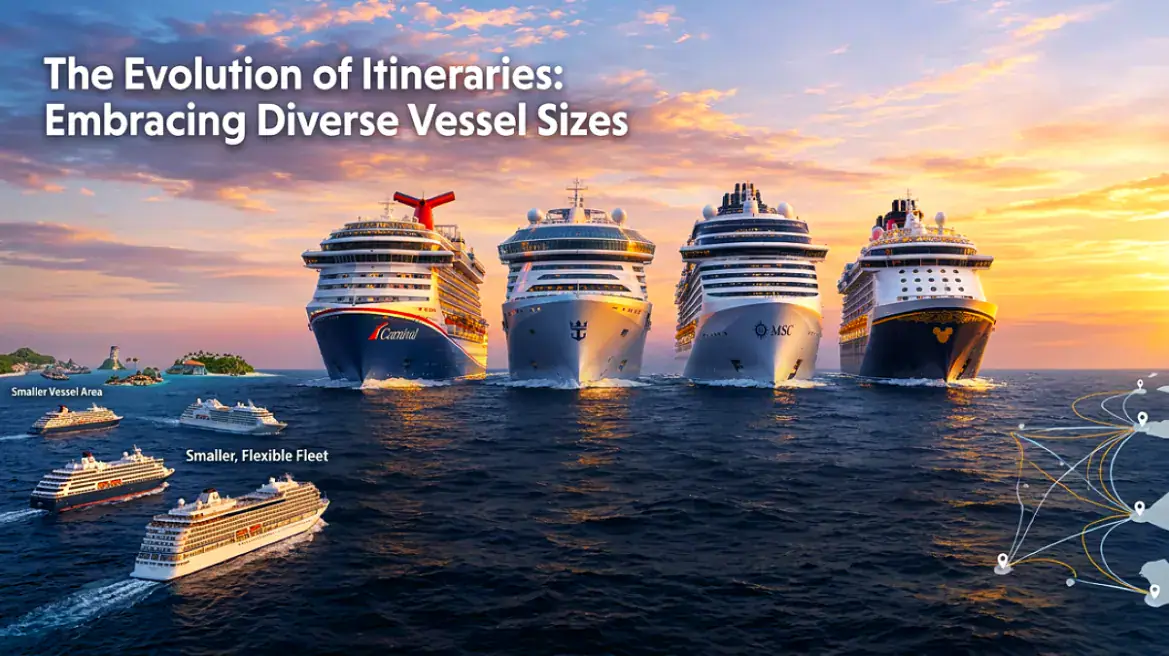
The global cruise industry is experiencing a shift towards smaller vessels, deviating from the long-standing trend of building mega ships. This change is evident in recent announcements from major cruise lines. The Carnival Cruise Line has unveiled plans for a new class of 130,000-gross-ton ships set to arrive in 2033 and 2035. These vessels are significantly smaller compared to their upcoming 230,000-gross-ton Ace Class. This move indicates a strategic adjustment in the industry's approach to ship design and capacity.
Royal Caribbean's upcoming Discovery Class, slated for a 2029 debut, will have a capacity for around 4,300 guests at double occupancy. This is considerably fewer than their Icon and Oasis Class ships, which can accommodate a much larger number of passengers. MSC Cruises has also announced its New Frontier Class, consisting of four ships measuring around 180,000 gross tons. These vessels are smaller than their current World Class ships and are expected to start operations from 2030 onward. These developments suggest a growing preference for smaller, more manageable ships.
The Disney Cruise Line is also embracing this trend by developing a new class of three ships weighing around 100,000 gross tons. These vessels are smaller than both their Dream and Wish classes, indicating a shift towards more intimate cruise experiences. Industry experts suggest that smaller ships offer greater flexibility when designing itineraries. They allow for access to smaller ports and the ability to sail from more homeports, thereby diversifying cruise options.
Another significant advantage of smaller ships is the potential for reduced overhead costs. With fewer crew members required, operational expenses can be substantially lowered. Additionally, smaller cruise ships may appeal to guests who prefer a more personalized and less crowded experience. This contrasts with larger vessels that can feel like floating cities, hosting a diverse and large crowd of people.
Despite this trend towards smaller ships, it's essential to note that the era of mega ships is not over. Cruise lines continue to invest in massive vessels, indicating that bigger ships still have their place in the market. However, the simultaneous development of smaller ships suggests that the industry is recognizing the value of diversity in ship size and capacity.
The shift towards smaller vessels may also be driven by changing consumer preferences. Guests are increasingly seeking unique and intimate experiences, which smaller ships can provide. By offering a range of ship sizes, cruise lines can cater to a broader spectrum of customers, from those seeking luxury and amenities on mega ships to those preferring a more personalized experience on smaller vessels.
As the cruise industry continues to evolve, it will be interesting to see how these trends unfold. The development of smaller ships is likely to have a lasting impact on the industry, offering more choices for both cruise lines and passengers. With greater flexibility, reduced costs, and enhanced intimacy, smaller ships are poised to play a significant role in the future of cruising.
Key points
- Cruise lines are opting for smaller vessels to offer more flexibility and intimate experiences.
- Smaller ships can access smaller ports and reduce operational costs.
- The trend towards smaller ships does not mark the end of the mega ship era but rather a diversification in ship sizes.
Reporting sources
- Is the cruise industry moving away from mega ships? · The Tanzania Times – News from Tanzania, Africa, World, Breaking News, Weather, Environment and Climate Change