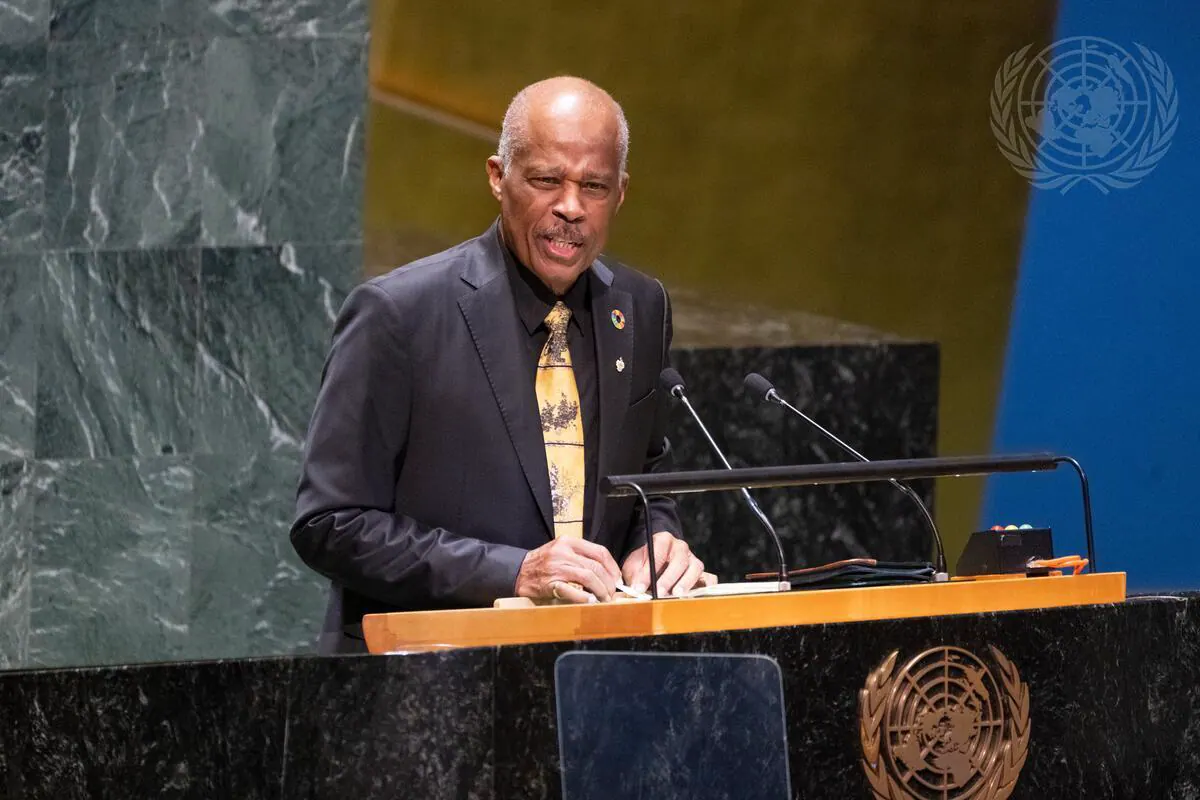
This year marks 25 years since the World Conference against Racism and related intolerance in Durban, South Africa, where reparations for historical injustices was a central issue. The Caribbean has been at the forefront of the struggle for reparative justice since then. Hilary Beckles, Vice-chancellor of the University of the West Indies and Chairman of the CARICOM Reparations Commission, has been a key figure in the movement. He notes that the Caribbean has a "vanguard duty" to the global movement for reparations. The region's experience offers valuable lessons for the future of reparations.
The publication of Beckles's book "Britain's Black Debt" in 2013 is often cited as the starting point for the formal Caribbean Reparations Movement. The book helped define the outlines of the decolonization project and sparked a wave of enthusiasm for reparations. As Chairman of CARICOM's Reparations Commission, Beckles has played a crucial role in shaping the movement. The Centre for Reparations Research was inaugurated under his leadership at the University of the West Indies. Beckles's work has helped raise awareness about the importance of reparations for historical injustices.
Despite the progress made, the Caribbean reparations movement has faced several contradictions and pitfalls. One major issue is that the movement has become overly state-led, with a focus on economic development rather than grassroots mobilization. This approach has led to concerns that the movement may not truly benefit the people it aims to help. Beckles himself has acknowledged the importance of grassroots demands for reparations, citing the Rastafari movement and the struggles of indigenous peoples. However, the movement's current trajectory may undermine its potential for transformative change.
The Caribbean reparations movement has taken a three-pronged approach since the Durban Conference. The CARICOM Reparations Commission oversees National Reparations Councils and has developed a Ten-Point Plan. The movement has also adopted an "open-door" approach, welcoming support from European individuals, institutions, and NGOs. While this approach has generated interest and resources, it has also raised concerns about neo-colonial dependency and the influence of external actors.
The involvement of European NGOs and institutions has been particularly contentious. Critics argue that this has led to a top-down approach, with external actors dictating the terms of reparations rather than Caribbean communities themselves. This has resulted in a disconnect between the leadership and the masses, undermining the movement's potential for meaningful change. The movement's reliance on external support has also raised questions about its long-term sustainability.
Another issue facing the movement is its reliance on the formal legal route. While this approach has generated some successes, it has also been criticized for being slow and ineffective. The movement's focus on economic development has also led to concerns that it may not address the deeper social and cultural impacts of historical injustices. As the movement looks to the future, it will need to address these challenges and find a more inclusive and sustainable approach.
As the Caribbean reparations movement looks to the future, it will need to prioritize grassroots mobilization and community-led initiatives. This will require a shift away from the current state-led approach and towards a more inclusive and participatory model. By learning from its past mistakes and challenges, the movement can build a more sustainable and effective approach to reparations that truly benefits the people of the Caribbean.
Key points
- The Caribbean reparations movement has made progress since the Durban Conference, but faces challenges related to its state-led approach and reliance on external support.
- The movement's focus on economic development has raised concerns that it may not address the deeper social and cultural impacts of historical injustices.
- A shift towards grassroots mobilization and community-led initiatives may be necessary for the movement to achieve its goals.