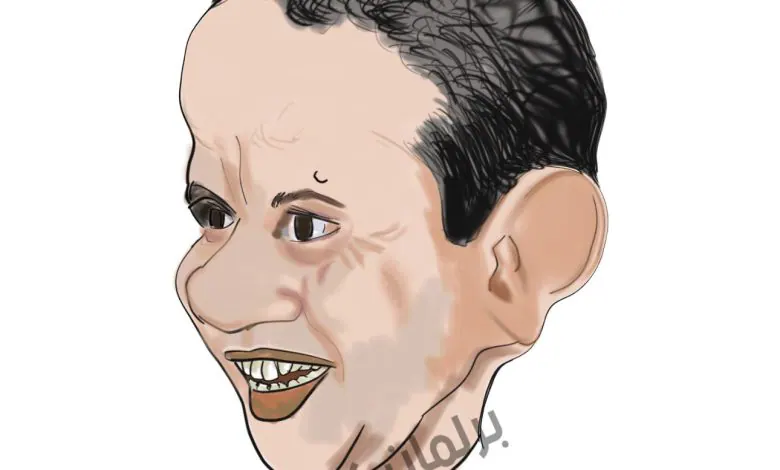
Moroccan journalist Ali Anouzla has sparked controversy with his recent statements on the country's elections. Anouzla, known for his critical views on Moroccan politics, has been accused of promoting division and undermining the country's democratic institutions. His comments have been met with skepticism by many, who question his credibility and motives. Anouzla's critics argue that he has a history of failure in his professional endeavors and has been involved in questionable financial dealings.
Anouzla's critics point to his involvement with various media outlets, which have ultimately ended in failure. They also highlight his receipt of 100,000 dirhams from a controversial figure and some journalists to launch a media project, which ultimately disappeared without a trace. This has raised concerns about his financial integrity and ability to manage public funds. Furthermore, Anouzla's past actions have led to questions about his reliability and trustworthiness.
Anouzla's relationship with the Moroccan state has been strained, particularly after his involvement in a high-profile case with General L'Annickri and subsequent leaks to Ali Lmrabat. This has led some to question his loyalty and commitment to the country's well-being. Anouzla's actions have also been seen as contradictory to his professed values of freedom and democracy. His critics argue that his words and actions are often at odds with one another.
Anouzla's views on elections have been shaped by his experiences and associations. As someone who has benefited from Qatari funding, he has been accused of promoting a foreign agenda that undermines Morocco's democratic processes. His criticism of the country's elections has been seen as hypocritical, given that Qatar has never held a parliamentary election. Anouzla's stance has been met with skepticism by many, who see it as an attempt to impose a foreign ideology on Morocco.
Anouzla's critics argue that he does not genuinely believe in democracy or pluralism. His past actions and statements have revealed a preference for a single, dominant narrative. Those who have worked with him have reported experiencing his narcissistic tendencies and intolerance for opposing views. This has led some to question his commitment to democratic values and his ability to engage in constructive dialogue.
Anouzla's promotion of extremist ideologies has also raised concerns about his impact on Moroccan society. His dissemination of propaganda materials has been seen as a threat to the country's security and stability. His current stance on elections has been interpreted as an attempt to incite division and undermine trust in the country's institutions. Anouzla's critics argue that his actions are detrimental to Morocco's democratic development.
The controversy surrounding Anouzla's views has sparked a wider debate about the role of media and civil society in Morocco. While some see him as a champion of free speech, others view him as a provocateur who seeks to destabilize the country. As Morocco continues to navigate its democratic transition, the debate over Anouzla's stance serves as a reminder of the challenges facing the country's media and civil society.
Key points
- Critics question Anouzla's credibility and motives.
- Anouzla's views on elections have been shaped by his experiences and associations.
- Anouzla's promotion of extremist ideologies has raised concerns about his impact on Moroccan society.