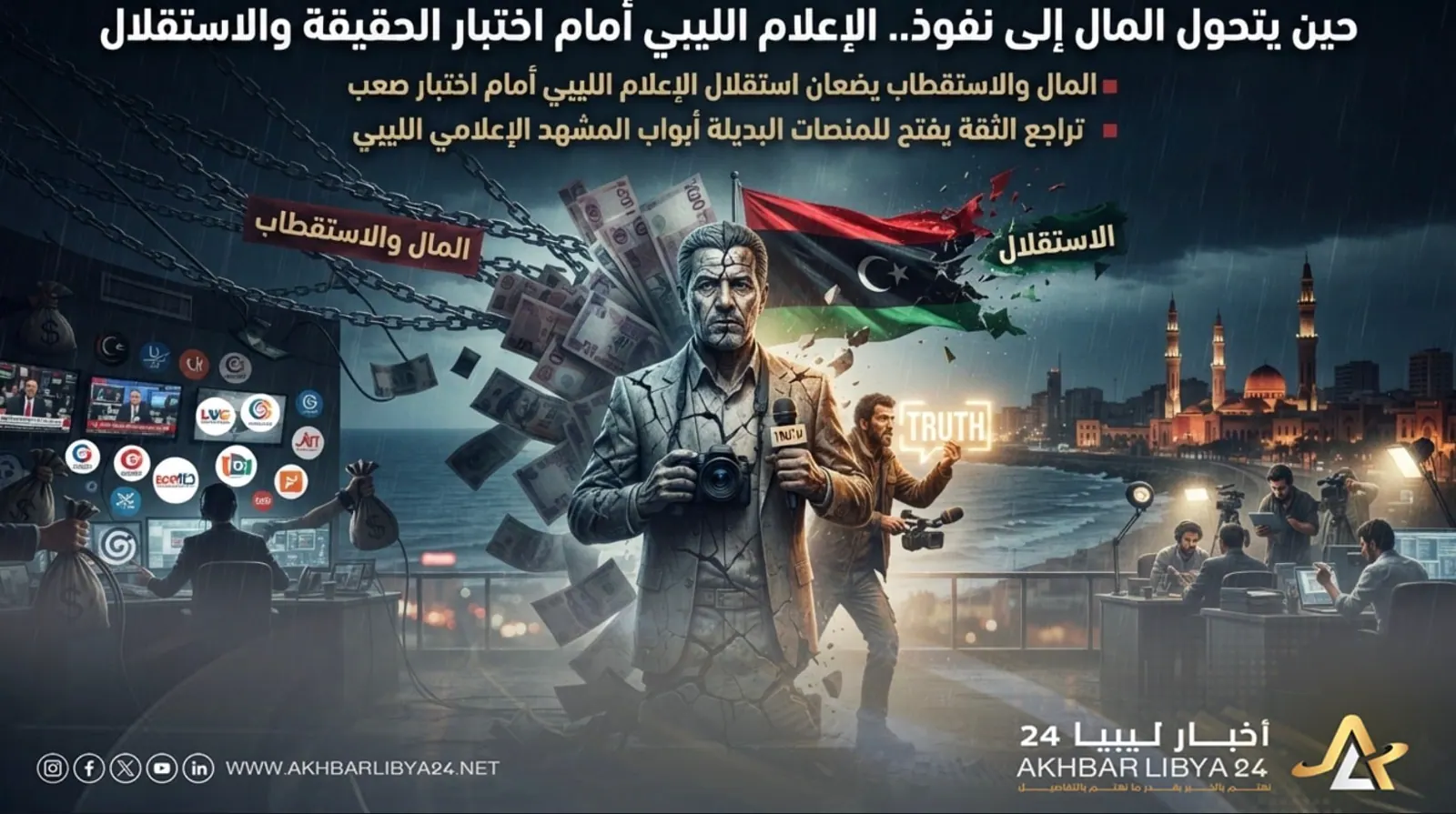
The state of Libyan media has sparked concerns about its independence and ability to report accurately. Criticisms from political activist Nadia Al-Rashid have reignited discussions about the challenges facing the media, including the influence of funding and political agendas. Al-Rashid argues that the local media has become a platform for "media trading" without neutrality, often promoting specific ideological agendas.
Al-Rashid's comments highlight the decline of media standards and the erosion of trust in local media outlets. She believes that the media has failed to maintain its independence in a fragile institutional, security, and political environment. The media landscape in Libya has been characterized by a lack of clear guidelines and regulations, leading to a proliferation of biased reporting and the spread of misinformation.
The issue of funding and its impact on media independence has been raised by other critics, including Abdulaziz Al-Zaqm. He argues that the relationship between funding, capital, and media is a significant challenge to the independence of media institutions. Al-Zaqm believes that the pursuit of funding can lead to a focus on specific narratives that serve the interests of the funder, rather than seeking the truth.
The polarization of Libyan society has also contributed to the challenges facing the media. Al-Zaqm notes that the country's economic and social instability has created an environment in which citizens are more susceptible to simplistic narratives that tap into their emotions. He argues that the media must be aware of these dynamics and strive to provide balanced and accurate reporting.
Al-Zaqm proposes a model of media that can criticize without resorting to partisanship. He believes that media outlets should be able to report critically without becoming embroiled in personal or political conflicts. This approach requires a commitment to fact-based reporting and a willingness to challenge prevailing narratives.
The intersection of economic, security, and social factors has significant implications for the media in Libya. Al-Zaqm notes that the decline of the middle class has led to increased vulnerability to external influences, including funding and propaganda. He argues that addressing these underlying issues is essential to creating a more stable and independent media environment.
Ultimately, the challenges facing Libyan media are complex and multifaceted. Critics like Al-Rashid and Al-Zaqm are calling for a more independent and fact-based media that can provide citizens with accurate information. The relationship between funding, polarization, and media independence will remain a critical issue in Libya, with implications for the country's stability and democratic development.
Key points
- Criticisms of Libyan media highlight the challenges of funding and polarization.
- The media landscape in Libya is characterized by a lack of clear guidelines and regulations.
- Addressing underlying economic, security, and social issues is essential to creating a more stable and independent media environment.