In the Democratic Republic of the Congo, a heated debate is underway about the idea of recreating the former Province Orientale, also known as Grande Orientale. Bruno Kamanda Nen'ling, in a recent opinion piece, argues that nostalgia for the old province is not enough to justify its reconstruction. He believes that no solid foundation for durable unity was established during the existence of the former province. Kamanda emphasizes that it's not large inherited entities that create power, but the real capacity to develop.
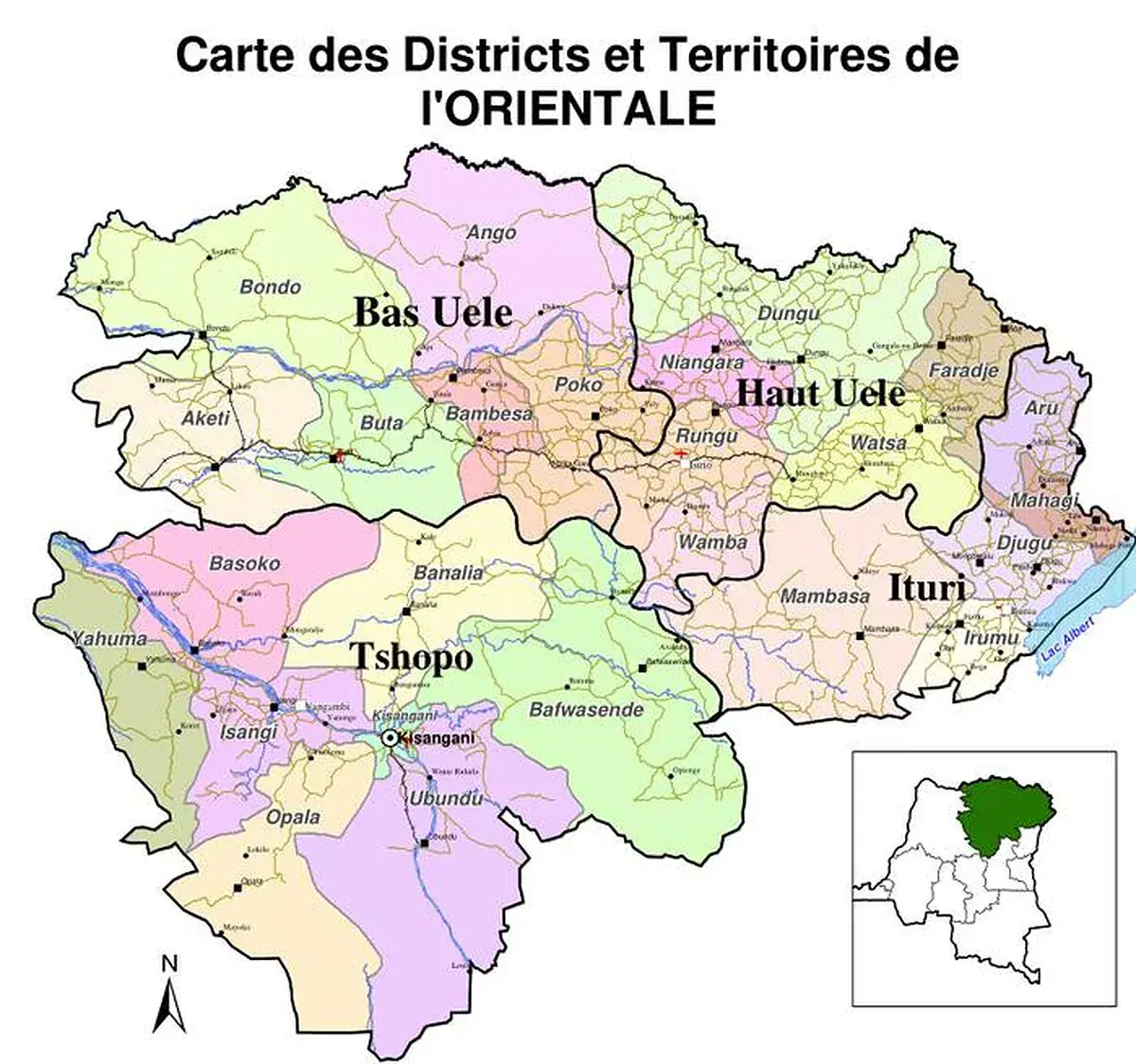
The discussion around Grande Orientale comes as various initiatives are being undertaken by political, community, and economic leaders. In February 2026, community and political leaders from the four provinces of Ituri, Tshopo, Haut-Uélé, and Bas-Uélé gathered in Kisangani to discuss security and collective vigilance. The meeting was an initiative of a dynamic group representing the four provinces. This development indicates ongoing efforts to revive the concept of Grande Orientale.
The Conseil économique et social (CES) organized a workshop in Kinshasa on May 13, 2026, focusing on the economic and social priorities of Grande Orientale. The workshop brought together experts, politico-administrative authorities, academics, and economic operators. They examined ways to transform the region's natural resources into development levers. According to the CES, the region, covering approximately 500,000 km², is rich in mineral, forest, and agricultural resources, with a strategic position for trade with East Africa.
Despite these initiatives, challenges persist. Participants at the CES workshop highlighted several obstacles, including the enclavement of Bas-Uélé and Haut-Uélé, degraded infrastructure, difficulties accessing markets, and ongoing security issues in Ituri. The slowdown in industry in some areas, particularly in Tshopo, was also noted. Sectors such as agriculture, transport infrastructure, mining, energy, and inter-provincial trade were identified as priorities for strengthening economic integration.
Bruno Kamanda Nen'ling warns against the political instrumentalization of the Grande Orientale concept. He fears that some actors might use this historical aspiration to gain political visibility without offering a concrete program meeting the populations' expectations. In March 2025, the Dynamique Grande Orientale welcomed the appointment of several personalities from these provinces to the presidium of the Union sacrée de la nation, seeing it as recognition of their political weight.
Kamanda draws lessons from the experiences of other geographical areas, such as Grand Kivu and Grand Katanga, which show that belonging to the same historical entity does not automatically guarantee effective political and economic integration. He advocates for the four provinces to strengthen their capacities, focusing on good governance, infrastructure construction, wealth production, and provincial institution consolidation. This approach, he believes, will enable them to respond to their inhabitants' needs before engaging in a larger integration project.
The former Province Orientale was dismantled in 2015, giving rise to four distinct provinces: Ituri, Tshopo, Haut-Uélé, and Bas-Uélé. Bruno Kamanda Nen'ling advises building strong provinces before dreaming of a Grande Orientale. He recommends that any rapprochement initiative between these entities should be based on clearly defined common interests, effective cooperation mechanisms, and a genuine development strategy for the populations.
Key points
- Bruno Kamanda criticizes the nostalgia-driven push for Grande Orientale without a common vision.