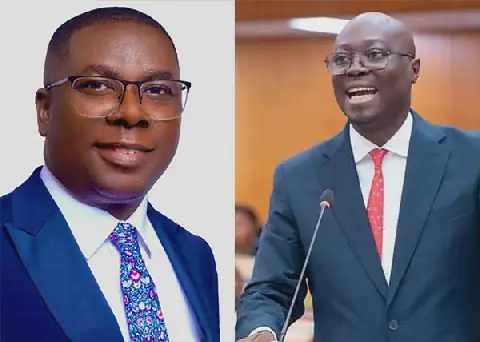
A recent proposition by Andrew Mwenda, an anti-corruption scholar, has sparked debate in Uganda. Mwenda suggests that the country's entrenched corruption can be defeated by dispensing with constitutional safeguards and allowing soldiers to administer corporal punishment to suspects. This proposal has raised fundamental questions about political power, constitutional government, and the succession ambitions of General Muhoozi Kainerugaba, Uganda's serving Chief of Defence Forces.
Mwenda's plan involves soldiers armed with sticks, supported by tanks and armoured vehicles, descending upon the streets to punish suspects. He claims that suspects will not appear in court but in a "basement," a metaphor for the consequences of undermining the public interest. However, this metaphor does not resolve the constitutional problem, as soldiers whipping civilians and suspects being denied judicial hearings are not lawful government actions.
The proposal has been criticized by the Uganda Law Society, which has condemned Mwenda's remarks and called for investigations into whether his advocacy of torture, secret detention, and extrajudicial punishment attracts criminal liability under Uganda's laws. The Society invoked the Prevention and Prohibition of Torture Act, the Penal Code, and other statutory provisions governing participation in criminal conduct.
Corruption is a significant problem in Uganda, with a study commissioned by the Inspectorate of Government estimating the annual economic cost at Shs9.144 trillion, equivalent to approximately 44 per cent of government revenue in 2019. The Inspector General of Government subsequently reiterated that corruption was costing Uganda approximately Shs10 trillion annually.
Critics argue that Mwenda's diagnosis raises an unavoidable historical question: who has governed Uganda, appointed senior public officials, shaped accountability institutions, and exercised political authority throughout the four decades of President Yoweri Museveni's rule? The governing political establishment must account for the failure of its promised transformation and explain why another "revolutionary" declaration should inspire confidence.
The Constitution of Uganda offers another possibility for addressing corruption: strengthening investigative independence, protecting prosecutors and judicial officers, recovering stolen assets, and ensuring that political influence cannot purchase immunity. Article 23 protects personal liberty, Article 24 prohibits torture and cruel, inhuman or degrading treatment or punishment, and Article 28 guarantees a fair hearing.
The Uganda Law Society President Isaac Ssemakadde has challenged the constitutional legitimacy of basements, torture, and extrajudicial punishment, invoking the absolute constitutional protection against torture. The Society's statement has added its institutional voice to this controversy, emphasizing that the state may employ lawful coercive powers to enforce criminal law but cannot dispense with the constitutional restraints governing those powers.
Key points
- The proposal to abandon constitutional safeguards to fight corruption has sparked criticism and debate in Uganda.
- Corruption is estimated to cost Uganda approximately Shs10 trillion annually.
- Critics argue that the governing political establishment must account for the failure of its promised transformation and explain why another "revolutionary" declaration should inspire confidence.