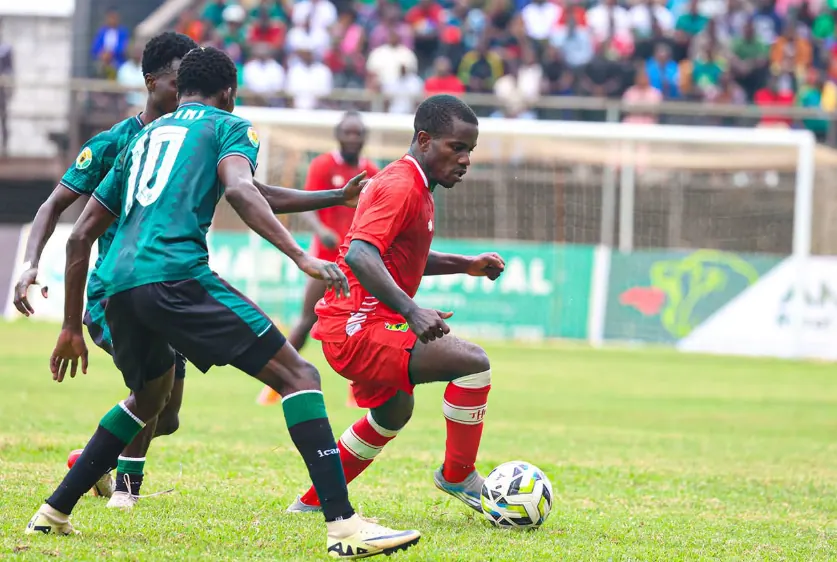
A growing concern is plaguing Ghanaian football, with many criticizing the emphasis on foreign talent over local players and coaches. This mindset has led to significant financial investments in foreign-based players, with the Ministry of Sports reportedly spending GH¢18 million on the Black Stars. Despite this substantial expenditure, Ghana failed to qualify for AFCON 2025 for the first time in 20 years, and the team's FIFA ranking dropped from 59 to 77.
Nana Kofi Boateng, President of Nsuopun Fidelity Football Club, exemplifies the dedication of local football administrators. He spends between GH¢300,000 and GH¢600,000 annually from his own pocket to keep his team in the Division One League. This includes GH¢15,000 to GH¢40,000 on player salaries, GH¢10,000 on feeding, and GH¢5,000 to GH¢15,000 on transportation for away games. Despite his efforts, Boateng's best players are often told they are not good enough for the Black Stars.
The sports community is questioning the notion that local talent is not good enough. In contrast, other African countries have achieved success with local players and coaches. Senegal's Aliou Cisse, a local player and coach, won AFCON 2021, while Morocco's Walid Regragui, who coached Wydad Casablanca, led the team to a World Cup semi-final in 2022 with 14 players from local academies.
Ghana's history also supports the potential of local talent. The Black Starlets that won the World Cup in 1991 and 1995 were 100% local, as was Asante Kotoko, which won Africa in 1983. The Black Stars that won AFCON in 1963, 1965, 1978, and 1982 were built on a local core. This success story suggests that Ghana can replicate past achievements with a renewed focus on local talent.
Enoch Worlanyo, a sports journalist with Multimedia Group Ghana, argues that the selective self-hatred displayed by Ghanaian football administrators is detrimental to the sport. He questions why local administrators, coaches, and players are deemed sufficient for certain roles but not others. Worlanyo emphasizes that if local is bad, then local is bad everywhere, and it is unfair to trust local individuals in some capacities but not others.
The GFA Executive Council faces criticism for prioritizing foreign talent over local players and coaches. Worlanyo urges them to reconsider their stance and recognize the value of local contributions to Ghanaian football. He stresses that the Black Stars should be a reward for Ghanaian sweat, not a visa office for foreign benchwarmers.
Ultimately, many believe it is time for Ghanaian football to change its approach and trust local talent. By supporting local players, coaches, and administrators, Ghana may be able to replicate the success of other African countries and rebuild a strong national team. Key decisions from the GFA and Ministry of Sports will be crucial in determining the future of Ghanaian football.
Key points
- Ghana's football administrators face criticism for prioritizing foreign talent over local players and coaches despite significant contributions from local administrators.
- Other African countries, such as Senegal and Morocco, have achieved success with local players and coaches, challenging Ghana's approach.
- Ghana's history shows that local talent can lead to success, with past national teams built on local cores achieving significant victories.