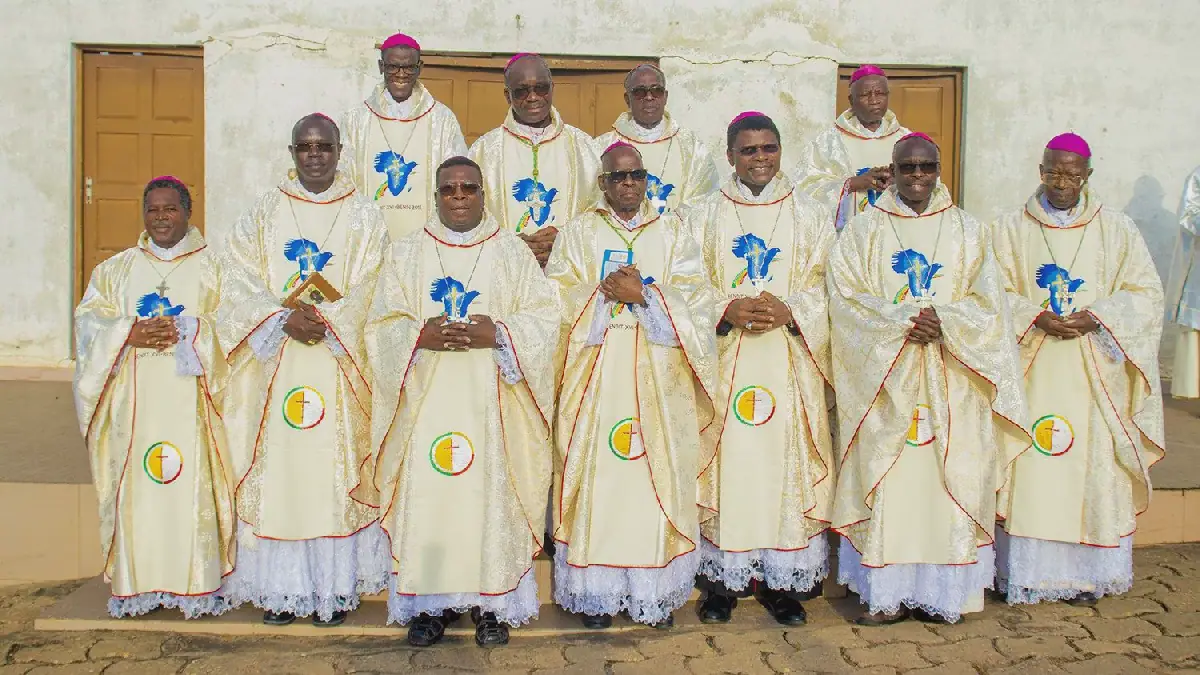
A controversy is brewing in Benin over a colloquium on traditional African religions announced by the Catholic Conference of Bishops (CEB) for November 19-20, 2026. Dodji Amouzouvi, a sociology professor and Vodun dignitary, has denounced the event as an "intellectual and pastoral swindle." He argues that the short notice and exclusion of key traditional leaders undermine the legitimacy of the colloquium.
Amouzouvi questions the CEB's decision to organize a colloquium on traditional religion without involving its practitioners. He notes that the Latin root of the word "colloquium" means "to speak with" or "to discuss together," implying a dialogue between equals. The professor argues that a genuine colloquium on traditional religion cannot be held without the participation of traditional leaders and experts.
The CEB announced the colloquium on October 28, 2026, after a 79th session in Natitingou. Amouzouvi criticizes the short notice, saying that 22 days is an unheard-of timeframe for organizing an international colloquium in Benin. He also laments the lack of transparency regarding the event's objectives, scientific committee, and list of speakers.
According to Amouzouvi, a colloquium typically involves 30 to 150 experts discussing a specific theme. He argues that the CEB's event, as announced, lacks the basic norms of a colloquium, including an objective, axes of reflection, and a scientific committee. The professor concludes that the CEB is treating traditional religion as a "folkloric object" rather than a "theological partner on an equal footing."
Amouzouvi's criticism centers on the exclusion of key stakeholders, including the Hunnon, faîtières des associations, and hauts dignitaires des hauts conseils. He also questions the absence of Beninese academics who have made significant contributions to the study of Fa and Vodun. The professor argues that the colloquium, as currently conceived, is a "monologue" rather than a dialogue.
The CEB's decision to hold a colloquium on traditional African religions follows a recent media controversy sparked by the publication of research by Father Gaston Aïtondji. Amouzouvi welcomes the CEB's initiative but insists that it must be done in a more inclusive and scientifically rigorous manner.
The outcome of the colloquium and the CEB's response to Amouzouvi's criticism remain to be seen. The controversy highlights the complexities of discussing traditional African religions in a country where Christianity and traditional practices coexist.
Key points
- The Catholic Conference of Bishops in Benin faces criticism for its handling of a colloquium on traditional African religions.
- Critics argue that the event's short notice and exclusion of traditional leaders undermine its legitimacy.
- The controversy highlights the challenges of discussing traditional African religions in a country with a complex cultural landscape.