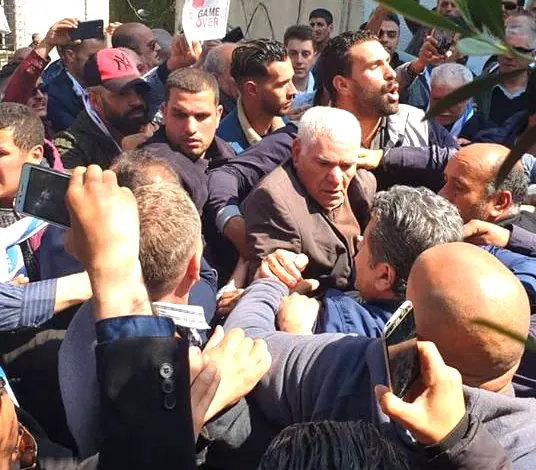
A dramatic turn of events unfolded at the headquarters of the Algerian party, Front des Forces Socialistes (FFS), in Algiers, as dozens of discontented militants and national council members gathered to demand the departure of Ali Laskri, a member of the party's presidential instance. The protesters expressed their rejection of the party's unilateral management and sought to rehabilitate the FFS's political action and free debate spaces. The situation escalated, resulting in Laskri being escorted out of his office and eventually forced to leave the premises.
Earlier, tensions were running high as the national council meeting, initially scheduled for the previous day, was disrupted. The protesters stormed the party's headquarters, prompting Laskri and other present members to vacate the area. According to reports, Hakim Belahcel, the party's first national secretary, appointed just three weeks ago, decided to resign shortly after the militants' intervention. This development further exacerbates the internal crisis within the FFS.
In a statement to the TSA website, Ali Laskri described the events as a "veritable putsch" against the FFS. He accused certain party members, including deputies and the president of the Béjaïa provincial assembly, of orchestrating the violence and bringing in "dangerous people" from various regions, including Tizi Ouzou and Béjaïa. Laskri claimed that these individuals had previously attempted a putsch on March 8 and had now resorted to using force to disrupt the party's activities.
Laskri attributed the problems within the party to January 25, when he was allegedly subjected to a similar attempt to oust him, as in 2006. He expressed concern that some FFS parliamentarians were working with external influences, which ultimately led to the violent takeover of the party's headquarters. According to Laskri, the party's parliamentary group had been working to undermine the FFS since the Algerian events began.
The FFS had suspended its parliamentary activities in October, following the sealing of the National People's Assembly (APN) headquarters. However, in February, the party's deputies resumed their activities, despite the initial decision to withdraw. Laskri explained that the national council, scheduled to take place on the day of the incident, was meant to address pressing issues and find solutions to strengthen the party's action on the political scene.
An extraordinary session of the FFS national council was planned for later that day, aiming to make decisions that would bolster the party's presence in Algerian politics. The session sought to set a date for an inclusive national congress, allowing militants to express their views freely and democratically. Members of the national council emphasized the need to restore the party's internal democratic processes.
The ongoing crisis within the FFS raises concerns about the party's stability and its ability to effectively participate in Algerian politics. As the situation continues to unfold, it remains to be seen how the party will address its internal divisions and navigate the challenges ahead.
Key points
- - The FFS party is facing internal turmoil, with Ali Laskri being ousted and Hakim Belahcel resigning amid protests. - The crisis is attributed to disagreements over party management and external influences within the party. - An extraordinary national council session has been planned to address the party's internal issues and plan an inclusive national congress.