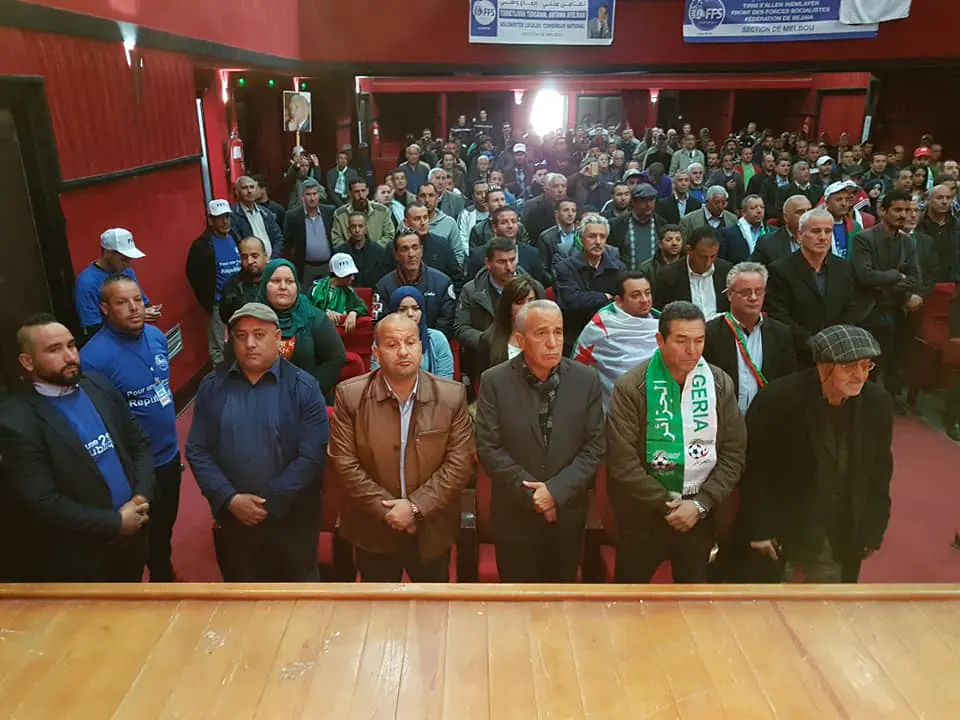
The crisis within Algeria's Front des Forces Socialistes (FFS) party has intensified, with the party's leadership announcing the suspension of at least six parliamentarians from Tizi-Ouzou and Béjaïa. The suspensions were prompted by the parliamentarians' participation in unauthorized meetings, which the party's leadership views as attempts to destabilize the party. The meetings, held in Tizi-Ouzou and Béjaïa, were organized outside of the party's official agenda and without the presence of local officials.
The FFS party's leadership had previously warned against such actions, denouncing the organization of "clandestine and factional" meetings. In a statement released on March 28, the party's leadership emphasized that any attempts to undermine the party's unity and stability would be met with disciplinary action. The party's first secretary, Hakim Belahcel, reiterated this stance during a speech at the party's Algiers federation, warning that the party would not tolerate irresponsible behavior.
The unauthorized meetings were attended by prominent party figures, including parliamentarians and local elected officials. The meetings were billed as "extraordinary federal councils," and were seen as a challenge to the party's leadership. The presence of high-profile figures, including two Popular Assembly deputies, lent credibility to the claim that the meetings were legitimate party gatherings.
The crisis within the FFS party appears to be linked to a deeper struggle for control and influence within the party. The party's decision to withdraw its parliamentarians from the national assembly has been a contentious issue, with some members apparently opposed to the move. The suspension of parliamentarians and the organization of rival meetings have exacerbated tensions within the party.
The FFS party's internal crisis has significant implications for Algeria's broader political landscape. The party has historically been a major player in Algerian politics, and its internal divisions may create opportunities for other parties to gain ground. The crisis also raises questions about the party's ability to effectively participate in the country's ongoing political reforms.
The party's leadership has vowed to take disciplinary action against those who have organized and participated in the unauthorized meetings. The leadership has also emphasized its commitment to respecting the party's statutes and internal rules. However, some party members have expressed concerns that the leadership's actions may further exacerbate internal divisions.
The FFS party's internal crisis is set to continue, with the party's national council scheduled to meet on April 13. The meeting is expected to be tense, with some members likely to challenge the party's leadership and its handling of the crisis. The outcome of the meeting may have significant implications for the party's future direction and its role in Algerian politics.
Key points
- The FFS party's leadership has suspended at least six parliamentarians for participating in unauthorized meetings.
- The party's internal crisis is linked to a deeper struggle for control and influence within the party.
- The crisis has significant implications for Algeria's broader political landscape.