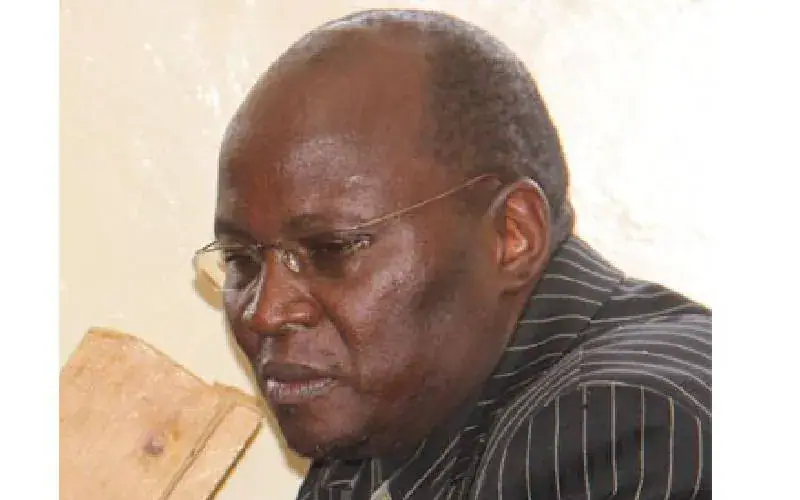
The High Court in Kenya has dismissed a petition by city lawyer Assa Kibagendi Nyakundi to halt an inquest into the death of his son, Joseph Nyakundi, who died on March 17, 2019. Justice Gregory Mutai ruled that the public interest favours the inquiry into the circumstances surrounding Joseph's death. The inquest, numbered E003 of 2023, is before the Milimani Chief Magistrate's Court.
According to court documents, lawyer Nyakundi claims that his son died when his firearm discharged as they drove home from church. Following his son's death, Nyakundi faced several court proceedings, including a manslaughter charge before the Kiambu Chief Magistrate's Court and murder charges before the High Court. A three-judge bench declared the proceedings in the murder cases null and void on January 19, 2023, and directed that any action against Nyakundi be taken within seven days.
Nyakundi argued that the Director of Public Prosecutions (DPP) disregarded those directions by initiating an inquest in April 2023, months after the deadline had elapsed. He asked the High Court to terminate the inquest, declare it unlawful, and find that the proceedings violated his right to a fair trial. The petitioner also challenged the constitutionality of Section 388 of the Criminal Procedure Code, which empowers the DPP to direct a magistrate to conduct an inquiry into the cause of a death.
However, Justice Mutai found that the issues raised did not meet the threshold for certification as substantial questions of law requiring a multi-judge bench. The judge said the question of whether Section 388 was unconstitutional could be determined by a single judge applying established principles of constitutional interpretation. Justice Mutai noted that although the issue had implications beyond the parties, public importance alone was insufficient to justify empanelling several judges.
The judge also declined to suspend the inquest, noting that an inquiry into a death was not a criminal trial and did not determine anyone's guilt. He added that the decision on whether to institute criminal proceedings remained vested in the DPP under Article 157(6) of the Constitution, while the inquest magistrate could not usurp that function. The judge further held that Nyakundi could participate in the inquest and challenge any findings through the processes provided by law.
Justice Mutai emphasized the need to avoid further delays, noting that the death occurred more than seven years ago. He said the petitioner, the interested party, and the public all have an interest in the expeditious determination of the petition. The judge dismissed the application, declined to certify the petition under Article 165(4) of the Constitution, and rejected the request to stay the inquest.
The DPP opposed Nyakundi's application, arguing that the petitioner had not demonstrated the existence of novel or weighty legal questions requiring a multi-judge bench. The deceased's family, listed as an interested party, supported Nyakundi's application. The court's decision allows the inquest to proceed, enabling an inquiry into the circumstances surrounding Joseph Nyakundi's death.
Key points
- The High Court in Kenya has rejected a bid to stop an inquest into the 2019 death of lawyer Assa Nyakundi's son.
- The court ruled that the public interest favours the inquiry into the circumstances surrounding the death.
- The inquest will proceed, enabling an inquiry into the circumstances surrounding Joseph Nyakundi's death.