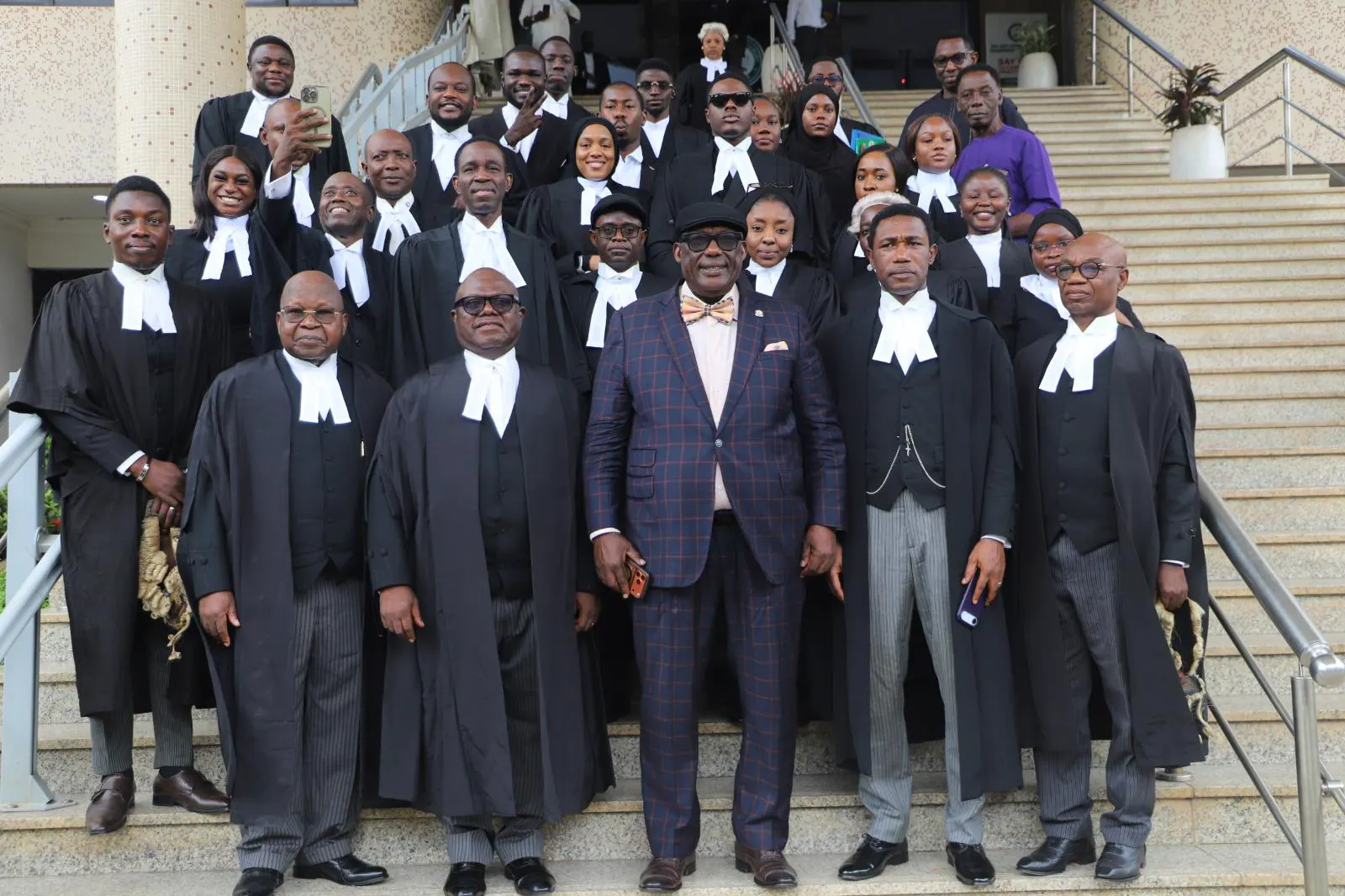
The Federal High Court in Abuja has declared the three-year suspension of Chief J-K Gadzama, SAN, by the Legal Practitioners Disciplinary Committee (LPDC) unconstitutional. Justice Obiora-Atuegwu Egwuatu ruled that the sanction could not be enforced without an effective appellate mechanism. The judgment was delivered on September 28, 2026, and granted the principal reliefs sought by Gadzama in his challenge to the LPDC Direction of July 29, 2026.
The court specifically declared that the implementation or enforcement of the LPDC Direction against Gadzama, in the absence of an effective appellate mechanism, was inconsistent with Sections 36(1), 36(2), and 6(6)(b) of the 1999 Constitution. The court also held that the LPDC lacked jurisdiction in the matter, rendering its decision against Gadzama unenforceable. This judgment has brought into sharp focus the constitutional limits of professional disciplinary powers in Nigeria.
The dispute arose from the administration and distribution of compensation connected with the Zaki-Biam litigation, which involved competing claims concerning legal representation, retainership, and professional fees. Gadzama had maintained that he had never had a professional relationship with Chris Alashi, the complainant before the LPDC, and had never received instructions from him. His case was that he had been separately instructed by some of the judgment creditors involved in the litigation.
The court restrained the respondents from implementing, publishing, transmitting, enforcing, or otherwise giving effect to the LPDC Direction insofar as it affects Gadzama. The court also restrained the Chief Registrar of the Supreme Court from making or causing to be made any disciplinary notation against Gadzama pursuant to the Direction. It equally restrained the publication or dissemination of the LPDC Direction as a final disciplinary determination against the Senior Advocate.
One of the significant questions emerging from the judgment is where the boundary lies between a genuine disciplinary matter and a dispute concerning legal representation and professional fees. Gadzama’s position throughout the proceedings was that Alashi was not his client and that there was no professional relationship between them. The dispute, according to his case, involved separate professional relationships between Alashi and other counsel involved in the litigation.
The Federal High Court’s decision raises questions about the circumstances in which a dispute over professional fees or competing claims to representation can properly become the subject of disciplinary proceedings before the LPDC. The judgment may prompt renewed debate among lawyers, academics, the Body of Benchers, and other stakeholders over the structure of professional discipline and the mechanism for reviewing LPDC decisions.
The implications of the judgment could extend beyond the immediate dispute between Gadzama and Alashi. The decision has placed constitutional safeguards, jurisdiction, and judicial review at the heart of professional regulation within the Nigerian legal profession. While disciplinary institutions have responsibility for maintaining professional standards, the judgment underscores that the exercise of such powers remains subject to constitutional requirements.
Key points
- The Federal High Court declares the LPDC suspension of Chief J-K Gadzama, SAN, unconstitutional due to lack of effective appellate mechanism.
- The judgment raises questions about the boundary between genuine disciplinary matters and disputes concerning legal representation and professional fees.
- The decision has significant implications for professional regulation within the Nigerian legal profession, emphasizing the need for constitutional safeguards and effective appellate mechanisms.