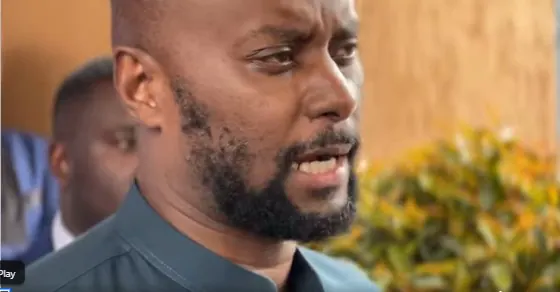
The High Court in Kampala is being asked to dismiss 97 affidavits filed in support of National Unity Platform Secretary General David Lewis Rubongoya's election petition against Minister Minsa Kabanda Nabbengo. The affidavits were submitted late and without the court's permission, according to lawyers representing the Electoral Commission and Minister Kabanda. Rubongoya filed his petition in March 2026, contesting Kabanda's victory in the January 15 parliamentary election for Kampala Central Division.
Rubongoya alleges that the election was marred by irregularities, including alterations to Declaration of Results forms, multiple voting, ballot stuffing, voter intimidation, and errors in vote tallying. Kabanda was declared the winner with 22,280 votes, compared to Rubongoya's 18,211. The petition was heard for the second time before Justice Flavia Nabakooza Kalungi, with Kabanda's lawyer, Ambrose Tebyasa, stating that the court should address objections regarding the affidavits before considering the substantive petition.
Tebyasa pointed out that although the petition was filed on March 30, Rubongoya seemed unprepared, as he was still seeking additional evidence three months later. Electoral Commission lawyer Steven Kalali supported Tebyasa's arguments, noting that objections filed directly impacted the evidence that the court would ultimately consider. Kalali emphasized that election petitions and all supporting evidence should be submitted within specified timelines.
Rubongoya's lawyer, Jude Byamukama, denied the Electoral Commission's position and requested that the court compel it to provide additional electronic copies of Declaration of Results forms and corresponding certified results. Byamukama specifically requested scanned copies of DR forms from several polling stations, arguing that the request was prompted by alleged alterations in some of the DR forms provided by the Electoral Commission.
The petition also raises concerns about Minister Kabanda's competency, arguing that the names under which she was nominated to contest do not match those registered with the National Identification and Registration Authority and her A-level equivalent certificate. The Electoral Commission states that nomination complaints should be handled during the pre-nomination period, not by the court.
Justice Nabakooza concurred with the EC and Kabanda's lawyers, stating that the rules require the court to address interim matters before the substantive hearing. She added that proceeding with the petition before resolving objections to the affidavits would create uncertainty regarding the evidence on which the case would proceed. The judge will deliver a ruling on preliminary issues, including the challenge to the affidavits, on October 7, 2026.
In the substantive petition, Rubongoya seeks to nullify Kabanda's election and declare himself the MP for Kampala Central Division, or alternatively, to order a fresh election. The court's decision on the preliminary issues will determine the next steps in the case.
Key points
- The High Court in Kampala will consider dismissing 97 affidavits filed in support of Rubongoya's election petition.
- The affidavits were submitted late and without the court's permission.
- The court will deliver a ruling on preliminary issues on October 7, 2026.