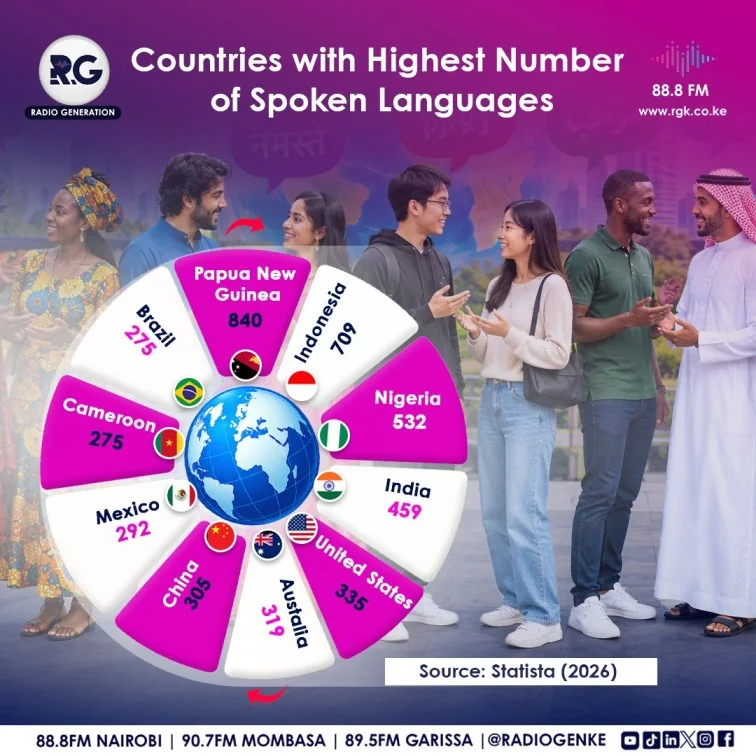
Papua New Guinea is home to more living languages than any other country, with over 840 distinct languages spoken across its communities. This diverse linguistic landscape is a testament to the country's rich cultural heritage. According to Ethnologue Insights, Papua New Guinea's language diversity is unmatched, with many languages spoken by small communities. The country's unique geography, with many isolated valleys and islands, has contributed to the development of this remarkable linguistic diversity.
The ranking of countries by the number of spoken languages is based on data from Statista, which cites Ethnologue Insights as its source. According to this data, Papua New Guinea is followed by other countries with significant language diversity. The data highlights the complexity of language use around the world and the many languages that are spoken in different countries. This information is useful for understanding the cultural and linguistic context of different countries.
The countries with the highest number of spoken languages are often those with diverse geography, large populations, and complex histories. These factors can contribute to the development of many languages and dialects. In addition to Papua New Guinea, other countries with high language diversity include Indonesia, Nigeria, and India. These countries have many languages spoken across their territories, reflecting their complex cultural and historical contexts.
Language diversity is an important aspect of cultural heritage, and efforts are being made to document and preserve languages around the world. Many organizations, including Ethnologue Insights, are working to record and study languages, with the goal of promoting language preservation and documentation. This work is essential for understanding the complexities of human language and culture.
The study of language diversity has many practical applications, including language documentation, language education, and cultural preservation. By understanding the languages spoken in different countries, researchers and policymakers can develop more effective strategies for promoting language preservation and cultural exchange. This knowledge can also inform education policies and language teaching practices.
In Kenya, language diversity is also an important aspect of cultural heritage. The country has many languages spoken across its territory, including Swahili, English, and many local languages. Understanding language diversity in Kenya and around the world can help promote cultural exchange and language preservation. This knowledge can also inform education policies and language teaching practices in Kenya.
Overall, the countries with the highest number of spoken languages are a testament to the diversity and complexity of human language and culture. By studying language diversity, researchers and policymakers can gain a deeper understanding of the complexities of human communication and culture. This knowledge can inform many areas of policy and practice, from language education to cultural preservation.
Key points
- Papua New Guinea has over 840 distinct languages spoken across its communities, the highest number of spoken languages in the world.