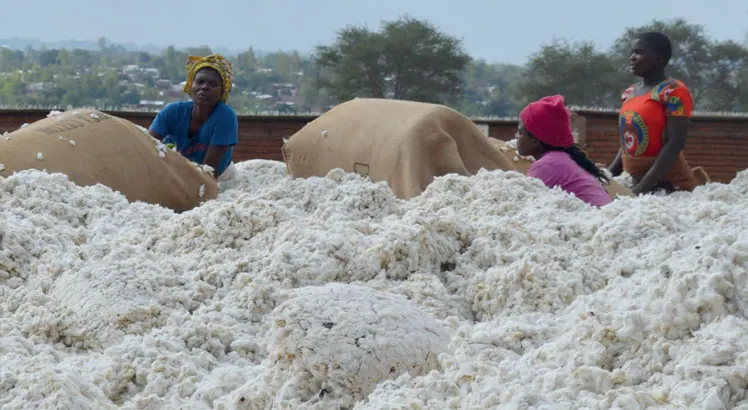
The Cotton Council of Malawi has developed a plan to boost cotton production in the country. The strategy focuses on sustainable input mobilisation and renewed sector coordination. This move aims to improve farmers' access to inputs and strengthen the foundation for increased production and household incomes. The council's efforts are crucial in reviving the industry, which faced a decline in output to 4.2 million kilogrammes in the 2025/26 season from 6.5 million kilogrammes previously.
The Cotton Council of Malawi spokesperson, Prisca Jamali, highlighted the potential for growth in the sector. She noted that with timely planting, effective rainfall, and good agronomic practices, cotton can be a resilient and profitable crop. The current record prices, averaging K1,500 per kilogramme, offer an opportunity for greater production and increased incomes for farmers. The council's data show that the industry is poised for recovery and growth.
The council is preparing for the 2026/27 season, with a strong focus on ensuring timely seed distribution and establishing a sustainable input mobilisation model. This will be done in partnership with banks, ginners, and other sector stakeholders. The goal is to promote cotton production, especially amid forecasts of El Niño conditions, as the crop is drought-tolerant. This approach is expected to improve the overall performance of the sector.
Malawi Cotton Company field manager, Yohane Jim, identified challenges in accessing inputs and low numbers of farmers growing cotton as major issues. He noted that out of 26,000 farmers who grew cotton in the previous season, only 7,000 grew the crop in the current season. This decline is partly attributed to technical challenges experienced in the Cotton Management Information System, a digital platform piloted in 2025 to modernise and track the country's cotton market operations.
Long-time cotton commercial farmer, Duncan Warren, recalled that since 2010, when Malawi achieved an output of about 100,000 metric tonnes, the country has only been producing about 10,000 metric tonnes due to low investment. He noted that unlike other countries that have revamped the industry by subsidising genetically modified cotton seed, Malawi has not explored this opportunity, leaving farmers stuck with local varieties that offer low yields.
The decline in cotton output has had a significant impact on farmers' incomes. In the just-ended season, overall farmers' income declined to K6.3 billion from K7.8 billion the previous year, representing a 19 percent drop. For the past two seasons, Malawi has been targeting to produce 22,000 metric tonnes of cotton but ended up producing less than one third of the target.
The Cotton Council of Malawi is targeting 50,000 metric tonnes of cotton output in the 2026/27 season, which aligns with its long-term objective of reaching 400,000 metric tonnes. The council's efforts, combined with favourable price conditions, are expected to translate into increased incomes for farmers and contribute to the growth of the sector.
Key points
- The Cotton Council of Malawi targets 50,000 metric tonnes of cotton output in the 2026/27 season.
- The council's strategy focuses on sustainable input mobilisation and renewed sector coordination.
- Cotton production in Malawi declined to 4.2 million kilogrammes in the 2025/26 season from 6.5 million kilogrammes previously.