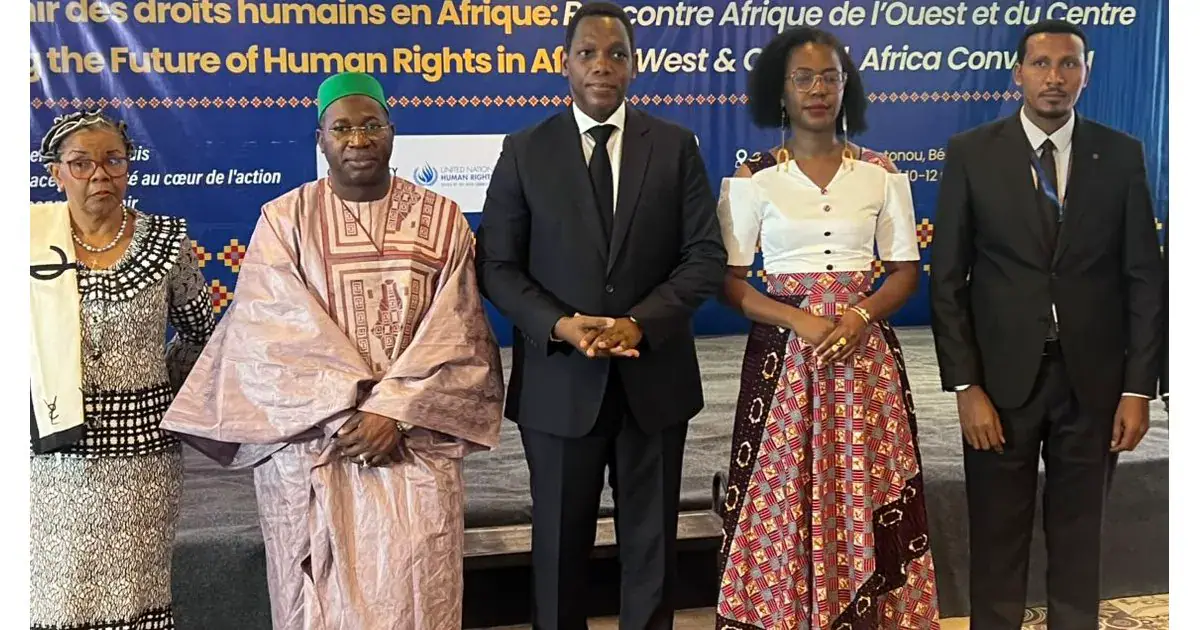
The city of Cotonou, Benin, is hosting a sub-regional meeting focused on the future of human rights in West and Central Africa. The event, which began on November 10, 2026, brings together representatives from regional and national institutions, governments, civil society, academia, youth movements, and development partners. The conference, co-organized by Open Society Foundations, the United Nations High Commissioner for Human Rights (HCDH), the African Commission on Human and Peoples' Rights (CADHP), and the Network of African National Human Rights Institutions (RINADH), aims to rethink the mechanisms of human rights protection based on African realities.
The meeting's theme, "Rethinking the Future of Human Rights in Africa," reflects the need to address the challenges facing human rights institutions in the region. Beresa Abera, from RINADH, highlighted the gap between states' legal commitments and their effective implementation. He emphasized that Africa must rely on its own capacities for analysis and action, rather than relying on external solutions. Abera called on African institutions to examine their policies, governance, and institutional capacities critically.
Nozipho Ndebele, associate director of Open Society Foundations, stressed that human rights protection is inextricably linked to development. She noted that the impact of human rights is measured by their effects on people's daily lives, including their security, access to opportunities, and participation in public life. Ndebele emphasized that human rights must be enjoyed in reality, not just enshrined in constitutions and laws.
The representative of the HCDH, Nouhoum Sangaré, highlighted the need to consolidate gains while preparing responses to current challenges, such as the shrinking civic space, disinformation, hate speech, and conflict. He warned against artificial oppositions between human rights, security, sovereignty, and development, emphasizing that human rights are a condition of trust and a source of state legitimacy.
Dr. Marie Louise Abomo, commissioner of the African Commission on Human and Peoples' Rights, welcomed the progress made since the entry into force of the African Charter, but noted that more needs to be done. She identified three key imperatives for the future of the African system: the effectiveness of rights, anticipation of risks, and strengthened cooperation between institutions. Abomo emphasized the need to translate legal commitments into concrete changes for populations.
The Beninese Minister of Justice and Legislation, Maître Yvon Détchénou, officially opened the meeting, highlighting its relevance to the aspirations of populations and the challenges faced by West and Central African states. He called for the use of Africa's historical heritage, values, and traditions to build responses adapted to contemporary realities. Détchénou emphasized the links between security, fundamental freedoms, economic policies, and the quality of institutions.
The meeting's outcome is expected to be a set of concrete recommendations to strengthen institutions and improve the effective protection of human rights. The conclusions will also inform the continental dialogue scheduled for December 2026, with a view to elaborating a roadmap for a more effective African human rights architecture.
Key points
- The meeting aims to rethink human rights protection mechanisms based on African realities.
- The conference brings together representatives from regional and national institutions, governments, civil society, academia, youth movements, and development partners.
- The outcome is expected to be a set of concrete recommendations to strengthen institutions and improve the effective protection of human rights.
Reporting sources
- Des réflexions à Cotonou pour renforcer les institutions des droits humains · 24 Heures au Bénin