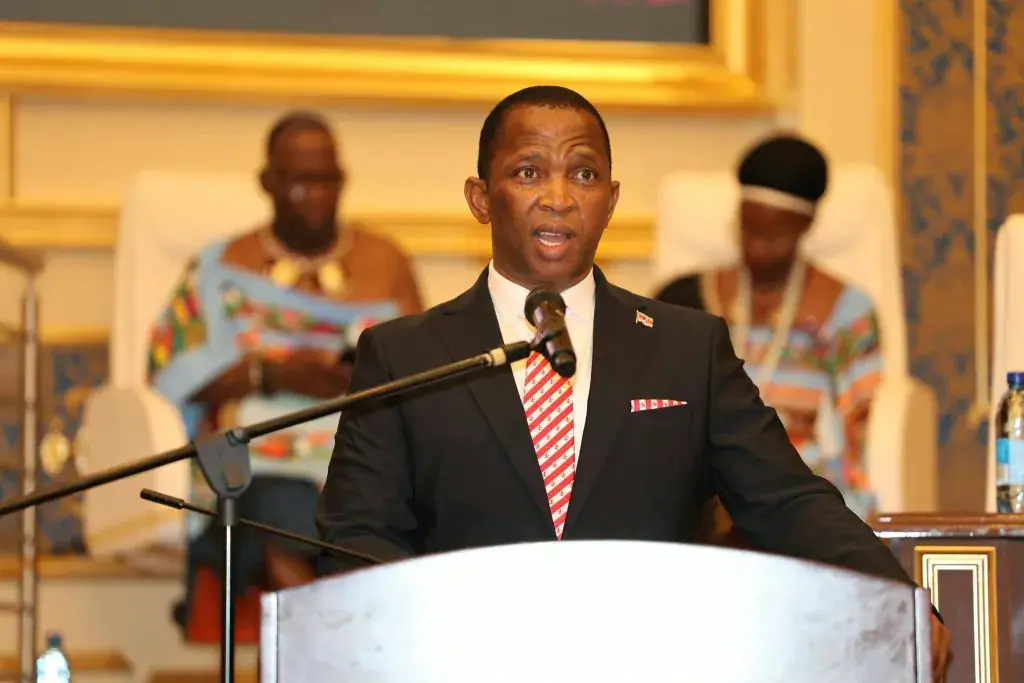
Speaker of the House of Assembly Jabulani Mabuza has stated that corruption remains one of the most significant governance challenges facing Eswatini. This assertion was made during the 59th Plenary Assembly of the SADC Parliamentary Forum, where Mabuza presented a report on the country's progress in implementing selected SADC protocols. The report highlighted Eswatini's efforts to strengthen democratic governance, accountability, and the rule of law. Mabuza emphasized that Parliament is committed to upholding these principles as essential for sustainable development and regional integration.
Mabuza's report noted that Eswatini has established a sound constitutional and legislative framework to advance the objectives of regional instruments, including the SADC Protocol Against Corruption, 2001, and the Revised SADC Principles and Guidelines Governing Democratic Elections, 2021. The country's Constitution provides a foundation for constitutional governance by affirming the separation of powers, judicial independence, and the accountability of public institutions. The Prevention of Corruption Act, 2006, established the Anti-Corruption Commission to investigate and prosecute corruption offences.
Despite these institutional measures, corruption persists as a significant challenge. According to the latest Corruption Perceptions Index, Eswatini scored 23 out of 100, indicating a high perceived level of corruption. Mabuza expressed concern that despite the establishment of the Anti-Corruption Commission and strengthened legislative framework, these efforts have not translated into a commensurate number of successful prosecutions and convictions. This has raised concerns about the effectiveness of anti-corruption agencies.
Parliament has continued to advocate for enhanced institutional effectiveness, adequate resourcing of anti-corruption agencies, and strengthened accountability mechanisms to reinforce public confidence in governance institutions. Mabuza emphasized that Parliament continues to exercise oversight over public expenditure through the annual budget process and engagements with government ministries, constitutional bodies, and public enterprises. This oversight is crucial in promoting prudent financial management, transparency in the utilisation of public resources, and institutional accountability.
Effective financial oversight is considered one of the most important preventive measures against corruption and contributes directly to the objectives of the SADC Protocol Against Corruption. Mabuza's report highlighted that Parliament has intensified its advocacy for the implementation of regional protocols through robust legislative scrutiny, institutional oversight, and public participation. This has been done to ensure that Eswatini meets its regional commitments to combat corruption and promote good governance.
The country's efforts to strengthen democratic governance and accountability have been ongoing. Mabuza noted that particular emphasis has been placed on promoting transparency in the utilisation of public resources and institutional accountability. This is essential in preventing corruption and ensuring that public resources are used for their intended purposes. The report also highlighted the importance of regional cooperation in addressing governance challenges.
Eswatini's commitment to addressing corruption and promoting good governance is evident in its continued efforts to strengthen anti-corruption laws and institutions. However, the persistence of corruption as a significant challenge underscores the need for sustained efforts to address this issue. The country's progress in implementing regional protocols and its commitment to democratic governance and accountability will be crucial in addressing governance challenges and promoting sustainable development.
Key points
- Corruption remains a significant governance challenge in Eswatini despite efforts to strengthen anti-corruption laws and institutions.
- The country's Speaker, Jabulani Mabuza, has emphasized the need for enhanced institutional effectiveness and accountability mechanisms to address corruption.
- Eswatini has established a sound constitutional and legislative framework to advance the objectives of regional instruments, including the SADC Protocol Against Corruption.
Reporting sources
- Corruption remains most significant governance challenge – Speaker · Swazi Observer