Corruption within South Africa's police force is a pervasive issue that affects not only the institution but also the communities it serves. Members of the South African Police Service who act with integrity and report wrongdoing often face severe consequences, including being labelled disloyal, excluded from professional networks, denied promotion, transferred to undesirable posts, or pressured to leave the service. This has created a culture of fear and silence within the police force.
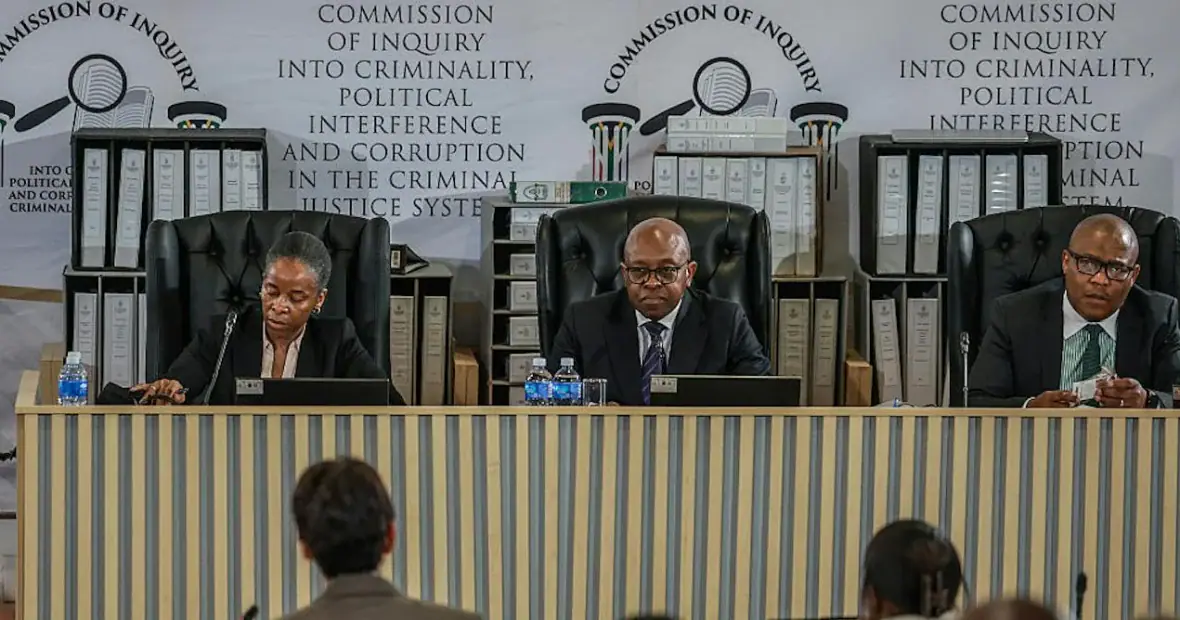
The issue of corruption within the police force was highlighted in an interim report released by the Madlanga Commission of Inquiry, which was established by President Cyril Ramaphosa in 2025 to investigate criminality, political interference, and corruption in the criminal justice system. The report named 14 senior police and municipal officials for investigation into alleged corruption and political interference. Public hearings have also heard allegations that corruption has reached senior levels of policing.
The consequences of not protecting whistleblowers are severe. Research has shown that people who report wrongdoing may face retaliation, isolation, career damage, and threats to their safety, even where formal protections exist. In South Africa, Corruption Watch, a not-for-profit anti-corruption agency, has documented five decades of whistleblowers facing dismissal, intimidation, social isolation, and even murder. This has created a culture of silence within the police force, where officers are reluctant to report wrongdoing.
Experts argue that protecting police members who report corruption is not simply a workplace welfare issue but a constitutional obligation. The state has a duty to make the rights of police members effective, and failing to do so allows corruption to continue harming the communities that police are meant to serve. A protection model based on three pillars has been proposed: police members have rights, the state has a duty to make those rights effective, and protecting members is a precondition for human security.
Retaliation within the police service is often informal and difficult to prove, taking forms like stalled promotions, undesirable transfers, exclusion from professional networks, reputational labelling, and pressure to resign rather than dismissal. Research has also identified four reinforcing dynamics that produce silence: fear of retaliation, loyalty pressures, moral rationalisation, and distrust of reporting channels. This has direct implications for the South African Police Service, which must build a culture of trust, respect, collective identity, and justice.
The "blue wall of silence" within policing adds another layer of complexity to the issue. Research shows that loyalty, fear of professional consequences, and norms of solidarity can discourage officers from reporting misconduct. This culture can turn whistleblowing from a professional duty into a perceived betrayal. Officers may fear being called a "snitch", losing informal support, or being treated as an enemy by colleagues and supervisors.
The cost of silence is severe, with wrongdoing becoming harder to expose, corrupt networks being protected, and accountability being delayed. Communities continue to experience organised crime, drug trafficking, and weakened policing. Afrobarometer reports that South Africans' views of the police are shaped by perceived corruption and low trust. To address this, the South African Police Force and the Independent Police Investigative Directorate should establish secure, anonymised reporting channels that are independent of local command structures.
Key points
- Protecting whistleblowers is crucial to addressing corruption within South Africa's police force.
- Corruption within the police force has severe consequences for the communities it serves.
- A culture of trust, respect, collective identity, and justice must be built within the police force to encourage whistleblowing.