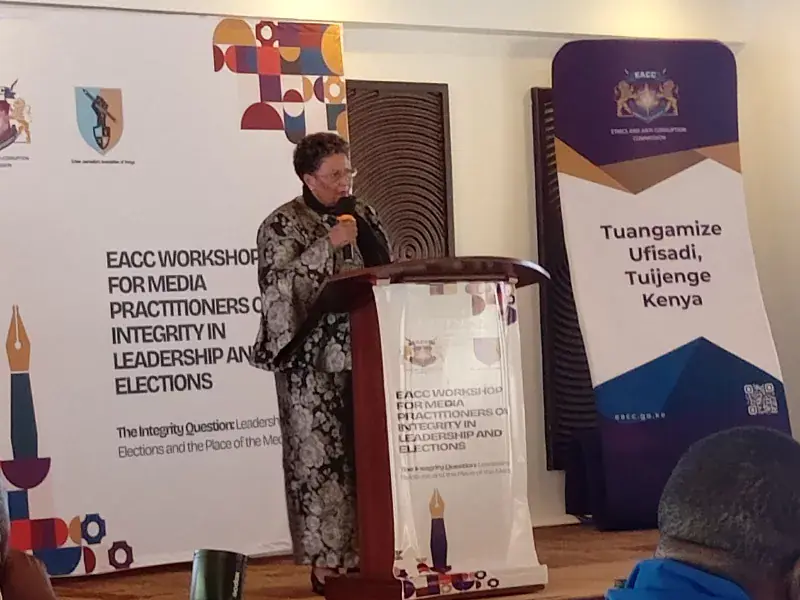
Court of Appeal Judge Fatuma Sichale has identified corruption as the primary challenge facing Kenya's development, comparing the country's situation to that of Singapore. According to Sichale, while Singapore is nearly free of corruption, Kenya continues to grapple with widespread graft. This, she believes, is the main difference between the two nations.
Judge Sichale emphasized that the fight against corruption requires a collective effort from all Kenyans, not just investigative agencies and the Judiciary. She acknowledged the role played by the Ethics and Anti-Corruption Commission (EACC) in pursuing corruption cases and the Judiciary's efforts to promote accountability and transparency. However, she stressed that these efforts would not succeed without the involvement of ordinary citizens.
The judge drew from her experience at the Corruption Commission, where she served for five years, to illustrate the limitations of a single institution in fighting graft. She noted that no single institution could win the war against corruption and that it was upon all Kenyans to take responsibility for confronting corruption in their respective positions.
Judge Sichale also highlighted the crucial role of investigative journalism in exposing graft, noting that media reports often provide investigative agencies with leads that would otherwise remain undiscovered. She urged media practitioners to continue using their platforms to promote accountability, stressing the need for every professional to take responsibility to contribute to the fight against corruption.
The judge cited a case involving a magistrate accused of colluding with an applicant to obtain letters of administration for a person who was still alive. The applicant had allegedly sought to withdraw Sh15 million from the deceased person's bank account using the documents. Investigations revealed that several individuals, including a local chief, a registrar of deaths, guarantors, and a doctor, had allegedly provided misleading information or documents.
Judge Sichale used this case to demonstrate how institutional efforts to uphold integrity could be undermined when individuals entrusted with public responsibilities participated in wrongdoing. She emphasized that the fight against corruption required a collective effort and that every individual had a role to play in promoting accountability and transparency.
In conclusion, Judge Sichale's remarks underscore the need for a collective approach to fighting corruption in Kenya. With the country's development hindered by widespread graft, it is clear that a concerted effort from all stakeholders is necessary to achieve a Singapore-like level of development. The judge's call to action serves as a reminder that every individual has a responsibility to contribute to the fight against corruption.
Key points
- Corruption is Kenya's biggest obstacle to achieving Singapore-like development.
- The fight against corruption requires a collective effort from all Kenyans.
- Investigative journalism plays a crucial role in exposing graft.