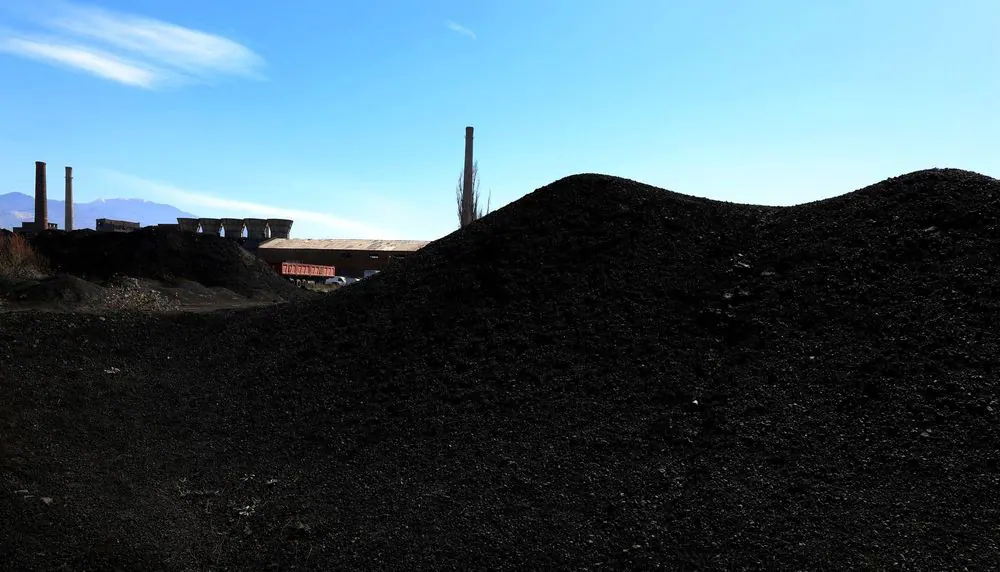
The Albanian city of Elbasan has been shrouded in a dense cloud of stinging smoke from a fire at a chrome factory, AlbChrome, owned by the Turkish group Yildirim. Environmental inspectors discovered 318 tonnes of toxic industrial dust stored for months with no transfer contracts for treatment or safe disposal. The site was temporarily shut, but it is the latest in a series of disasters to affect one of Europe's most polluted industrial cities.
Elbasan has been plagued by environmental crimes since the 1970s when Chairman Mao's China helped Albania's then-communist dictator Enver Hoxha build a sprawling complex of 500 factories. The city's pollution problems have been exacerbated by corruption, with a vast multi-million-dollar scam involving a "ghost" incinerator for the capital Tirana that was never built. Top officials, including an environment minister, were jailed for graft, and the country's former deputy prime minister is on the run.
A fire in July 2025 at a waste dump next to homes outside Elbasan led to concentrations of toxic furans, dioxins, methane, and volatile organic compounds more than seven times above safety limits. Local resident Fatmira Serjani, who suffers from asthma, recalled the "terrible nights and crushing mornings" and is taking the city of Elbasan and the manager of the Eco-Elb landfill site to court for air pollution. Her lawyer claims the fire was "probably deliberate".
Environmental engineer and former Elbasan councillor Ahmet Mehmeti said some factories on the site turn off filters on their chimneys to save money, adding new layers of toxic dust to the two million tonnes of hazardous material inherited from the communist era. An AFP team observed a chimney spewing out black smoke at the site, which resembles a black lunar landscape. Waste stored since the communist era or produced by current factories contains chromium, nickel, and zinc, which seep into the water and end up in the fruit and vegetables on local plates.
Genetic diseases and cancers have been rising in the region for years, with environmental experts citing lead emissions as a cause of brain damage, especially in children. Albanian authorities have not responded to questions on the impact of pollution on people's health in Elbasan, but a 2023 report estimated that the mortality rate from air pollution in Albania is three times the European average. The country has not had a single working air monitoring station despite EU funding for equipment.
The "phantom incinerators" scandal, which involved the misuse of nearly 150 million euros in public funds, is a prime example of corruption in Albania's waste management system. The Elbasan incinerator, which cost 26 million euros, is now a rusting hulk after barely operating, while the Fier facility never functioned. Critics say the lack of transparency and misappropriation of public funds have contributed to the environmental catastrophe in Elbasan.
The repeated environmental failures and corruption scandals may slow Albania's hopes of joining the European Union in 2030, with neighbouring Montenegro seen to be pulling ahead. EU Enlargement Commissioner Marta Kos warned that having the best legislation for fighting corruption is not enough if it is not accepted in the country. Residents like retired teacher Lirie Curri, who showed AFP the X-rays of her damaged lungs, are paying the price for the pollution, with many calling for action to address the environmental crisis.
Key points
- Corruption and lack of transparency have contributed to the environmental catastrophe in Elbasan.
- The city's pollution problems have been exacerbated by the misuse of EU funds and the "phantom incinerators" scandal.
- Genetic diseases and cancers have been rising in the region due to lead emissions and other pollutants.