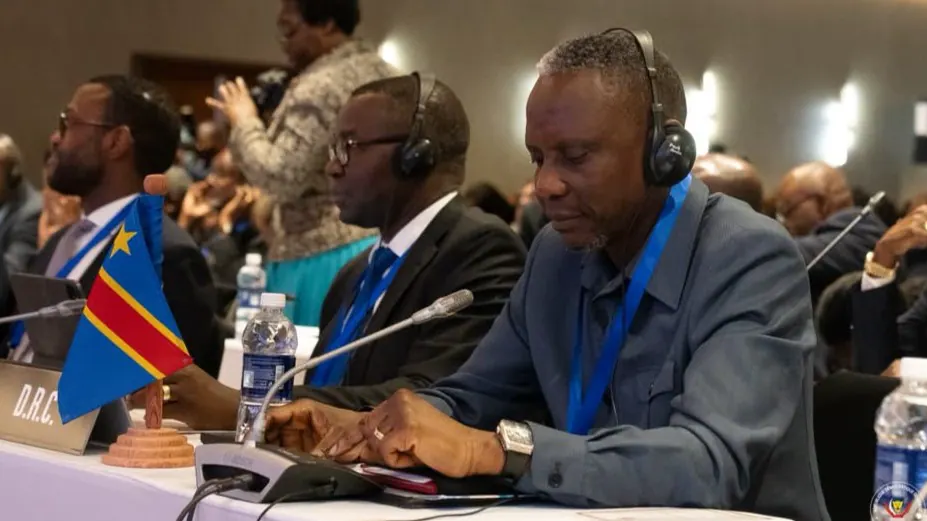
The Minister of Infrastructure and Public Works, John Banza, has outlined three key priorities for the Democratic Republic of Congo at the second Lobito Corridor coordination meeting held in Lusaka, Zambia. The priorities include strategic and structuring road networks, urban modernization, and technical engineering through the Project to Support Connectivity and Transport (PACT), funded by the World Bank. Banza emphasized the need to lay the foundations for the modernization of the Democratic Republic of Congo.
Banza presented a vision to reform the Lobito Corridor program, transforming it from a project focused on railway interconnection to a comprehensive and multisectoral development corridor. The strategic objective is to make this axis a driver of growth and integrated development, rather than just a route for transporting resources. The minister highlighted the need to turn the corridor into a strategic platform for industrialization, regional economic integration, and food security.
The Democratic Republic of Congo has made significant institutional and operational progress in recent years, including a railway partnership with the signing of the Sakania-Tenke-Dilolo agreement, governance through the creation of an inter-ministerial technical committee dedicated to the Lobito Corridor, and planning with the development of a master plan for the corridor's development on national territory.
Banza appealed to financial partners, including the World Bank, the African Development Bank, and the European Union, to transform the ambitions surrounding the Lobito Corridor into concrete achievements. He emphasized the need to strengthen cooperation between the DRC and the European Union. The minister also highlighted the importance of connecting the Lobito Corridor to other strategic axes, modernizing road and river infrastructure, and strengthening the national network.
The development of the Lobito Corridor should not be considered in isolation, but rather as part of a broader strategy to connect different axes and build an integrated national and regional system. This strategy should also incorporate the Congo River and other navigable waterways. Banza stressed the need for studies on dredging, buoying, and port construction to modernize the river.
Since his appointment as Minister of Infrastructure, Banza has prioritized making infrastructure a lever for development, aiming to strengthen territorial connectivity and link different regions of the DRC. The goal is to bring economic and social opportunities closer to the population. The Lobito Corridor development plan is part of a larger program to connect 22,800 kilometers of roads and integrate them into the existing 135,800-kilometer national road network.
The modernization of the Lobito Corridor is expected to have a positive impact on the country's economic and social development. The project aims to improve the living standards of the population by facilitating the circulation of people and goods, and creating new opportunities for economic growth. The success of the project will depend on the collaboration of various stakeholders, including financial partners, international organizations, and local communities.
Key points
- The three key priorities for the Democratic Republic of Congo are strategic and structuring road networks, urban modernization, and technical engineering through the Project to Support Connectivity and Transport (PACT).