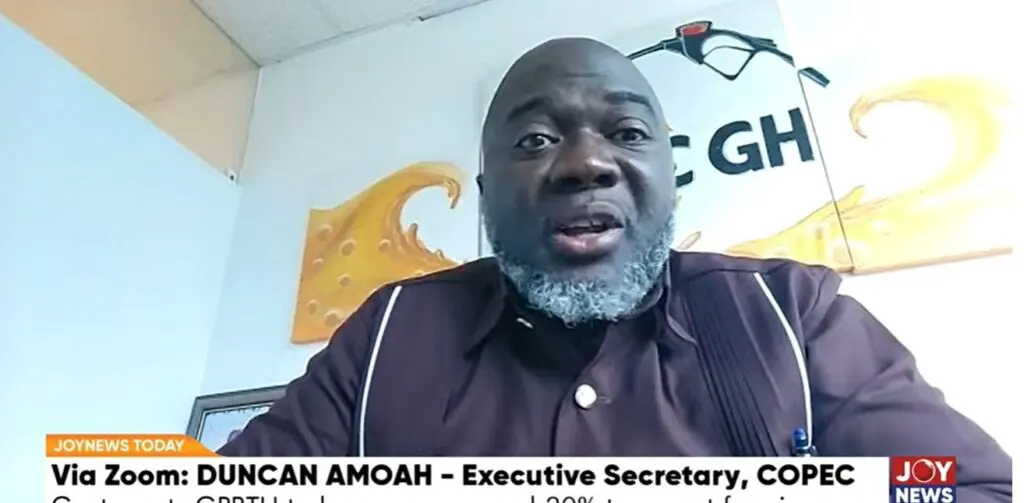
The Chamber of Petroleum Consumers (COPEC) has expressed support for a potential increase in transport fares in Ghana, citing rising fuel costs and vehicle maintenance expenses faced by commercial drivers. COPEC Executive Director Duncan Amoah stated that some adjustment to fares appears justified given the financial pressures on drivers. He argued that allowing drivers some increase would be fair, considering the current economic situation. This development comes as the Ghana Private Road Transport Union (GPRTU) continues talks with the government over a fare adjustment.
According to Amoah, the GPRTU initially proposed a 30% increase in transport fares, but he expects the final figure agreed with the government to be lower, around 15 to 20 percent. He emphasized that this was his own expectation and not a confirmed outcome of the talks. Amoah also pointed to the government's GHS2-per-litre intervention on diesel as a factor that has helped keep fuel prices manageable for transport operators. However, he noted that the subsidy has not fully offset the broader rise in operating costs that drivers continue to face.
The fuel cost pressures feeding into this debate have been building for weeks, with Ghana's pump prices coming under strain from global oil market shocks. Brent crude had topped $107 a barrel after a Saudi pipeline shutdown, highlighting how exposed local pump prices are to global events. The National Petroleum Authority's chief executive has also stated that diesel would cost GHS28 a litre without government support, underscoring the significant role of state intervention in cushioning the current price.
The strain on transport operators has also been visible in other areas of the industry, including a warning from the Progressive Transport Owners Association that vehicles could be parked due to an unresolved spare parts crisis. Amoah acknowledged that commuters would bear the brunt of any fare increase, as their salaries have not been increased. He suggested that any conversation about raising fares should be paired with a broader look at workers' incomes and possible salary adjustments to help cushion workers against the rising cost of transport.
Amoah proposed that organised labour, including the Trades Union Congress (TUC), should engage the government and employers on possible salary adjustments. He emphasized that the specifics of any such negotiation would be left to the TUC. This suggestion aims to mitigate the impact of fare increases on commuters who rely heavily on public transport. Amoah's comments highlight the complexities of the fare adjustment debate and the need for a comprehensive approach.
Beyond the immediate fare debate, Amoah renewed a call for a more scientific method of setting transport fares going forward. He suggested that the GPRTU and the Ministry of Transport develop a cost-per-kilometre and cost-per-passenger model that would factor in distance, fuel consumption, vehicle maintenance, and passenger numbers. Such a system would allow fares to be calculated on clearer, objective grounds rather than through periodic negotiations whenever operating costs shift.
Talks between the GPRTU and government have been ongoing for several months, but a firm date for announcing a final fare figure has not been indicated. It remains unclear whether the TUC or government will act on Amoah's suggestion to review workers' salaries alongside any new transport fares. The outcome of these talks will have significant implications for transport operators and commuters in Ghana.
Key points
- COPEC supports a transport fare increase due to rising fuel costs but notes commuters will bear the brunt due to stagnant salaries.
- A proposed 30% fare increase may be adjusted to 15-20% after negotiations between GPRTU and government.
- COPEC calls for a scientific method to set transport fares and considers linking fare adjustments with salary reviews.