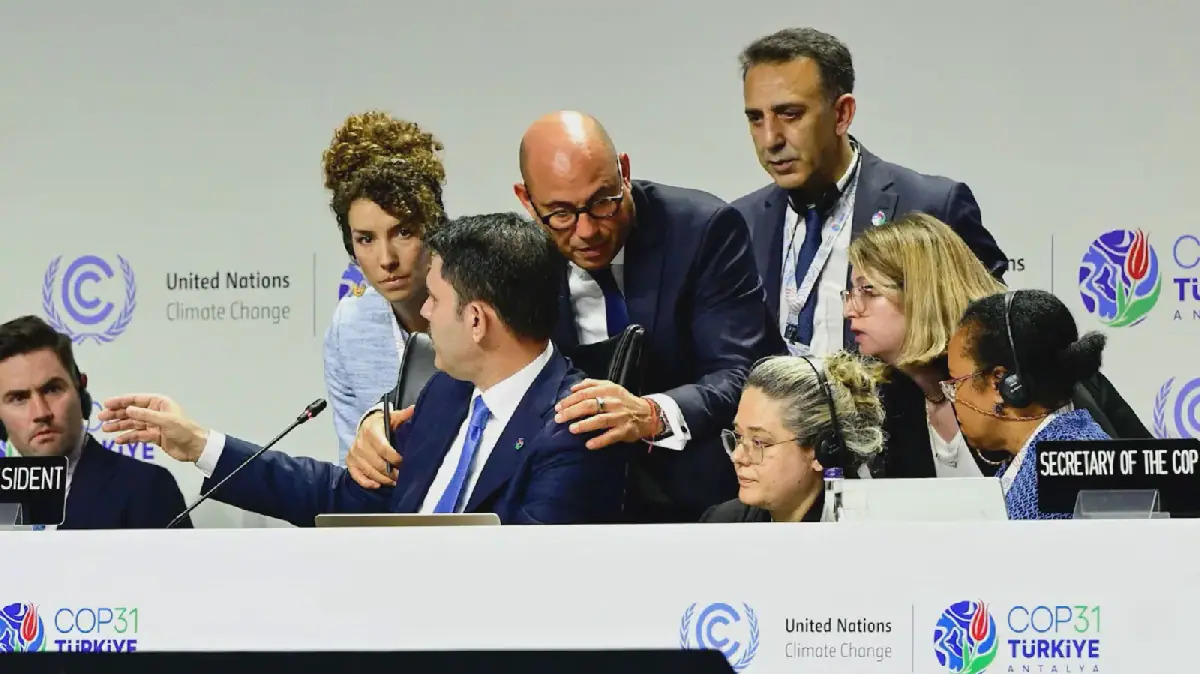
The recently concluded COP31 talks in Antalya, Türkiye, ended without a climate pact due to disagreements over fossil fuels and finance. Rising inflation, worsening poverty, and energy shortages have forced governments to prioritize immediate economic pressures over climate commitments. This has weakened global efforts to cut greenhouse gas emissions and accelerate the transition to cleaner energy. The Nigerian delegation, with 1,453 participants, was the third largest at the conference.
The pressure to contain energy prices, protect households, and sustain growth is competing with pledges to phase out fossil fuels, expand renewables, and meet emissions targets. Developing countries, where governments must provide electricity, create jobs, subsidize essentials, and finance infrastructure while addressing climate change, feel this pressure most acutely. For many households, affordable food, transport, electricity, and cooking fuel come before climate policies that could raise living costs.
The climate talks, initially scheduled to end on November 20, ran over time as countries sought consensus on a revised draft. COP31 President Murat Kurum submitted a revised proposal early Sunday to bridge divisions between co-hosts Türkiye and Australia and participating countries. However, earlier drafts drew objections from Europe, Africa, Latin America, and the Pacific after explicit calls to phase out fossil fuels were removed.
A central proposal sought to raise electricity's share of global final energy consumption from about 23 percent to 35 percent by 2035. Other initiatives addressed methane reduction, zero waste, and energy-efficient buildings. Developing and climate-vulnerable countries demanded predictable adaptation finance and implementation of existing commitments. Their priorities included science, fossil fuels, climate finance, clean electrification, methane reduction, and international cooperation.
By the close of COP31, negotiators had failed to reach a climate pact amid divisions over fossil fuels. Kurum acknowledged the impasse, saying, "I understand that there is no agreement on this text. For that reason, these decisions have not been adopted." The deadlock reflected differences between climate-vulnerable nations and countries seeking a stronger move away from coal, oil, and gas, and those protecting fossil-fuel-dependent economies.
Critics said the texts weakened earlier commitments and fell short of the action needed. UN Secretary-General António Guterres expressed disappointment, saying, "There may be no consensus in the negotiating room, but there is no ambiguity in the science. The take-home message from COP31 is clear: The world must do much more to confront the climate crisis. And it must do it now." The International Energy Agency's World Energy Outlook 2026 shows how energy insecurity can undermine climate ambitions.
The World Bank estimates that 811 million people—one in 10 globally—live on less than $3 daily, while about 3.7 billion survive on less than $8.30. Such households are especially vulnerable to increases in food and energy prices. Managing Director of Azura Power, Edu Okeke, said Nigeria and other African countries should prioritize development and energy security before accepting restrictions on fossil-fuel investment.
Key points
- Climate negotiators at COP31 fail to agree on text over fossil fuels and finance.
- Rising inflation, energy crisis, and poverty deepen dilemma for developing countries.
- Global efforts to cut greenhouse gas emissions and accelerate transition to cleaner energy weakened.
Reporting sources
- The Guardian · The Guardian