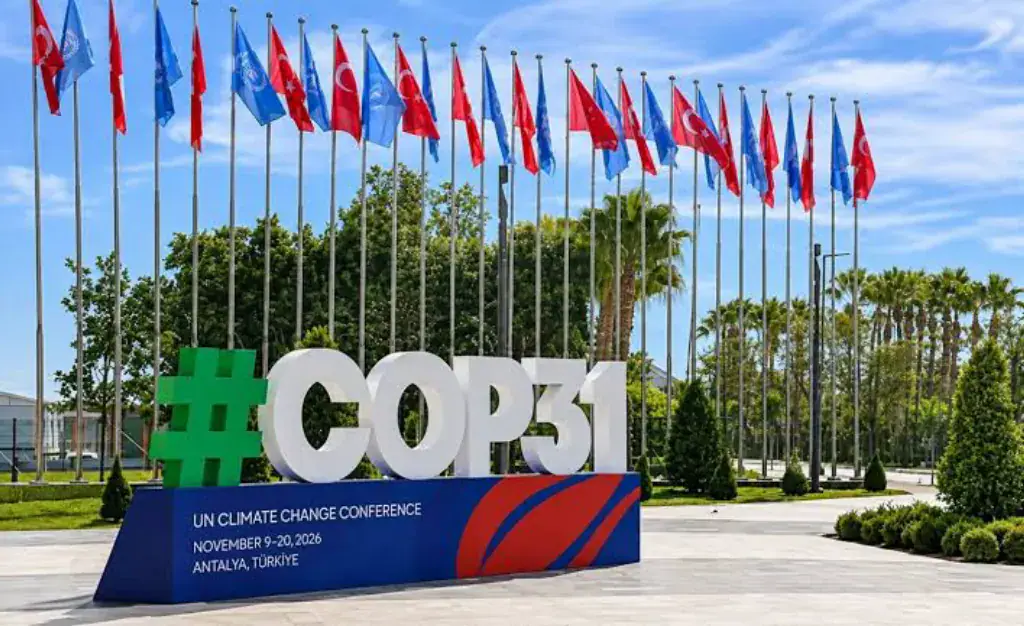
The presidency of COP31 has published a first summary of proposals from countries, ranging from the elimination of fossil fuels to increased financing for adaptation. These proposals may eventually be integrated into the final political text of the summit. The document reflects a wide range of concerns and points of divergence expressed by delegations at the 31st United Nations Conference on Climate Change.
The summary document, resulting from consultations with delegations on Tuesday and Wednesday, acknowledges that it does not reflect consensus or the level of support for each proposal. Some proposals were presented by several countries, while others were presented by only a few. The document includes proposals to reaffirm multilateralism and the Paris Agreement, as well as respond to the anticipated exceedance of the 1.5°C limit.
Proposals also include accelerating mitigation by reducing greenhouse gas emissions and strengthening adaptation to the climate crisis. The document sets a goal to increase the share of electricity in global energy consumption to 35% by 2035, a priority of the Turkish presidency. Renewable energy, energy efficiency, power grids, and energy storage are also mentioned.
The proposed roadmap by Brazil to abandon fossil fuels and combat deforestation is part of the document. It also includes proposals to establish a reference base for the commitment to triple adaptation financing and promote financial instruments that do not increase debt. Consultations will continue, and delegations are expected to present written proposals over the weekend.
A first draft of the final text may be released early next week. The approval of the final declaration, which gathers the main political orientations of the summit, requires consensus. COP31 will conclude on November 20. Diana Acconcia, representative of the European Commission, stated that the summary "faithfully reflects the expressed positions," including those of Europe.
However, Acconcia clarified that it serves as a basis for further consultations and not for negotiating an agreement. Jasper Inventor, head of the Greenpeace delegation at COP31, argued that governments should combine proposals and develop "a recipe with real climate actions, rather than a diluted agreement that does not reach the minimum common denominator."
Alden Meyer, a specialist at the E3G think tank, considered that "the big question is what will resist the opposition of different groups of countries." The presidency of the negotiations "must be very cautious, as the legitimacy of the entire process is being questioned by certain groups of countries," he added, referring to Russia and the Arab group.
Key points
- Proposals at COP31 include the elimination of fossil fuels and increased financing for adaptation.
- The summary document does not reflect consensus or the level of support for each proposal.
- A first draft of the final text may be released early next week.
Reporting sources
- COP31: Presidência divulga primeiro resumo das propostas dos países · Expresso das Ilhas