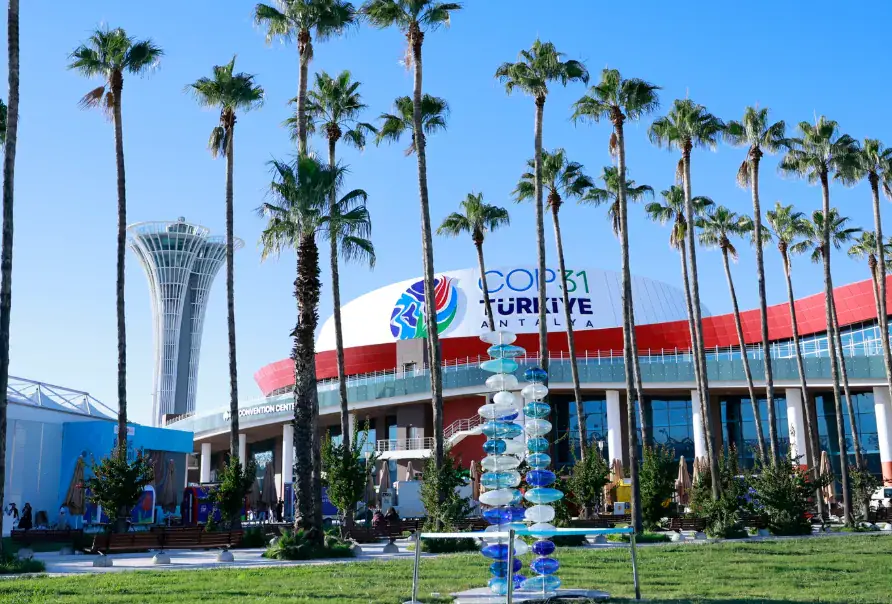
The COP31 conference started on November 9 in Antalya, Turkey, with a call from UN Secretary-General Antonio Guterres for countries to take urgent action on climate change. Guterres stated that the world has entered a new era of extreme climate events and emphasized the need for countries to reduce emissions, transition to clean energy, and provide financial support to vulnerable countries. He urged leaders to show commitment to addressing the climate crisis.
The opening ceremony was attended by Andre Correa do Lago, the president of the previous COP, who handed over the responsibility to Murat Kurum, the Turkish Minister of Environment. Correa do Lago emphasized the importance of moral principles in addressing climate change and the need for the world to come together to find solutions. However, disagreements persisted over the financing of climate change mitigation and adaptation efforts, particularly with regards to the tripling of adaptation finance.
A major point of contention was the financing of climate change mitigation and adaptation efforts. Developed countries have historically been responsible for the majority of greenhouse gas emissions and have committed to providing financial support to developing countries to help them cope with the impacts of climate change. However, the exact terms of this support remain unclear. Sources indicate that the tripling of adaptation finance will not be officially inscribed on the agenda but may be discussed under other topics.
The conference aims to translate previous commitments into concrete actions. The past year has seen a series of devastating climate-related disasters, including floods in Nepal, heatwaves in Europe, and forest fires in Indonesia. The global energy crisis, triggered by the conflict in the Middle East, has also put pressure on governments to prioritize climate action. The scientific consensus is that the planet is on a trajectory that is incompatible with the 2015 Paris Agreement goal of limiting warming to 1.5°C above pre-industrial levels.
The Turkish presidency of COP31, supported by Australia, is focusing on electrification as a key theme. Turkey's goal is to increase the share of electricity in global energy consumption to 35% by 2035, up from around 20% currently. However, this initiative may face resistance from countries that rely heavily on fossil fuels. The European Union is advocating for "clean" electrification, which implies a reduction in coal, oil, and gas-fired power generation.
The absence of the US administration, led by President Donald Trump, has raised concerns about the country's commitment to climate action. As the world's largest economy and second-largest emitter of greenhouse gases, the US plays a crucial role in global climate efforts. The effectiveness of the Turkish-Australian partnership in facilitating negotiations and finding compromises will be closely watched.
The outcome of COP31 will depend on the ability of countries to find common ground on key issues, including financing, electrification, and reducing emissions. The conference has the potential to drive meaningful progress on climate action, but it will require countries to show a willingness to compromise and take concrete steps towards a more sustainable future.
Key points
- The conference aims to translate previous commitments into concrete actions to address the climate crisis.
Reporting sources
- La COP31 s’ouvre à Antalya, divergences autour des financements · Challenge Hebdo