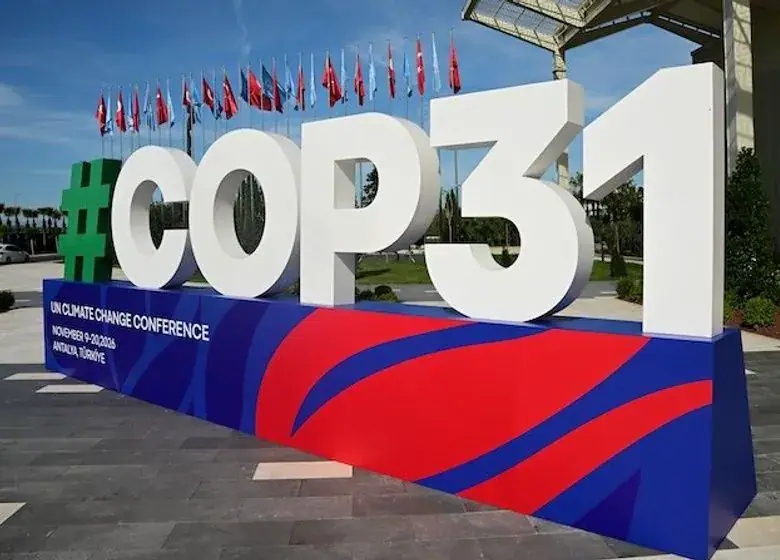
The 31st Conference of the Parties (COP31) in Antalya, Turkey, concluded on November 22, 2026, without adopting its main political text, known as the "cover decision." According to the Associated Press, negotiations stalled due to irreconcilable differences. The talks were primarily hindered by disagreements over fossil fuels, climate financing, carbon capture, and the rule of consensus.
A major point of contention was the phasing out of fossil fuels. The European Union and several countries pushed for a clear commitment to gradually exit coal, oil, and gas. However, this was opposed by hydrocarbon-producing countries, including Saudi Arabia and Russia. The final draft presented by the Turkish and Australian presidencies did not mention fossil fuels, which was unacceptable to the European Union and vulnerable countries.
Climate financing was another significant area of disagreement. Developing countries demanded additional financial support to cope with climate change impacts such as droughts, floods, and rising sea levels. However, proposed financial commitments did not meet the expectations of several delegations. Discussions struggled with the modalities of financing adaptation measures that would help populations and economies better withstand climate change effects.
The project agreement also gave prominence to carbon capture and storage technologies. These processes involve recovering CO2 emissions from industrial activities and storing them to limit their atmospheric presence. However, this approach drew reservations from several countries and environmental organizations. They argued that relying on these technologies without a clear reduction in fossil fuel use risked prolonging dependence on oil, gas, and coal.
The rule of consensus, which requires all parties to agree on major decisions, prevented the adoption of the text. Several countries refused to support the proposed compromise, with the European Union and island states rejecting a text that did not explicitly mention fossil fuels. Conversely, other countries opposed any formulation that could further constrain their hydrocarbon production or consumption.
Despite the failure to adopt a global political agreement, some progress was made on specific issues, such as electrification. Nearly 100 countries supported an initiative to increase the share of electricity in global final energy consumption to 35% by 2035. However, sensitive issues like transitioning away from fossil fuels and adaptation financing remain unresolved.
The lack of agreement has drawn criticism from various quarters. UN Secretary-General António Guterres expressed deep disappointment, stating that "every delay makes our task more difficult and more costly." As climate change effects intensify, countries continue to struggle with collective responses. Several issues will need to be revisited during future climate negotiations in Ethiopia.
Key points
- The COP31 failure highlights the challenges in reaching a global consensus on climate change mitigation and adaptation strategies.
- The absence of a clear commitment to phase out fossil fuels and provide adequate climate financing remains a significant obstacle.
- The outcome of COP31 underscores the need for countries to intensify efforts to address climate change impacts and develop effective collective responses.