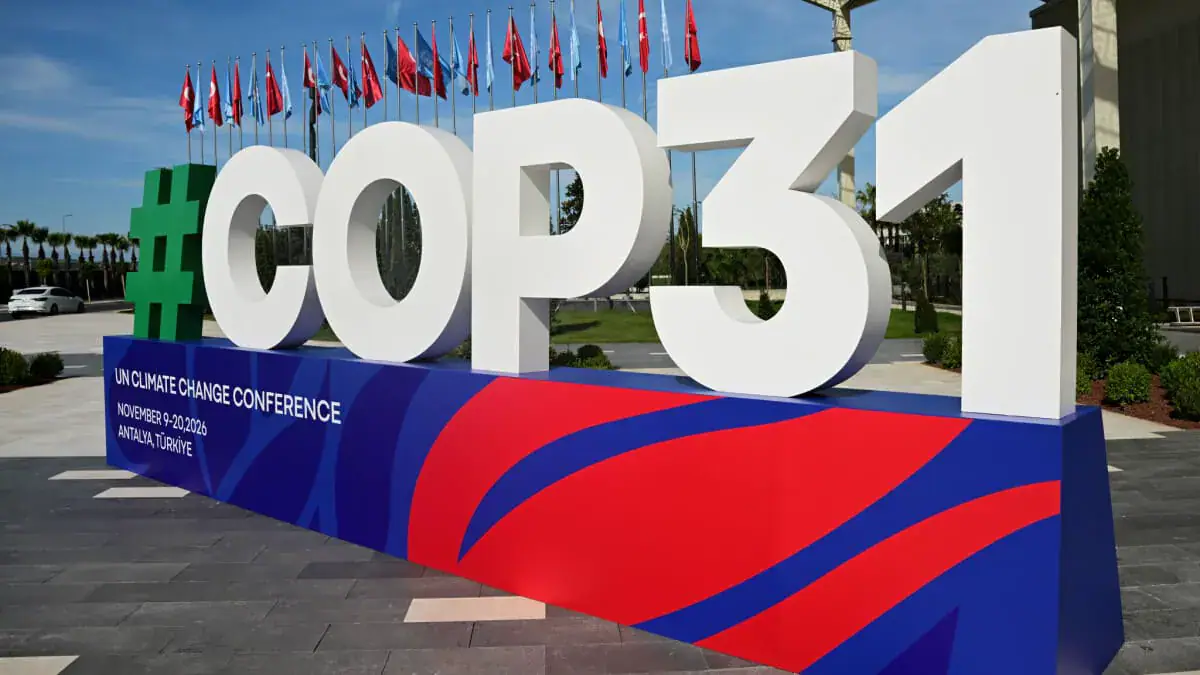
The COP31 conference, held in Antalya, Turkey, concluded on Sunday, November 22, without a comprehensive agreement. Despite two weeks of negotiations and 49 hours of extensions, the longest UN climate conference in history ended in failure. The conference's co-president, Chris Bowen, acknowledged that parties were unable to agree on the final text. Turkish Environment Minister Murat Kurum, the conference president, also noted the impasse in the closing session.
A last-minute text proposed by the presidency was rejected because it did not mention fossil fuels. The Irish Minister for Climate, Darragh O'Brien, whose country currently presides over the EU, stated that the Union would not approve a decision that omitted even a mention of the primary driver of climate change. The Panama, the Marshall Islands, Vanuatu, and Belize shared the same determination. Discussions were prolonged due to opposition from oil and gas-producing countries to any mention of these energies in the final document.
Christiana Figueres, who worked on the adoption of the Paris Agreement, noted that over 130 countries refused to sign an agreement that would have obscured the reality of the crisis. This event is historic, as it is the first time since the 2009 Copenhagen summit that participating countries have failed to adopt a comprehensive final agreement. It also marks a setback compared to COP28 in the United Arab Emirates, which for the first time acknowledged a commitment to move away from fossil fuels, a formula that this year's project did not repeat.
The text lacked specificity on climate financing and was rejected by many countries, including European states and Pacific island nations. UN Secretary-General António Guterres expressed deep disappointment that the conference ended without consensus and shared the frustration of those who expected governments to rise to the challenge of the crisis. He recalled that this outcome does not change the realities of climate disruption, that fossil fuels remain the primary cause, and warned against attempts to delay the transition to cleaner energies.
Reactions to the outcome were numerous. O'Brien stated that COP31 had been "taken hostage by oil states," while Chris Bowen described the outcome as very disappointing. Greenpeace estimated that a bad agreement favorable to fossil fuels had been blocked, but that leaving without an agreement remained a failure for frontline communities. The Climate Action Network, which brings together 2,000 civil society organizations, also expressed its disappointment.
However, several media outlets reported that this failure does not invalidate the commitments adopted during previous UN conferences. The outcome of COP31 has sparked concerns about the prospects for global cooperation on climate change. The Turkish presidency of the conference had aimed to achieve a balanced and comprehensive agreement, but ultimately, the divergent interests of participating countries proved too great to overcome.
The failure of COP31 to reach an agreement has significant implications for global efforts to address climate change. As the conference concluded, many countries and organizations reiterated their commitment to reducing greenhouse gas emissions and transitioning to cleaner energies. Despite the setback, the momentum for climate action is expected to continue, with countries and civil society organizations pushing for more ambitious efforts to address the crisis.
Key points
- The COP31 conference ended without an agreement due to disagreements over fossil fuels.
- The failure of COP31 marks a setback compared to previous conferences, which had acknowledged a commitment to move away from fossil fuels.
- The outcome of COP31 has sparked concerns about the prospects for global cooperation on climate change.
Reporting sources
- Antalya : La COP31 s’achève sans accord · realites.com.tn