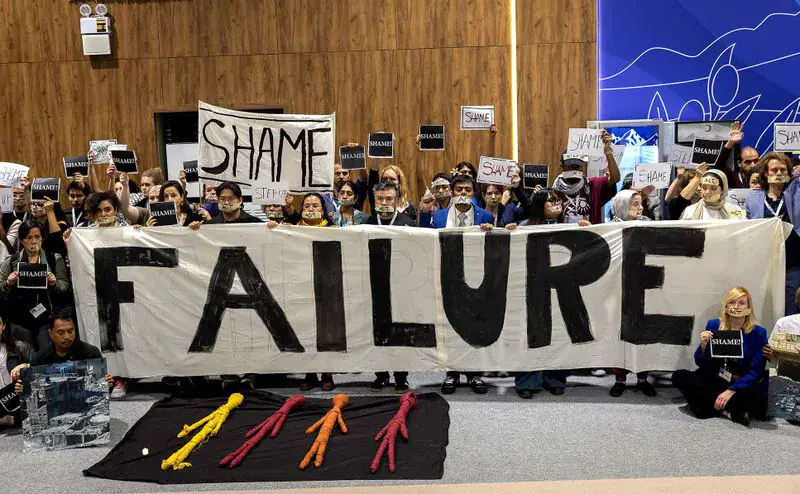
The 2026 United Nations Climate Change Conference, also known as COP31, concluded without a consensus on a new deal to tackle climate change. The conference, which started with high expectations, was extended into the weekend due to impasses over fossil fuels and finance. Despite efforts to reach an agreement, nearly 200 countries were unable to overcome their differences. The conference was meant to conclude on Friday but ran into the weekend.
The draft agreement, known as the Antalya pact, called on countries to minimize the 1.5°C overshoot, which scientific reports have found is inevitable. Developed countries, including the EU and UK, were urged to provide fair finance to developing nations to help them adapt to the impacts of climate change. The pact also invited countries to electrify their economies. However, the text failed to mention a transition away from fossil fuels for developed countries.
The EU, UK, and several developing nations rejected the deal because it did not mention fossil fuels. Ireland's environment minister, Darragh O'Brien, speaking on behalf of the EU, stated that the deal failed to meet the moment and would not be endorsed. UN Secretary-General António Guterres expressed deep disappointment that the conference ended without consensus, but emphasized that the science on climate change remains clear.
One of the key issues that caused deadlocks during the conference was climate finance. Developed nations were accused of lacking willingness to make new finance available to developing countries. The African Group of Negotiators had pushed for a tripling of adaptation finance to at least $120-billion delivered to developing nations annually by 2035. However, this goal was not included in the final text.
The African Group of Negotiators expressed frustration with the lack of progress on climate finance and other key issues. The group's chairperson, Dr. Nana Antwi-Boasiako Amoah, emphasized that the group came to the conference seeking implementation, not just discussion. The group's lead negotiator on climate finance, Debbie Swanepoel, criticized developed nations for trying to renegotiate the Paris Agreement.
Ghana's Minister of the Environment, Science and Technology, Dr. Zanetor Agyeman-Rawlings, delivered a powerful statement during the closing, criticizing the text for falling short on Africa's priorities. These priorities included adaptation finance, loss and damage, and a just transition. Agyeman-Rawlings emphasized that the lack of concrete commitments on these issues would have severe consequences for communities already facing the impacts of climate change.
Civil society organizations have accused the EU of hypocrisy in its rejection of the final text. Climate Action Network International stated that the EU's rejection served as a "fossil fuel smokescreen" to obscure the bloc's systematic obstruction of funding obligations. Despite the disappointment and frustration, Agyeman-Rawlings emphasized that Africa had chosen to build multilateralism rather than walk away from it.
Key points
- The conference failed to reach an agreement on a new deal to tackle climate change due to impasses over fossil fuels and finance.
- Developed countries were accused of lacking willingness to make new finance available to developing countries.
- The African Group of Negotiators expressed frustration with the lack of progress on climate finance and other key issues.