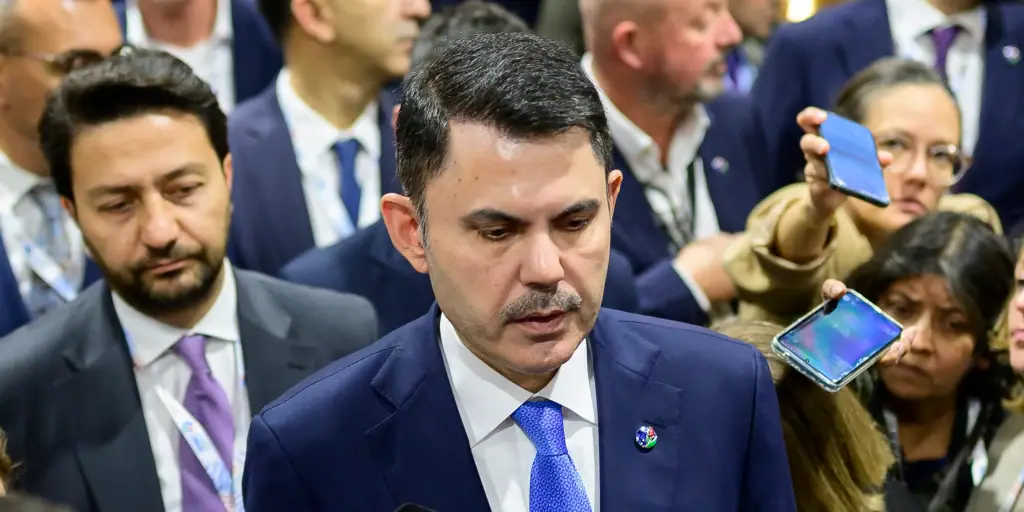
The COP31 climate talks, held in Antalya, Turkey, ended in collapse on Sunday, November 22, 2026, as the European Union and other countries rejected a final deal proposed by the conference presidents, Turkey and Australia. The rejected deal was deemed too weak to advance the fight against global warming. The talks, which lasted over two weeks and spilled into overtime, were the longest COP on record.
The collapse of the talks reflects the challenges governments face in taking ambitious action to address the worsening consequences of climate change, including heatwaves, wildfires, floods, and powerful storms. The negotiations were impacted by wars and economic pressures competing for attention. Turkey's conference president, Murat Kurum, stated that all possible efforts had been made, and no new text would be advanced.
The failure to reach a deal was attributed to disagreements over fossil fuels and climate finance. Australia's COP31 president of negotiations, Chris Bowen, described the outcome as "very disappointing." UN Secretary General Antonio Guterres expressed his frustration, stating that governments had failed to rise to the moment the climate crisis demands.
The last time UN climate talks failed to reach a deal was in Copenhagen in 2009. Despite the challenges, recent COP summits have provided important signals for business investment and spurred advances in renewable power and electric vehicle technology. Analysts argue that these summits have also helped curb warming.
The Paris agreement, struck in 2015, aimed to limit warming to 1.5 degrees Celsius. A decade later, projections suggest that existing policies put the world on course for 2.8 C of warming this century. This year's COP was the first since the UN's environmental body confirmed that the rise in global temperatures was set to overshoot 1.5 C.
The collapse of the COP31 talks has significant implications for the fight against climate change. The failure to reach a deal highlights the need for governments to take more ambitious action to address the crisis. The talks' outcome has also sparked concerns about the effectiveness of the COP process.
The impact of the failed talks will be closely watched by countries and analysts. The next COP summit will be crucial in determining the future of global climate action. Key stakeholders will need to reassess their strategies and work towards a more effective and collaborative approach to addressing the climate crisis.
Key points
- The COP31 climate talks collapsed due to disagreements over fossil fuels and climate finance.
- The failure to reach a deal has significant implications for the fight against climate change.
- The next COP summit will be crucial in determining the future of global climate action.
Reporting sources
- COP31 climate talks collapse as EU and others reject deal · Garowe Online