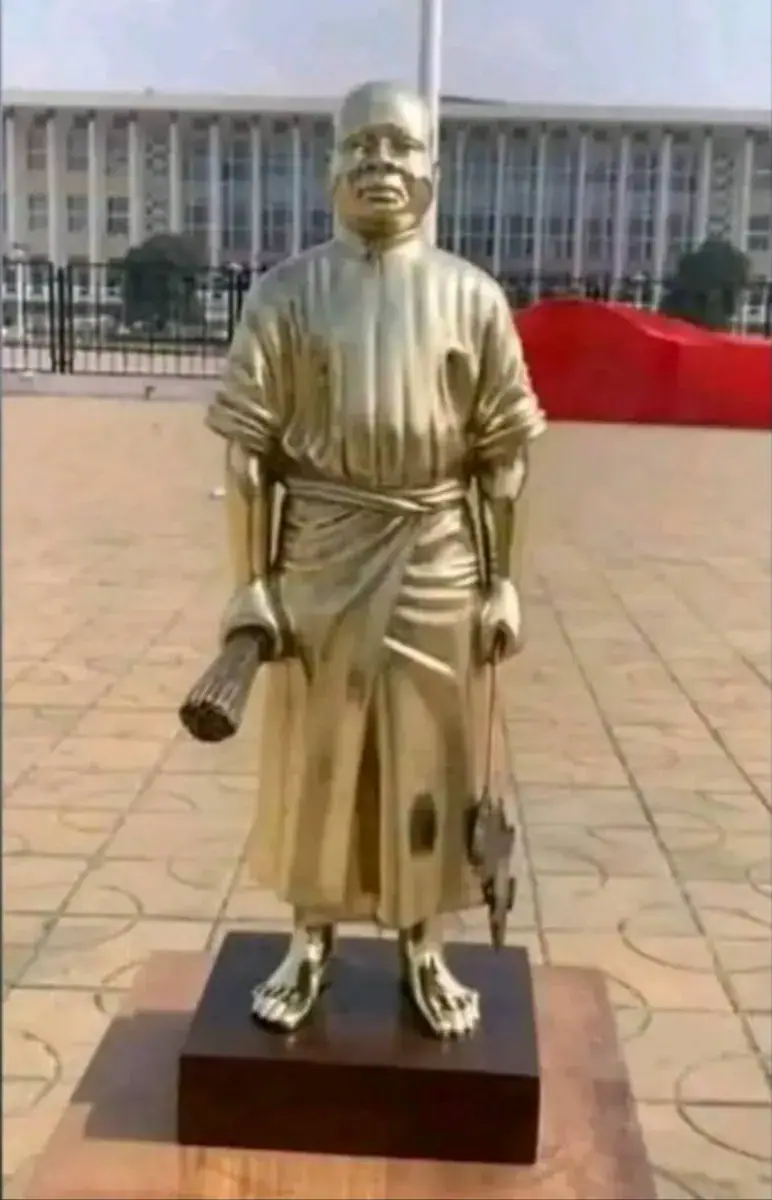
The recent declaration of Simon Kimbangu as a national hero in the Democratic Republic of Congo has sparked intense debate and criticism. According to critics, this move is an attempt by the regime to manipulate history and undermine the legacy of Tata Kimbangu Diantunguna Mwindya Bisio Bayindo. The regime's decision has been accused of being driven by political interests rather than a genuine recognition of Kimbangu's contributions to the nation.
The article published by Réveil FM criticizes the regime for trying to equate Simon Kimbangu with Étienne Tshisekedi Wa Mulumba, a prominent figure in Congolese politics. The author argues that being an opponent of a regime does not automatically qualify one as a national hero. Instead, the author asserts that a person's greatness is measured by the nobility of their struggle, the sacrifices they make, and their actual contributions to the nation.
The article further argues that the regime's actions are an attempt to instrumentalize history for political gain. The author claims that the title of national hero should be reserved for individuals who have made exceptional sacrifices for the nation and whose legacy transcends generations. The article also highlights the influence of Tata Kimbangu Diantunguna's message on the consciousness and emancipation of the Bayindo people, which extends beyond national borders.
The regime's decision to declare Simon Kimbangu a national hero has been met with skepticism and criticism from various quarters. The article by Réveil FM describes the regime as tyrannical and dictatorial, accusing it of exploiting and oppressing the Congolese people while attempting to present itself as a champion of national heroes. The author questions the regime's credibility in conferring such honors, given its track record of human rights abuses and corruption.
The article also touches on the theme of silence in the face of injustice. The author argues that silence is not a neutral act, but rather a deliberate choice that can be complicit in perpetuating injustice. In times of great moral conflict, the author asserts that it is essential to take a stance and speak out against injustice, rather than remaining silent and risking complicity.
The declaration of Simon Kimbangu as a national hero has also raised questions about the regime's motivations and priorities. The article by Réveil FM suggests that the regime's actions are driven by a desire to maintain power and control, rather than a genuine commitment to the welfare and interests of the Congolese people. The author argues that the regime's legacy of human rights abuses and corruption undermines its credibility in conferring national honors.
The controversy surrounding Simon Kimbangu's declaration as a national hero highlights the complex and often contentious nature of historical narrative and national identity in the Democratic Republic of Congo. The article by Réveil FM serves as a critique of the regime's actions and a call to action for the Congolese people to be vigilant and critical of attempts to manipulate history for political gain.
Key points
- The regime's declaration of Simon Kimbangu as a national hero has sparked controversy and accusations of historical revisionism and political opportunism.
- Critics argue that the regime's actions are driven by a desire to manipulate history and undermine the legacy of Tata Kimbangu Diantunguna Mwindya Bisio Bayindo.
- The controversy highlights the complex and often contentious nature of historical narrative and national identity in the Democratic Republic of Congo.