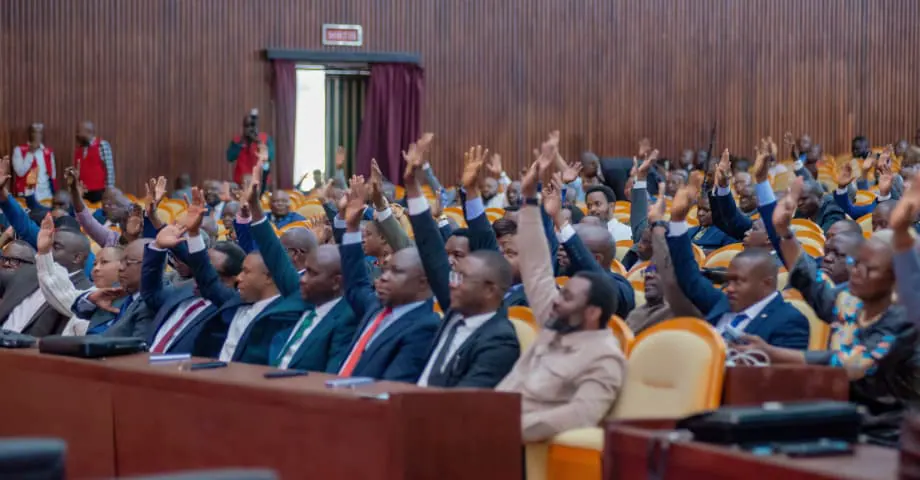
The National Assembly of the Democratic Republic of the Congo has launched an initiative to document and showcase the social, community, and humanitarian actions of lawmakers in their constituencies. According to a communiqué released on October 5 by the Assembly's rapporteur, Jacques Djoli Eseng'Ekeli, lawmakers are invited to provide photos and videos of their initiatives. The move aims to give visibility to the actions undertaken by elected officials for the benefit of their communities.
The initiative has sparked controversy within the public opinion on the role of national deputies as defined by the Constitution and the financing of their social actions in their constituencies. Some citizens have raised concerns that public funds might be used to finance these initiatives. However, Jacques Djoli Eseng'Ekeli has clarified that the actions are carried out without public financing or support from the National Assembly's Bureau. He explained that the initiatives cover areas such as education, health, infrastructure, and access to electricity.
The rapporteur of the National Assembly emphasized that the goal is to highlight the social actions undertaken by lawmakers, which often go unnoticed. According to him, these actions are a result of the deputies' personal initiatives and do not receive any public funding. Djoli Eseng'Ekeli also noted that the Congolese deputy is often confronted with expectations that go beyond their institutional attributions, including requests for assistance with school fees, funeral expenses, and student housing.
The Congolese Constitution clearly defines the main missions of Parliament, which include voting laws and controlling the Government, public enterprises, and public establishments. However, some observers argue that it is not the role of deputies to execute development actions within their communities, as this responsibility lies with the executive power. In contrast, Jacques Djoli Eseng'Ekeli believes that the Congolese deputy is a social actor who is deeply engaged with their community.
The initiative has also raised questions about the distinction between social actions carried out by lawmakers in their personal capacity and public policies that fall under the responsibility of state institutions. By documenting these initiatives, the National Assembly aims to shed light on the social dimension of the deputies' actions while clarifying that the reported actions do not receive funding from the Assembly's budget.
According to Jacques Djoli Eseng'Ekeli, the Congolese deputy is often called upon to respond to social needs that go beyond their institutional mandate. He cited examples of deputies who undertake infrastructure projects or seek partnerships to address specific needs in their constituencies, such as access to electricity. The rapporteur believes that these actions demonstrate the personal sacrifices made by lawmakers for the benefit of their communities.
The controversy surrounding the National Assembly's initiative highlights the complexities of political representation in the Democratic Republic of the Congo. The deputy is not only a lawmaker but also a social actor who is expected to respond to the needs of their community. As the Assembly seeks to showcase the social achievements of its members, it must also navigate the fine line between the deputies' institutional roles and their social responsibilities.
Key points
- The National Assembly's initiative aims to document and showcase social actions by lawmakers in their constituencies.
- The move has sparked controversy over the role of national deputies and the financing of their social actions.
- The Congolese Constitution defines the main missions of Parliament, which do not include executing development actions within communities.