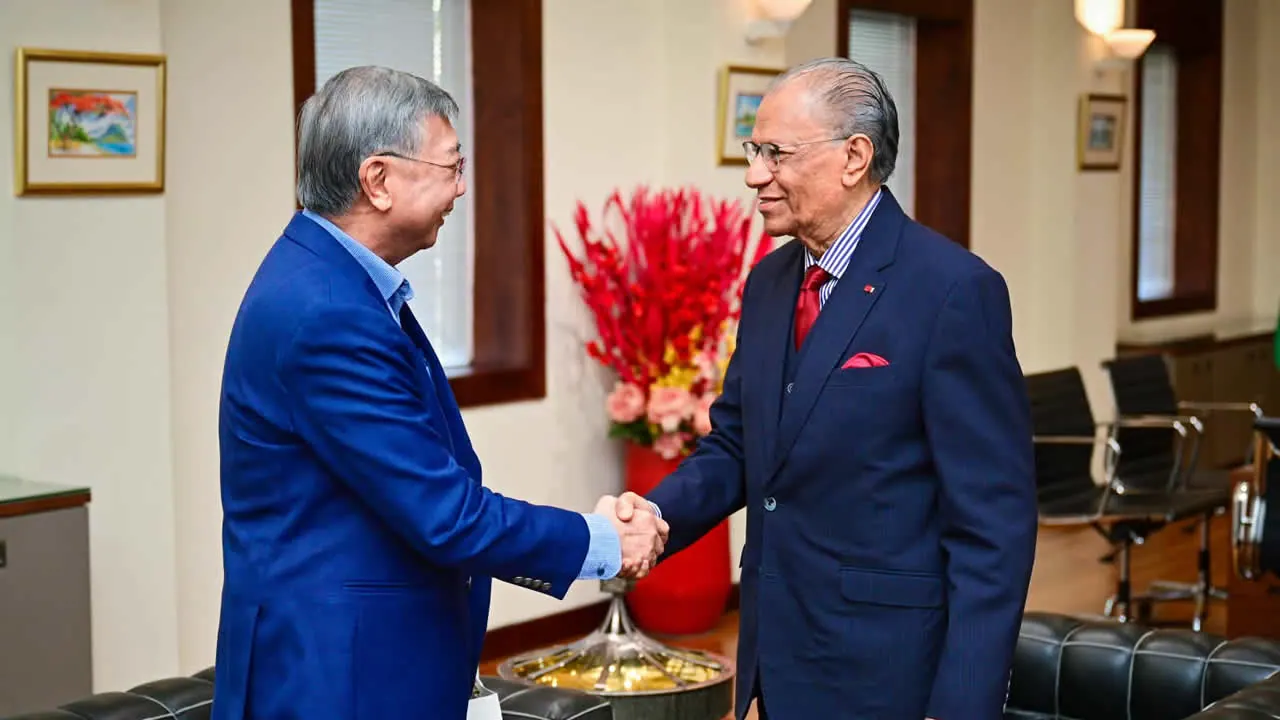
The National Initiative for Civic Education (NICE) in Mauritius has sparked controversy with the appointment of Ong Boon Hwee, a former Singaporean brigadier-general, as a consultant. The National Forum for Colleges (NAFCO) has expressed strong disapproval of this decision, citing concerns about compatibility with Mauritian democratic values. NICE, under the Prime Minister's Office, has a budget of 10 million rupees for 2026-2027 and aims to foster patriotism, peaceful coexistence, respect, and responsible citizenship among young Mauritians.
NICE is set to pilot a program with around 200 Grade 8 students, aged 12-13, from November 16 to 28, 2026, featuring a mix of residential and non-residential activities. The initiative seeks to help young people develop essential life skills and values. However, NAFCO has raised several objections to Ong Boon Hwee's appointment, questioning Singapore's human rights and civic space record. According to CIVICUS Monitor, Singapore's civic space is classified as "restricted" with a score of 30, whereas Mauritius is classified as "narrowed" with a score of 77.
NAFCO argues that Singapore's civic space model is not an example for Mauritius to follow, stating that the island nation is already performing better in this regard. The organization also questions the suitability of a former senior military officer to design a civic education program, pointing out that military personnel are trained to follow orders rather than think critically or challenge hierarchy. NAFCO advocates for an education approach centered on care, empathy, and collective well-being for communities.
Furthermore, NAFCO disputes the legitimacy of a non-Mauritian designing a civic education program for the country, arguing that many talented young Mauritians would be willing to contribute voluntarily to such an initiative. The organization suggests that NAFCO and other groups have been overlooked in the development of a more effective education system. NAFCO's concerns highlight the need for careful consideration in the development of civic education programs that align with Mauritian values and needs.
The controversy surrounding Ong Boon Hwee's appointment has sparked a wider debate about the direction of civic education in Mauritius and the role of international consultants in shaping the country's values and institutions. As the nation prepares for the pilot program, stakeholders will be watching closely to see how the initiative unfolds and whether it meets its objectives. The government's response to NAFCO's concerns will also be crucial in determining the future of civic education in Mauritius.
The National Initiative for Civic Education has the potential to play a significant role in shaping the values and worldview of young Mauritians. As such, it is essential that the program is designed and implemented in a way that is sensitive to the country's unique cultural and democratic context. The involvement of international consultants like Ong Boon Hwee must be carefully evaluated to ensure that their expertise and experience align with Mauritian values and goals.
The outcome of this controversy will have implications for the development of civic education in Mauritius and the country's relationships with international partners. As the situation continues to unfold, stakeholders will be paying close attention to the government's response and the impact on the nation's democratic development.
Key points
- NAFCO criticizes the appointment of Singaporean consultant Ong Boon Hwee due to concerns about Singapore's human rights and civic space record.
- The organization questions the suitability of a former senior military officer to design a civic education program.
- NAFCO disputes the legitimacy of a non-Mauritian designing a civic education program for the country.