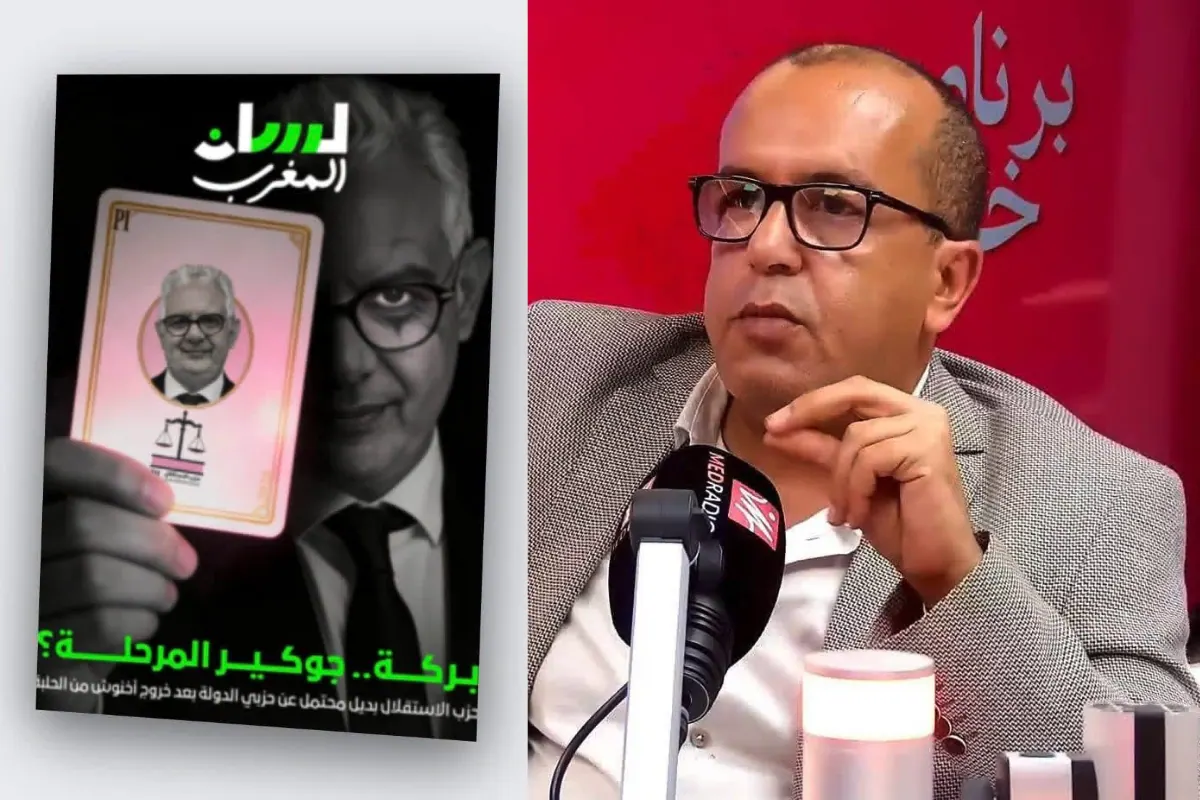
In a recent article, Moroccan journalist Yunes Dafakir critiqued the stance of the magazine "Sawt Al-Maghreb" on the appointment of the next head of government. Dafakir noted that when the magazine supported the candidacy of Aziz Rabbah, it was seen as a democratic move, but when it opposed the candidacy of Fatima Zahra Mansouri, it was labeled as a "daring act against the state." This contradictory stance has sparked debate among Moroccan journalists and politicians.
Dafakir recalled an article he wrote on January 28, 2026, in which he discussed the potential of the Istiqlal party to lead the government. He noted that the party had a strong electoral base, a cohesive organization, and a leadership that could be marketed as a mix of state and party logic. Dafakir also highlighted the party's economic and cultural assets, which could help to build alliances and balance the political landscape.
In contrast, the magazine "Sawt Al-Maghreb" has taken a more conservative stance on the appointment of the head of government. An editorial in the magazine described the expression of a preference for Mansouri as a "daring act against the institutions" and a "dangerous degree" of interference in the king's exclusive decision-making authority. This stance has been criticized by Dafakir and others, who argue that it undermines the democratic process and the role of the media in promoting open discussion.
The debate over the leadership of the next government has sparked a wider discussion about the role of the media in Moroccan politics. Some journalists and politicians have expressed concerns about the increasing polarization of the media landscape and the need for more nuanced and balanced reporting. Others have argued that the media should play a more active role in promoting democratic values and holding those in power accountable.
The controversy surrounding the appointment of the head of government has also highlighted the complex relationships between the media, politics, and the monarchy in Morocco. The king has significant influence over the appointment of key officials, including the head of government, and the media plays a crucial role in shaping public opinion and influencing the political agenda.
In a related development, Ahmed Cherai, the publisher of the Global Media group, has expressed his support for Fatima Zahra Mansouri as a potential candidate for the leadership of the next government. Cherai's comments sparked a backlash from some quarters, with critics accusing him of overstepping his role as a journalist and publisher.
The debate over the leadership of the next government is likely to continue in the coming weeks and months, with different journalists, politicians, and stakeholders expressing their views and opinions. Ultimately, the appointment of the head of government will depend on a range of factors, including the outcome of the upcoming elections and the will of the king.
Key points
- The appointment of the head of government is a contentious issue in Moroccan politics.
- Journalists and politicians have expressed differing opinions on the potential leadership of the next government.
- The debate has highlighted the complex relationships between the media, politics, and the monarchy in Morocco.