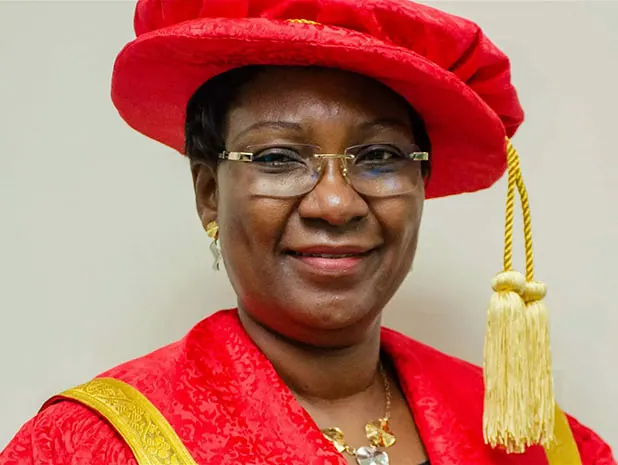
The Immediate-Past Vice-Chancellor of Lagos State University, Distinguished Professor Ibiyemi Ibilola Olatunji-Bello, has been quoted as saying that students must pay ₦1 million in fees for public universities to achieve self-sustainability. However, this statement has been taken out of context, generating considerable reaction online. According to her interview with The Punch newspaper, Olatunji-Bello's remarks were made in the context of Nigerians' aspiration for quality university education comparable to what is obtainable in other parts of the world.
Olatunji-Bello argued that delivering quality undergraduate education costs approximately ₦1 million per student annually. She emphasized that her statement did not suggest that this cost must be transferred wholesale onto students or their parents. Instead, she called for universities to pursue innovation and diversified revenue streams as the primary pathway to financial sustainability. Her central argument was that universities can achieve financial self-sustainability by innovating and ensuring improvements in the institution.
In response to the interview question on institutional self-sustainability, Olatunji-Bello stated that universities can achieve financial self-sustainability by innovating and ensuring improvements in the institution, which will generate more revenue. She also encouraged parents to prioritize their children's education by paying fees, emphasizing that good quality education requires money. Her position reflects a broader call for universities to pursue innovation and diversified revenue streams.
The misinterpretation of Olatunji-Bello's statement has generated considerable online reaction, with many commentators interpreting her statement outside its original context. Her Media Aide, Emmanuel Adeyemi, has urged members of the public, the media, and stakeholders in the education sector to engage with Olatunji-Bello's complete remarks in their proper context, rather than isolated soundbites that do not accurately reflect her position.
According to Adeyemi, Olatunji-Bello's statement was not about assigning the burden of education costs to students or their parents but about encouraging shared responsibility. He emphasized that the public should consider Olatunji-Bello's full remarks, which reflect a call for universities to pursue innovation and diversified revenue streams, while also reminding parents of the genuine cost implications of quality education.
The clarification of Olatunji-Bello's statement comes at a time when there are concerns about the funding of public universities in Nigeria. The country's public universities have been struggling with inadequate funding, which has affected the quality of education and infrastructure. Olatunji-Bello's suggestion that universities need to innovate and generate more revenue is seen as a potential solution to this problem.
The debate about university funding and self-sustainability is ongoing in Nigeria, with various stakeholders contributing to the discussion. Olatunji-Bello's statement has added to the conversation, emphasizing the need for universities to be innovative and self-sustaining. The issue remains a critical one, with implications for the quality of education and the future of Nigeria's public universities.
Key points
- Distinguished Professor Ibiyemi Ibilola Olatunji-Bello suggests ₦1 million per student annually for quality education, not necessarily a fee increase.