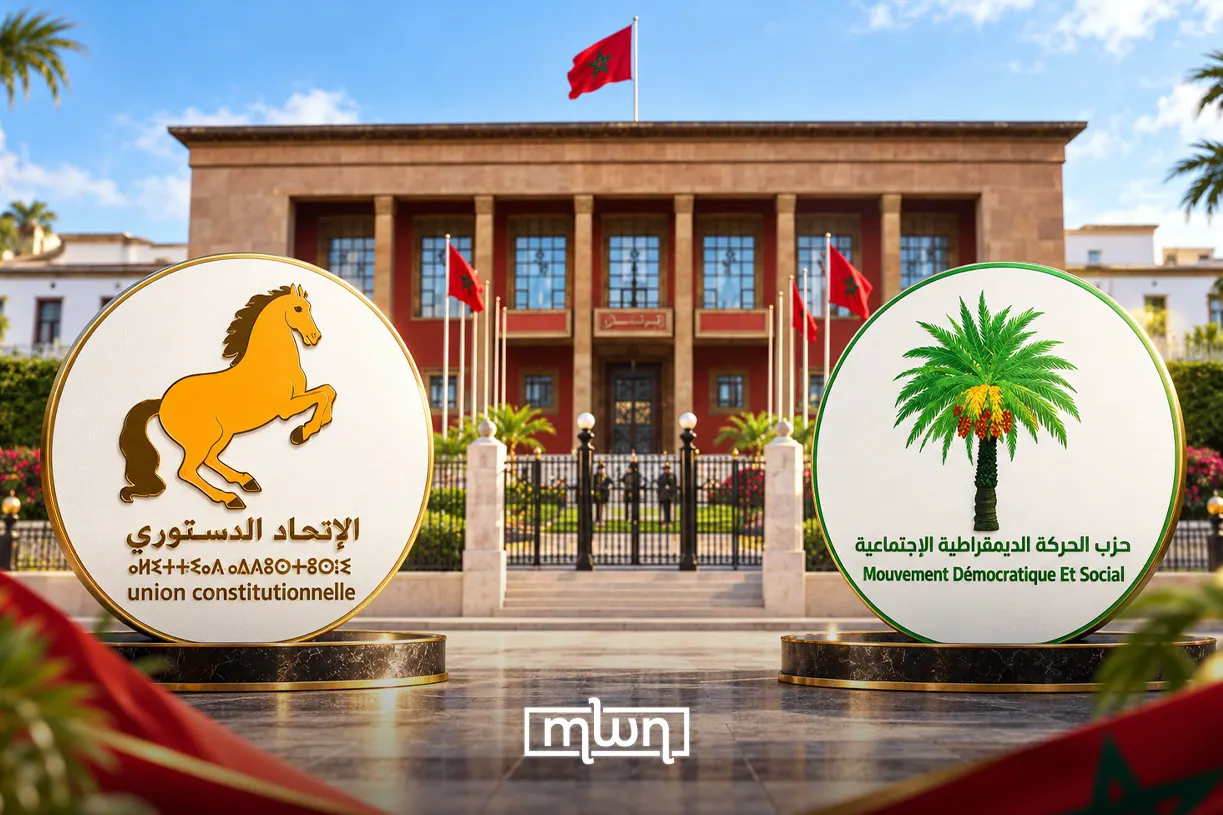
The Constitutional Union (UC) and the Democratic and Social Movement (MDS) have announced their decision to form a joint parliamentary group in Morocco's House of Representatives. This move comes after the September 23 legislative election, with the two parties securing 17 and 8 seats respectively, totaling 25 seats. The joint group was formalized through a communiqué signed by UC Secretary-General Mohamed Joudar and MDS Secretary-General Abdessamad Archane.
The decision to form a joint parliamentary group is based on extended consultations between the leaderships and elected members of both parties. This alliance builds on their previous partnership during the previous mandate, where they cited a "significant political and parliamentary presence" and complementarity in their legislative work. The new agreement aims to strengthen their representation in the chamber and exercise their constitutional prerogatives effectively.
The joint bloc has set several immediate goals, including strengthening its effectiveness and presence within the legislative institution. The two parties have pledged to improve their legislative, oversight, and advocacy performance, and to coordinate across the group's components in defense of citizens' concerns and expectations. This move is seen as a route to stronger representation in the chamber, with both parties reaffirming their shared will to develop a proven dynamic.
The formation of this joint group takes place within a reshaped parliament, with the Authenticity and Modernity Party (PAM) leading the election with 97 seats, followed by the National Rally of Independents (RNI) with 66 and the Istiqlal Party (PI) with 65. The Justice and Development Party (PJD) secured 54 seats, marking a strong comeback for the Islamist party.
The legislative election, which was Morocco's first since youth-led Gen Z protests and a mass migration attempt at occupied Ceuta, saw a turnout of 38.08%, the lowest since 2007. Interior Minister Abdelouafi Laftit presented the provisional figures on the night of the count. The election will shape the government co-hosting the 2030 World Cup.
The joint parliamentary group will operate with strict respect for the identity, doctrine, and independence of each party. Both leaders emphasized that the arrangement preserves the identity and independence of each formation in the service of parliamentary work and the national interest. This move is expected to enhance the effectiveness of the two parties in the legislative institution.
The Constitutional Union and Democratic Social Movement's decision to form a joint parliamentary group reflects their shared political ground and commitment to parliamentary work. The group is expected to play a significant role in the House of Representatives, with a focus on exercising its constitutional prerogatives and defending citizens' concerns.
Key points
- The Constitutional Union and Democratic Social Movement have formed a joint parliamentary group with 25 seats in Morocco's House of Representatives.
- The joint group aims to strengthen its effectiveness and presence within the legislative institution.
- The alliance builds on a previous partnership between the two parties during the previous mandate.