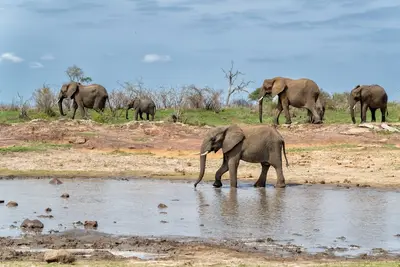
In South Africa, the Babanango Game Reserve has made significant strides in conservation over the past eight years, reintroducing over 4,000 animals, including black rhino and elephants, onto land that had previously experienced overgrazing and loss of wildlife. This achievement is a testament to the reserve's conservation efforts, but it is not the only story to be told. The reserve's success is closely tied to the well-being of the surrounding communities, and the Babanango Foundation has been working to address this connection.
Dudu Ngcobo, an herbicide controller for The Babanango Foundation, is a prime example of the impact of conservation on local communities. Her work has enabled her to support her two daughters through higher education, with one currently studying Tourism at the University of South Africa and the other studying Accounting at the University of Johannesburg. The foundation's work goes beyond conservation, focusing on providing access to services, livelihoods, skills, education, and opportunities for young people in the surrounding communities.
The Babanango Game Reserve covers approximately 21,000 hectares, most of which is communally owned. The reserve's conservation efforts have been complemented by the establishment of The Babanango Foundation, a registered Public Benefit Organisation that works with local land-owning trusts. The foundation's Access to Water Programme has developed 17 boreholes and solar-powered water systems, providing reliable water access to over 5,000 households.
Employment has also been a key focus area for the foundation, with the Babanango Game Reserve creating 200 local jobs directly. The foundation also leads the removal of invasive alien plants, employing 23 community members who earn an income while contributing to the management of the landscape. This intersection of conservation and rural development is critical to the long-term success of conservation efforts.
The Babanango Foundation's approach to conservation is not about providing every service a community needs, but rather about demonstrating that ecological and social goals can be pursued within the same landscape. The foundation's work has shown that conservation and community development do not have to be separate line items, and that people are part of the landscapes being conserved.
The experience of the Babanango Game Reserve and The Babanango Foundation highlights the need for a more nuanced approach to measuring conservation success. Rather than just counting hectares protected or animals reintroduced, conservation projects should also consider whether local people are developing skills, gaining access to essential services, and seeing themselves as participants in conservation efforts.
Ultimately, conservation efforts that ignore the well-being of local communities risk creating a lasting divide between conservation success and community well-being. By working with communities and considering their needs and aspirations, conservation projects can achieve lasting success and create a more equitable and sustainable future for all.
Key points
- Conservation efforts must consider the well-being of local communities to achieve lasting success.
- The Babanango Game Reserve and The Babanango Foundation have demonstrated that ecological and social goals can be pursued within the same landscape.
- A more nuanced approach to measuring conservation success is needed, one that considers the needs and aspirations of local communities.