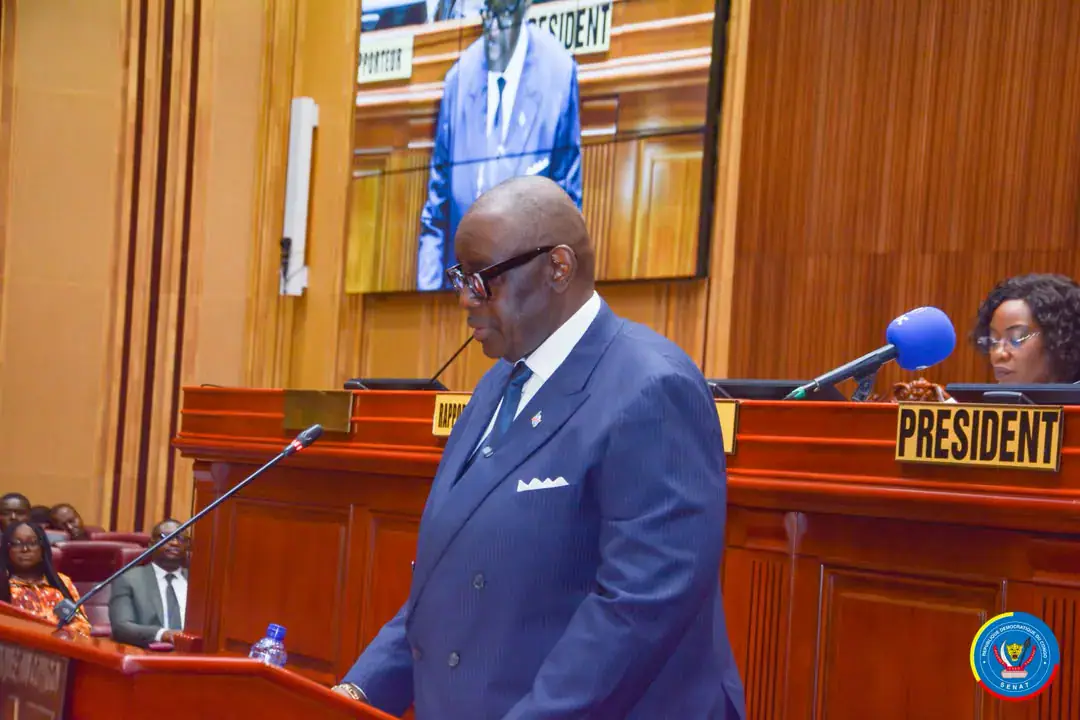
The Democratic Republic of Congo's Minister of Mines, Louis Watum Kabamba, was questioned by senators on November 17 regarding the governance of the mining sector and public revenue mobilization. He presented measures taken by the government to better regulate the identification, marketing, and taxation of mineral by-products with economic value. The discussions focused on including certain mineral substances in the mining royalty base to increase state revenue.
Minister Kabamba defended the application of an interministerial decree issued on June 29, 2026, which came into effect on October 1. The decree integrates 16 mineral substances, including gold, silver, platinum, and palladium, into the calculation of the mining royalty. According to the government, this measure aims to improve the valuation of mining resources and strengthen the sector's contribution to public finances.
Senators raised concerns about a potential loss of over $800 million for the state, but Minister Kabamba stated that this estimate needs to be verified using technical data from the Center of Expertise, Evaluation, and Certification (CEEC). The discussions also touched on the capabilities of public laboratories to control the conformity of mining products destined for export.
The taxation of artisanal gold and the regime applied to DRC Gold Trading were also debated. Minister Kabamba defended the 0.25% rate applied to this company, stating that it is based on a specific legal framework and contributes to the fight against fraud, smuggling, and informal gold marketing circuits.
Senators expressed concerns about transparency in the management of the mining sector, the traceability of exported products, and the effectiveness of revenue mobilization mechanisms. Minister Kabamba has 48 hours to provide detailed responses to the concerns raised during the debate. Senators aim to ensure that new control and taxation measures are effectively applied to contribute to national development financing.
The Congolese government is seeking to improve the valuation of its mining resources and increase revenue. The mining sector plays a crucial role in the country's economy, and the government is working to ensure that it contributes more to national development. The new tax measures are part of a broader effort to improve governance in the mining sector.
The Senate's scrutiny of the mining sector is ongoing, with a focus on ensuring that the government's measures are effective in increasing revenue and promoting transparency. The outcome of the debate will likely have implications for the mining sector and the country's economy.
Key points
- The Congolese government has introduced new tax measures for mineral by-products to increase revenue and improve governance in the mining sector.