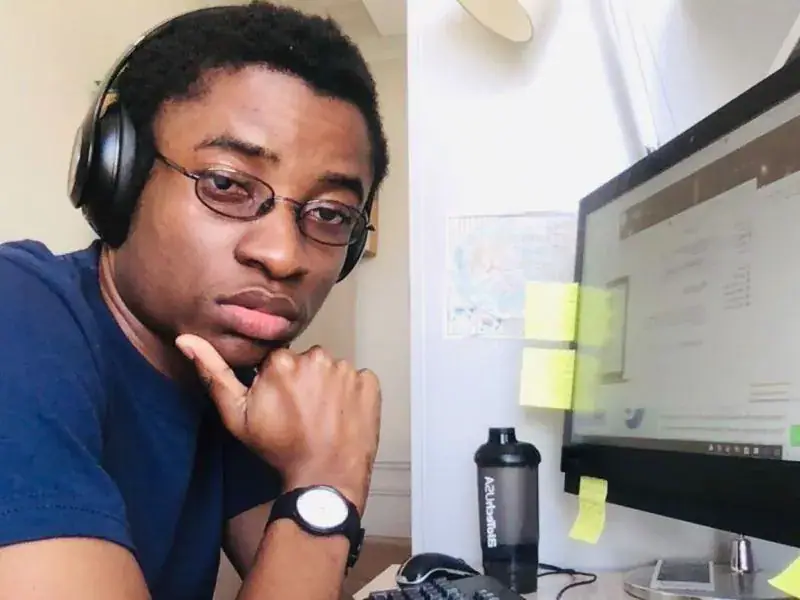
In the summer of 2019, Will Claes Nlemvo, a 25-year-old Congolese man, began working at the International Organization of La Francophonie (OIF) in Paris. He was recruited on a VIF contract to work in the Directorate of Economic and Digital Francophonie, where he was tasked with promoting the activities of Le Medialabo, a program supporting media projects in Africa. Nlemvo's role involved producing and publishing content on the OIF website.
Nlemvo's troubles began when he published an article on different models of financing digital platforms, citing Télé Tshangu, a YouTube channel critical of Rwandan President Paul Kagame. The channel's anti-Kagame stance led to Nlemvo being suspected of having a political agenda. Shortly after the article's publication, it was removed from the OIF website. Nlemvo was then summoned to his director's office, where he found several senior officials waiting for him.
During the meeting, Nlemvo's director accused him of committing an "impair" and asked if he realized what he had done. Nlemvo attempted to explain that his intention was not to engage in politics or destabilize anyone. However, his explanations seemed to fall on deaf ears, and the decision to suspend his publication privileges on the OIF website was made. For the remainder of his contract, Nlemvo was not allowed to publish any articles on the OIF website.
The incident highlights the tensions between the Democratic Republic of Congo and Rwanda, which can spill over into international organizations like the OIF. Nlemvo's experience demonstrates how quickly a seemingly innocuous action can be misinterpreted and lead to severe consequences. The OIF, with its mission to promote French language and culture, must navigate complex geopolitics, especially when its staff members come from countries with strained relationships.
Louise Mushikiwabo, the OIF's Secretary-General, is a Rwandan national who has been at the helm of the organization since 2014. Her appointment and re-appointment have been supported by several member states, including France. However, some member states, like the Democratic Republic of Congo, have expressed concerns about the organization's impartiality and the influence of certain member states.
The incident involving Nlemvo has sparked a wider conversation about the OIF's role in promoting press freedom and the potential for political interference. Some critics argue that the organization should be more transparent in its decision-making processes and ensure that its staff members are not unfairly targeted for their views or affiliations. The OIF has faced criticism in the past for its handling of sensitive issues, including the suspension of several journalists and media outlets.
The controversy surrounding Nlemvo's suspension raises questions about the limits of free speech and the role of international organizations in promoting democratic values. As the OIF continues to navigate complex geopolitics, it must balance its mission to promote French language and culture with its commitment to press freedom and human rights. The organization's handling of the Nlemvo case will be closely watched by member states and observers alike.
Key points
- A Congolese man was suspected of plotting against OIF chief Louise Mushikiwabo after publishing an article on a YouTube channel critical of Rwandan President Paul Kagame.
- The incident highlights the tensions between the Democratic Republic of Congo and Rwanda, which can spill over into international organizations like the OIF.
- The controversy raises questions about the limits of free speech and the role of international organizations in promoting democratic values.