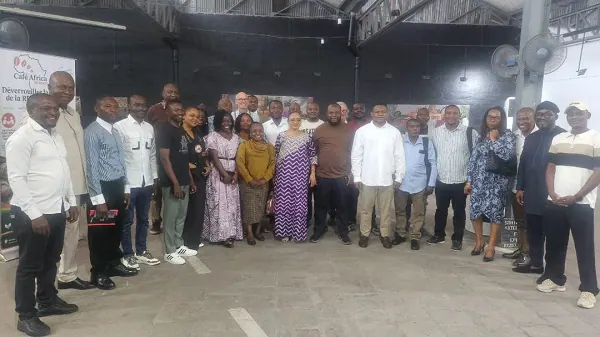
In a recent gathering in Kinshasa, the capital city of the Democratic Republic of Congo, stakeholders from the Congolese coffee sector emphasized the need for better structuring of the industry. This initiative aims to enhance the valuation of Congolese coffee and strengthen its position in both local and international markets. The meeting brought together various actors, including representatives from the Office national des produits agricoles du Congo (Onapac), the Agence nationale de promotion des exportations (Anapex), Rainforest Alliance, and Connex Africa.
Djenny Soladio, Director General of Kin Agribusiness Sarl and an independent raw materials trader, highlighted the importance of improved coordination among different segments of the value chain. According to Soladio, better structuring would create more synergies between producers, economic operators, and support organizations. This, in turn, would facilitate access to market opportunities and contribute to the development of commercial prospects for sector actors.
The discussions focused on the future development of Congolese coffee, the challenges associated with sector structuring, and ways to enhance collaboration between producers, economic operators, support organizations, and markets. Participants also stressed the need to improve the skills of sector actors, increase the competitiveness of Congolese coffee, and develop commercial outlets at national, regional, and international levels.
The meeting attendees concurred that improved sector structuring is crucial for enhancing coordination among actors, strengthening the value chain, and promoting better valuation of Congolese production. Furthermore, they emphasized the importance of reinforced collaboration among value chain stakeholders to maximize the potential of the Congolese coffee sector.
This gathering is part of a broader effort to promote dialogue among sector actors and contribute to improved structuring, sustainable development, and competitiveness within the Congolese coffee sector. By working together, stakeholders aim to capitalize on the country's coffee potential and increase its market share.
The Congolese coffee sector faces several challenges, including limited access to international markets, inadequate infrastructure, and insufficient support for producers. Addressing these challenges through improved structuring and collaboration will be essential for the sector's growth and development.
The push for better sector structuring comes at a critical time for the Congolese coffee industry, as it seeks to capitalize on emerging opportunities and overcome existing hurdles. With a concerted effort from all stakeholders, the sector can unlock its full potential and become a significant player in the global coffee market.
Key points
- The Congolese coffee sector requires improved structuring to enhance its valuation and competitiveness.
- Better coordination among value chain segments and reinforced collaboration among stakeholders are essential for sector growth.
- Improved sector structuring will help increase the skills of actors, competitiveness of coffee, and commercial outlets.