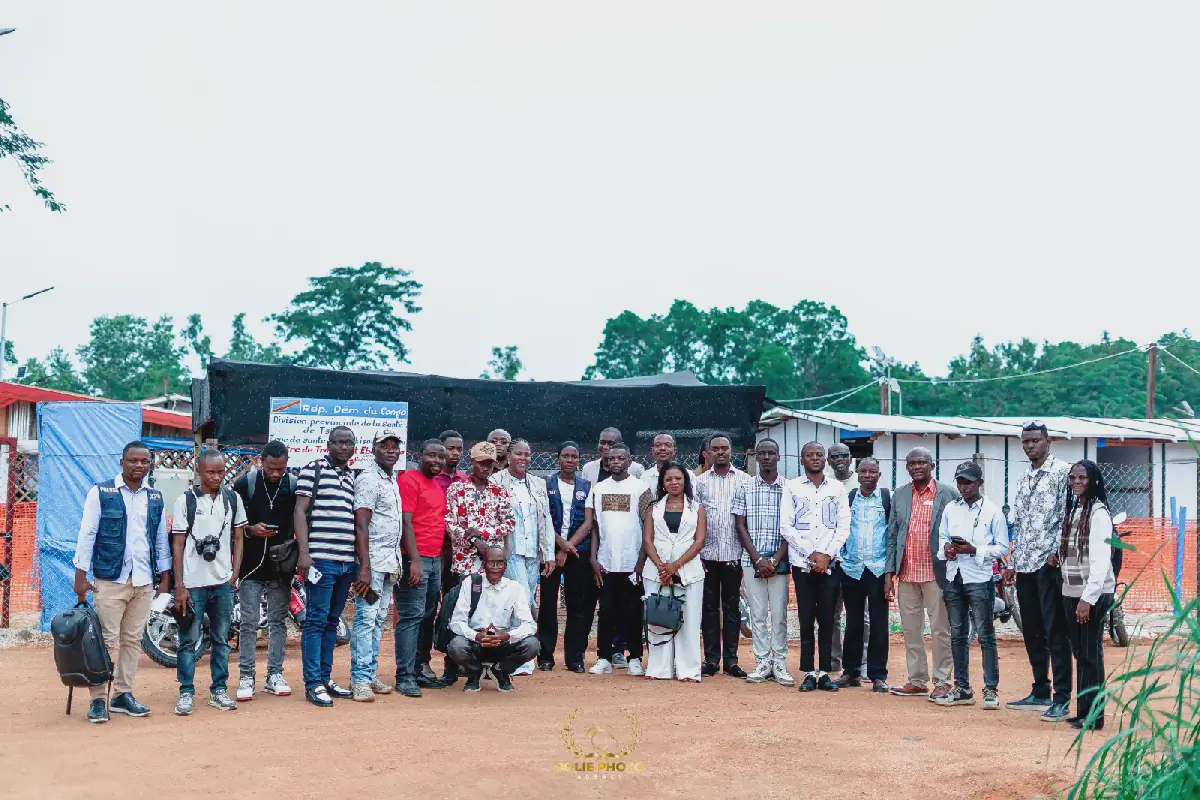
The Ebola treatment center in Kisangani, Tshopo province, recently opened its doors to a group of journalists, providing them with a firsthand look at its operations and the measures in place to prevent the spread of the disease. The center, which has increased its capacity from 24 to 56 beds, is equipped to handle suspected and confirmed cases of Ebola. The visit was led by Dr. Franck Botalema, a treating physician at the center.
During the tour, the journalists were shown various sections of the center, including the low-risk zone, areas for suspected cases, and areas for confirmed patients. However, access to the high-risk zone was restricted due to biosecurity measures. The journalists were also informed about the three main aspects of patient care: medical, psychological, and nutritional support. This holistic approach aims to provide patients with comprehensive care throughout their stay at the center.
According to Dr. Botalema, the center has recorded 256 people since its inception, including 74 confirmed positive cases of Ebola. Currently, 18 patients are being treated, with 11 suspected cases and 7 confirmed cases. The doctor also shared details about the patients, including the oldest and youngest cases, a 48-year-old adult and a 10-day-old newborn, respectively.
The center has strengthened its infrastructure, increasing its capacity to accommodate more patients. The medical team has also been working to improve its response to the outbreak, with the support of partners such as MSF Spain, the World Food Program, and Caritas. Dr. Botalema emphasized that all care provided at the center is free of charge, from admission to discharge.
Despite the efforts made, several challenges persist, including resistance from some members of the community who question the existence of the disease. This skepticism complicates efforts to conduct dignified and secure burials for those who have died from Ebola. The medical team is also working to identify and track individuals who have come into contact with patients, which is crucial to interrupting the transmission of the disease.
Dr. Botalema urged the population to seek medical attention promptly if they suspect they have been infected, emphasizing that early treatment significantly improves chances of recovery. He also stressed the importance of collaboration between the medical team and the community in preventing the spread of the disease.
The visit by the journalists was seen as an opportunity to provide accurate information to the public and combat rumors and misinformation about Ebola. By understanding the realities of the response efforts, the media can play a critical role in promoting prevention and encouraging the adoption of favorable behaviors.
Key points
- The Ebola treatment center in Kisangani has increased its capacity from 24 to 56 beds to accommodate more patients.
- The center provides comprehensive care to patients, including medical, psychological, and nutritional support.
- Despite efforts to combat the disease, challenges persist, including community resistance and the need for prompt identification of contacts.
Reporting sources
- Tshopo : immersion de la presse au CTE · Radio-Télévision nationale congolaise