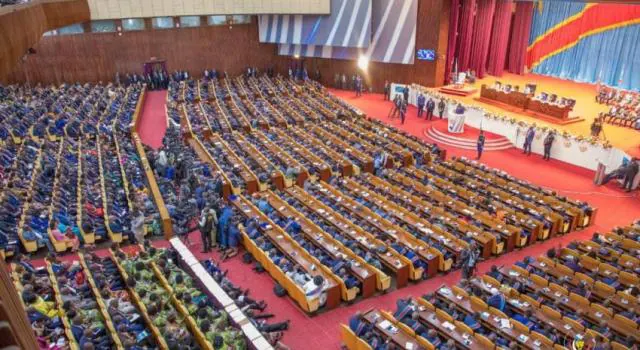
The National Assembly of the Democratic Republic of Congo has instructed its deputies to provide photos and videos of their achievements in their electoral districts by October 15, 2026. This move is aimed at evaluating the performance of the deputies and promoting transparency. The request was made by the Assembly's bureau, led by rapporteur Jacques Djoli, who signed the communiqué on October 5.
The instruction requires deputies to submit visual evidence of their achievements, including the cost and nature of each project, whether it be social, socio-economic, or humanitarian. This has sparked controversy, with some arguing that it blurs the lines between the roles of deputies and those of the executive. Dieudonné Mavungu, a political analyst, believes that this approach may lead to deputies being judged on their ability to undertake projects rather than their legislative work.
The Constitution of the Democratic Republic of Congo outlines two primary missions for Parliament: voting laws and controlling the government, public enterprises, and public services. However, the request for proof of achievements has raised concerns about the extent of deputies' responsibilities. Nathalie Ilunga, a cadre of a political party close to the Union sacrée, argues that the request is a matter of accountability and transparency, allowing citizens to know what has been achieved and at what cost.
The move has elicited mixed reactions from citizens and experts. Some believe that it will help to distinguish between active and inactive deputies, while others fear that it may lead to a focus on photo opportunities rather than meaningful work. Patrick Kabasele, a Kinshasa resident, welcomes the initiative, saying that it will allow citizens to see what their deputies have accomplished. In contrast, Jean-Marc Tshibangu, a professor, warns that it may create a culture of superficiality.
The controversy surrounding the request highlights the challenges of defining the role of deputies in the Democratic Republic of Congo. While some argue that deputies should focus on legislative work, others believe that they have a responsibility to serve their constituents directly. The debate raises questions about the balance between the different branches of government and the accountability of elected officials.
The National Assembly's request has also sparked concerns about the potential for confusion between private and public initiatives. When deputies fund charitable projects using their personal resources, it is unclear whether this should be considered part of their official duties. Critics argue that this could lead to a patrimonial approach to the role of deputy, where they are expected to provide benefits to their constituents rather than representing their interests through legislation.
Ultimately, the effectiveness of the National Assembly's request in promoting transparency and accountability remains to be seen. While some argue that it is a necessary step towards improving governance, others believe that it may create more problems than it solves. As the deadline for submission approaches, the debate is likely to continue, with implications for the future of democratic governance in the Democratic Republic of Congo.
Key points
- The National Assembly of the Democratic Republic of Congo has requested proof of achievements from its deputies.
- The request requires deputies to submit photos and videos of their achievements by October 15, 2026.
- The move has sparked controversy over the role of deputies and the balance between legislative work and direct service to constituents.