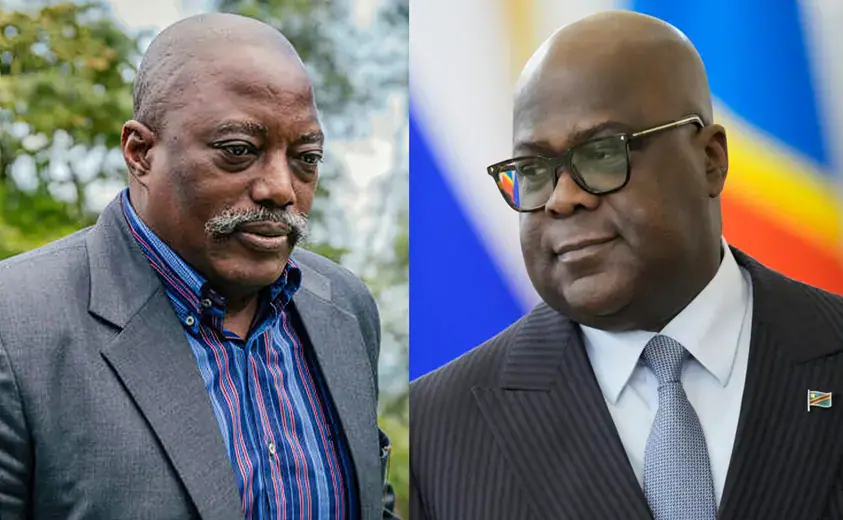
The Republic of Congo is grappling with a constitutional crisis, with multiple groups pushing for national dialogue. The Coalition Article 64 (C64) has proposed separate meetings with President Félix Tshisekedi and former President Joseph Kabila to find a Congolese-led solution to the crisis. This initiative comes as the country's internal political crisis, the Doha process, and the constitutional debate begin to intersect.
The C64, which met in Rome from October 25 to 27, seeks to integrate governance issues outlined in six additional protocols of the Doha process into a national dialogue. The coalition also calls for the revival of African facilitation led by the Catholic and Protestant churches. However, the C64 rejects any constitutional changes that could undermine the 2028 electoral calendar or the alternation of power.
The Front for the Refoundation of the Nation (FRN), led by Kabila since October 12, has taken a different approach. The FRN has asked Qatari mediation to clarify that the agreements reached in Doha are based on the current Constitution. The group wants Kinshasa to confirm this and include the issue on the agenda for upcoming consultations.
Kabila's new role as head of the FRN, a politico-military structure, complicates the C64's initiative. The Congolese government now views Kabila not just as a former President turned opponent, but as a leader of a group considered an enemy. Interior Minister Jacquemin Shabani stated that any contact with such actors requires government approval.
Despite this, UN peacekeeping mission head James Swan met with Kabila in Goma on November 3, citing the mission's mandate to protect civilians, facilitate humanitarian access, and monitor the ceasefire. This meeting indicates that the FRN remains a relevant interlocutor in peace mechanisms, even if Kinshasa disputes Kabila's political normalization.
The Congolese debate is now fragmented across multiple frameworks, including national dialogue, African facilitation, mediation by churches, and the Doha process. The key challenge is not just securing a Tshisekedi-Kabila meeting but ensuring that these concurrent tracks do not produce incompatible agendas.
The constitutional question has become a focal point, with various groups pushing for different interpretations. The outcome of these dialogues will likely determine the course of Congo's political future, including the potential for constitutional reform and the stability of the 2028 electoral process.
Key points
- The Coalition Article 64 seeks to integrate governance issues from the Doha process into a national dialogue.
- The Front for the Refoundation of the Nation wants Qatari mediation to clarify that Doha agreements are based on the current Constitution.
- The UN peacekeeping mission continues to engage with Kabila, despite Kinshasa's reservations about his political status.
Reporting sources
- RDC : Le dialogue face au nœud constitutionnel · Le Journal du Mali