The battle over Congo's constitutional future has taken a new diplomatic turn. Leaders of the Coalition Article 64 (C64), a platform of the Congolese opposition, met with French diplomats at the Quai d'Orsay in Paris. This meeting comes amid heightened tensions in the Democratic Republic of Congo, marked by war in the East, discussions around a referendum law, and President Felix Tshisekedi's statements on the need to revise the Constitution.
The C64 leaders aim to mobilize international support to prevent what they see as an attempt to undermine the constitutional order. This effort is part of a series of consultations by the coalition to stop the constitutional change project. By engaging with foreign partners, the opposition seeks to highlight the political and institutional risks associated with this initiative. The meeting in Paris is a significant step in this diplomatic offensive.
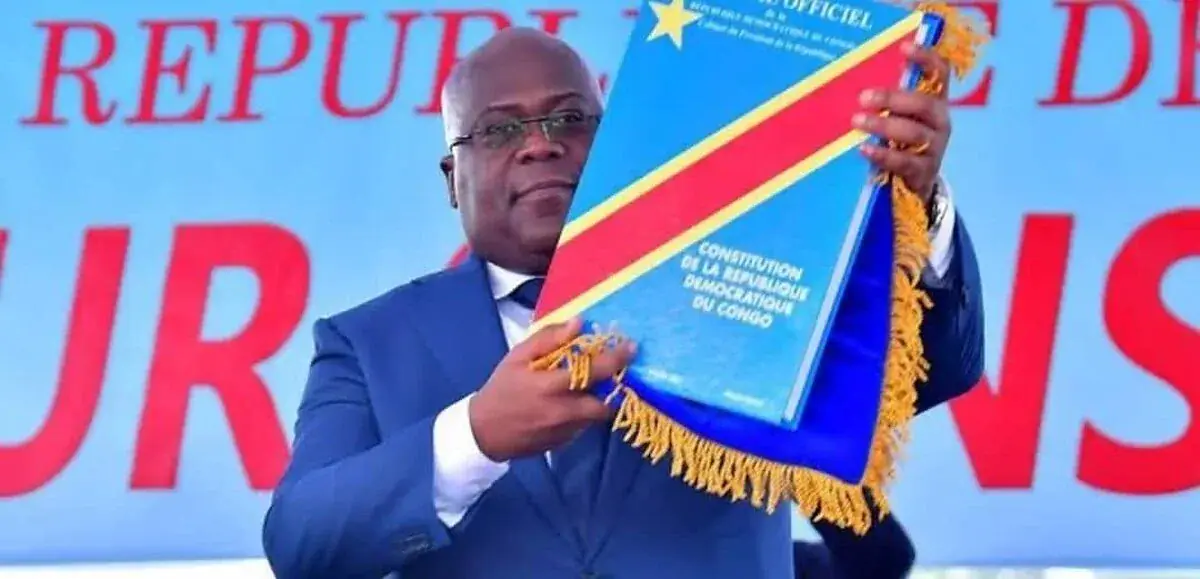
President Felix Tshisekedi has openly expressed his desire to engage in the constitutional debate. In recent speeches to his majority deputies and the Congolese diaspora in Russia, Tshisekedi's statements have reignited concerns among his opponents. The C64 interprets these declarations as a sign of a political will to modify the current constitutional framework. The opposition fears that the debate on reform may be used to alter institutional balances and the rules governing the exercise of power.
The opposition's mobilization follows the adoption of a law fixing the conditions for organizing a referendum. The C64 views this text as a crucial step in setting up a legal framework that could allow a referendum process to begin. The coalition plans to multiply its efforts with foreign partners to voice its concerns and attempt to slow down this dynamic. This move is part of a broader strategy to internationalize the issue.
Civil society is also speaking out against any initiative to modify the Constitution. Jean-Claude Katende, president of the African Association for the Defense of Human Rights (ASADHO) and coordinator of the Council for the Defense of the Constitution (CDC), has expressed surprise at Tshisekedi's statements against the Constitution. Katende emphasizes that respect for the Constitution is an obligation for all institutions and citizens, particularly the head of state.
Katende disputes the arguments advanced by Tshisekedi to justify the need for a revision or change of the Constitution. The activist considers the concerns expressed by civil society to be based not only on the president's political declarations but also on the legal mechanisms currently being put in place. He believes that certain provisions of the referendum law would grant the head of state powers not explicitly recognized by the Constitution.
The constitutional debate has become a major issue in Congolese politics, with significant implications for the country's stability and institutional balance. The opposition's diplomatic efforts and civil society's mobilization indicate a fierce battle ahead. The international community is being called upon to play a role in this debate, which could have far-reaching consequences for the Democratic Republic of Congo.
Key points
- The opposition coalition, C64, is seeking international support to block a potential constitutional change.
- President Felix Tshisekedi's statements on revising the Constitution have sparked controversy.
- Civil society groups are mobilizing against any attempt to modify the Constitution.