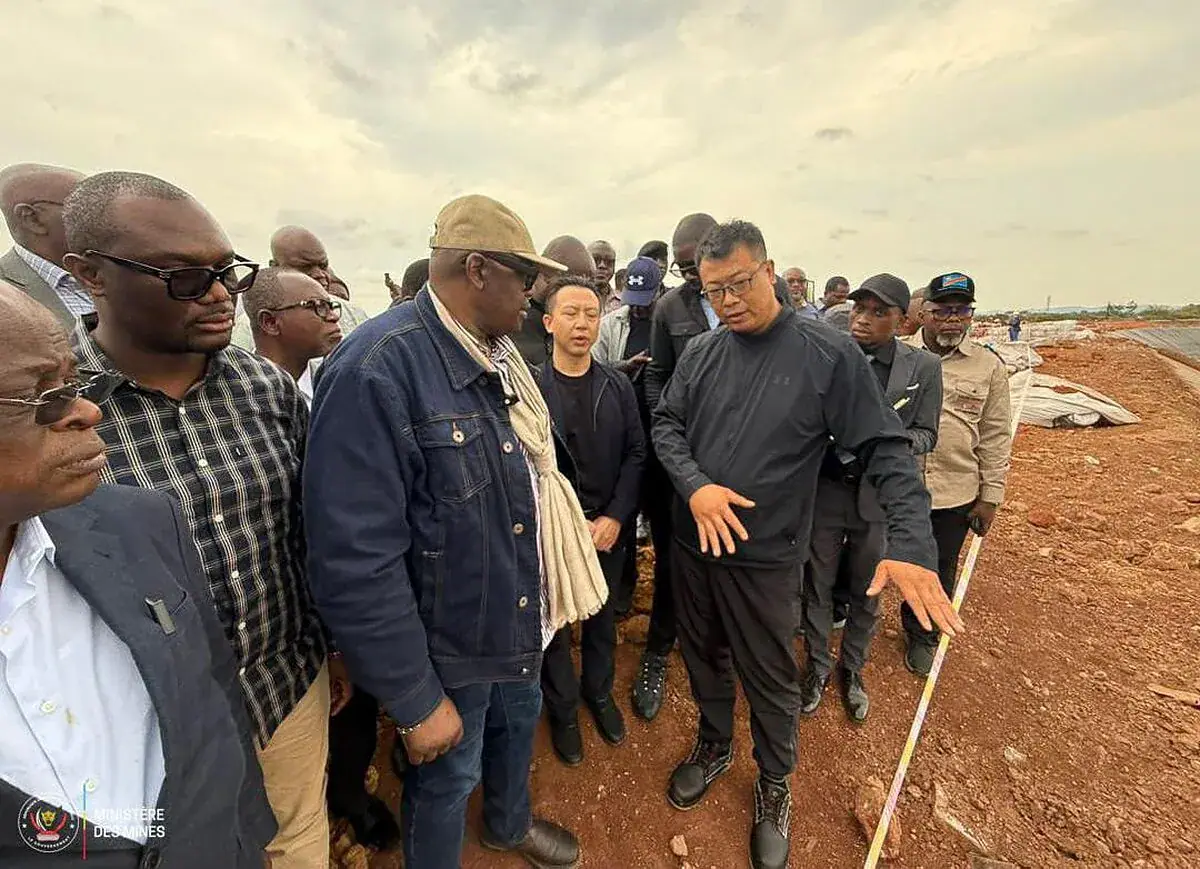
The Democratic Republic of Congo's Ministry of Mines has defended its response to a pollution incident in Lubumbashi, which occurred in November 2025. According to the ministry, the incident was caused by the use of a water retention basin to store acidic solutions. Minister Louis Watum visited the site, suspended the company's activities for three months, and established an investigation commission. The commission's findings led to several measures, including the decontamination of polluted areas and wells.
The ministry reported that 350 households received assistance within days of the incident, and 612 people received medical care. Additionally, 423 individuals were individually compensated. The company, CDM, was fined $6.6 million, which was paid to the public treasury. During the suspension, CDM was required to continue paying its employees' salaries to protect their rights. The incident and subsequent response have raised concerns about the company's accountability and the government's oversight.
A $6 million collective reparations package is planned for the affected communities, with $2 million allocated to each of the three impacted neighborhoods: Kasapa, Kamatete, and Kamisepe. However, the implementation has been delayed due to CDM's cited financial difficulties and the need to revise the company's terms of reference to include Kamisepe, which was initially omitted. The ministry attributes the delays to CDM's financial struggles and its recent announcement to cease operations.
The ministry emphasizes that CDM's financial difficulties do not exempt it from its obligations. "The commitments made must be honored," the ministry stated. The government is determined to ensure that the company fulfills its responsibilities, despite its decision to halt operations. The incident has sparked concerns about the environmental and health impacts of mining activities in the region.
The ministry also sought to correct what it perceives as a mischaracterization of the issue as a personal responsibility of Minister Watum. The measures taken were based on the recommendations of a commission that included representatives from civil society, and the decisions were made collectively. The ministry argues that reducing the issue to individual responsibility would overlook the work of the commission and other competent institutions.
The government remains committed to monitoring the progress of the reparations process. The ministry is convinced that "the cessation of a company's activities does not absolve it of its responsibilities." With CDM announcing its withdrawal, the question remains as to who will take responsibility for the remaining commitments and when.
The incident highlights the challenges of balancing economic development with environmental and social responsibility in the Democratic Republic of Congo's mining sector. The government's response and CDM's actions will likely have implications for the industry's future operations and reputation. The ministry's efforts to hold CDM accountable reflect the need for greater transparency and accountability in the sector.
Key points
- The Congolese government has taken steps to address the pollution incident, including suspending CDM's activities and imposing a $6.6 million fine.